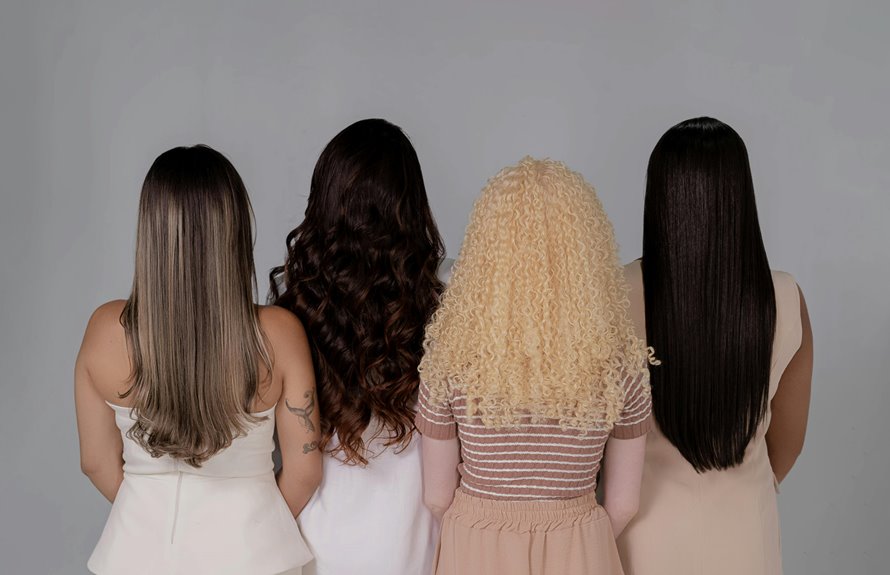
Twenty-inch hair looks different on every body type because length isn’t everything. On tall frames, it hits around your waist, creating balance. Petite figures need face-framing layers to avoid overwhelming your proportions. Athletic builds benefit from soft, flowing styles that add movement. Curvy bodies rock layered cuts that elongate your silhouette. Texture matters too; straight hair feels heavier, while curls appear shorter. Your lifestyle and comfort should guide whether you choose straight or textured styles. Understanding these factors helps you decide if this length truly suits you.
Body Type, Not Length Alone, Determines How 20-Inch Hair Flatters You
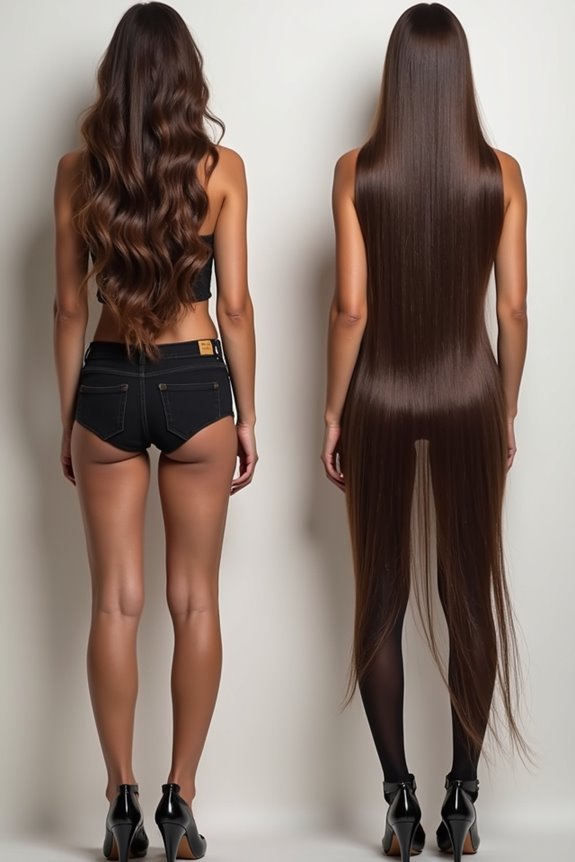
Why does 20-inch hair look completely different on your best friend than it does on you? The answer isn’t the length itself; it’s your body type. Your frame, height, and neck length shape how that hair actually sits on you.
Body type shapes how hair sits on you—the length itself isn’t what makes the difference.
Consider texture too. Straight hair shows the full 20 inches, while curly or wavy hair compresses, appearing shorter. This difference matters when you’re deciding if this length works for your body.
Rectangle body types need soft, layered cuts to avoid harsh lines. Hourglass figures benefit from face-framing highlights that maintain proportion. Petite frames require sleek styling to preserve vertical elongation.
Understanding your body type helps you style 20-inch hair strategically. You’re not fighting your frame; you’re working with it.
20-Inch Hair on Tall Frames: Creating Balance and Proportion
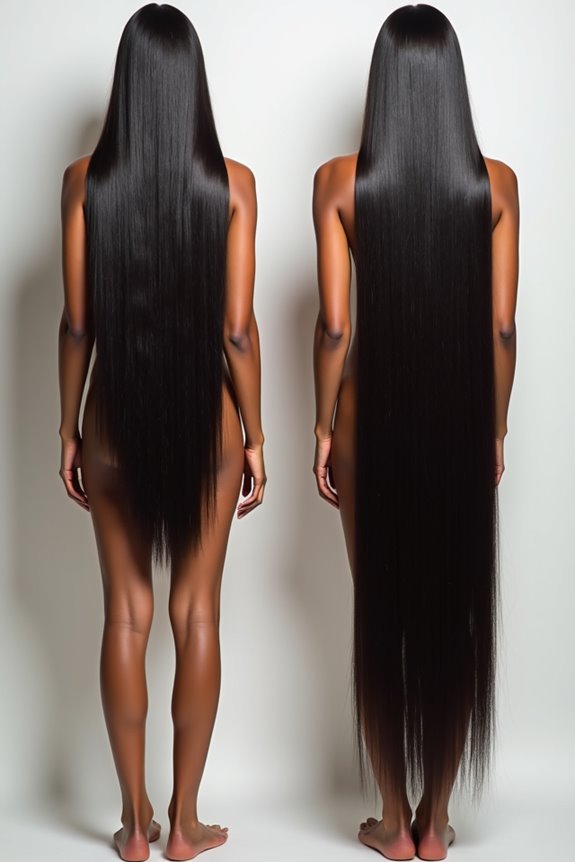
When you have a taller frame, how your 20-inch hair distributes across your body is just as important as the actual length itself. This length interacts with your proportions in ways that either elongate or balance your silhouette. Understanding these dynamics helps you decide whether 20 inches works for your frame or if adjustments might create a more flattering appearance.
The key is recognizing that vertical space plays a significant role. On a tall body, 20 inches of hair may sit proportionally higher than it would on someone shorter, which can affect how the length relates to your overall silhouette. This positioning influences whether the hair adds visual weight where you want it or creates an imbalanced effect.
Consider how the hair falls relative to your shoulders, collarbone, and torso. These reference points determine whether the length complements your frame or competes with it. Hair that ends at certain points along your body can either ground your proportions or emphasize vertical length in ways that may or may not serve your aesthetic goals.
Proportional Length Distribution
How a 20-inch length sits on your body depends largely on your height and frame size. On tall frames, this hair length creates different proportional balance than on shorter bodies. Your torso’s length means 20 inches may land differently than you’d expect.
Consider these factors affecting your hair length perception:
- Texture impact shapes how long your hair appears to be
- Straight styles showcase the full 20-inch length more visibly
- Curly or wavy textures may appear shorter due to shrinkage
- Layering adds movement and prevents heavy, bottom-heavy silhouettes
For tall frames specifically, 20 inches typically reaches your waist or mid-back. This measurement creates subtle yet noticeable changes in your overall silhouette. Understanding how proportional balance works helps you achieve the exact look you’re seeking. Your unique frame deserves styling that flatters your natural proportions.
Elongating Silhouette Effects
If you’re tall, 20-inch hair offers a distinct advantage: it creates a longer vertical line without overwhelming your frame. The elongation effect depends on your neck length and overall height. Taller individuals experience more pronounced length below the shoulders, which naturally extends your torso visually.
Your hair’s texture matters significantly. Straight 20-inch hair displays length clearly, maintaining that streamlined vertical line you’re after. Curls, however, reduce perceived length and add width at the ends, potentially shortening your silhouette.
To maximize elongation, choose styles that sustain vertical movement. Smooth waves or sleek falls work best. Avoid heavy, wide-volume shapes at the crown; they’ll shorten your overall appearance. Keep styling choices minimal and intentional, letting your natural height advantages shine through.
20-Inch Hair for Athletic Builds: Softening Muscle With Flow
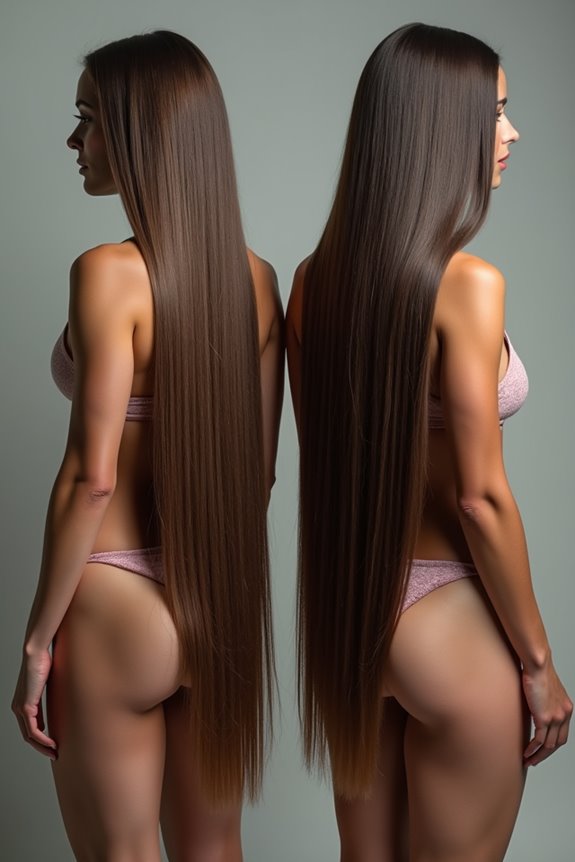
If you’ve got an athletic build, this hair length works effectively for softening muscle definition while maintaining balance. The key is choosing styles that add movement and femininity without bulk. Here’s what works:
- Halter necklines and face-forward silhouettes draw eyes upward, balancing your strong shoulders
- Voluminous layers and beach waves create curvature through texture, not thickness
- Three-quarter sleeves keep proportions balanced while showcasing your hair’s length
- Strategic color around the face and neckline enhances your features
At mid-back to waist level, 20-inch hair flows beautifully with flowy fabrics and feminine pieces. This length gives you versatility. You’re not fighting your build; you’re enhancing it. Your athletic frame becomes an asset, not something to conceal.
Petite Figures and 20-Inch Hair: Strategic Styling to Avoid Overwhelming
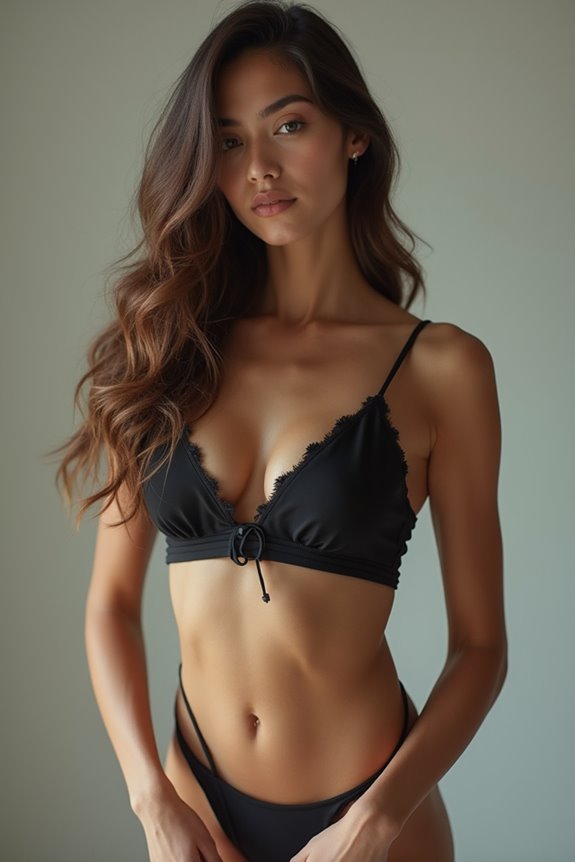
While athletic builds benefit from hair’s softening effects, petite frames require a different approach entirely. You’ll want to prioritize vertical elongation strategies that create length without adding bulk. Face-framing layers and curtain bangs work beautifully for petite figures, drawing the eye upward and creating dimension without overwhelming your frame.
At 20 inches, straight hair reads length more clearly on smaller bodies, while curly or wavy textures may appear shorter due to shrinkage. Layering becomes your subtle tool here; it keeps styling sleek and minimal while maintaining proportional balance.
Skip waist-length extensions entirely. They’ll visually shorten your torso further. Instead, embrace layered cuts that work with your natural texture. Maintain moisture and prevent bulk through careful detangling. You’re building a look that feels authentically you while honoring your frame’s unique proportions.
20-Inch Hair on Curvy Bodies: Layering and Balance for Volume
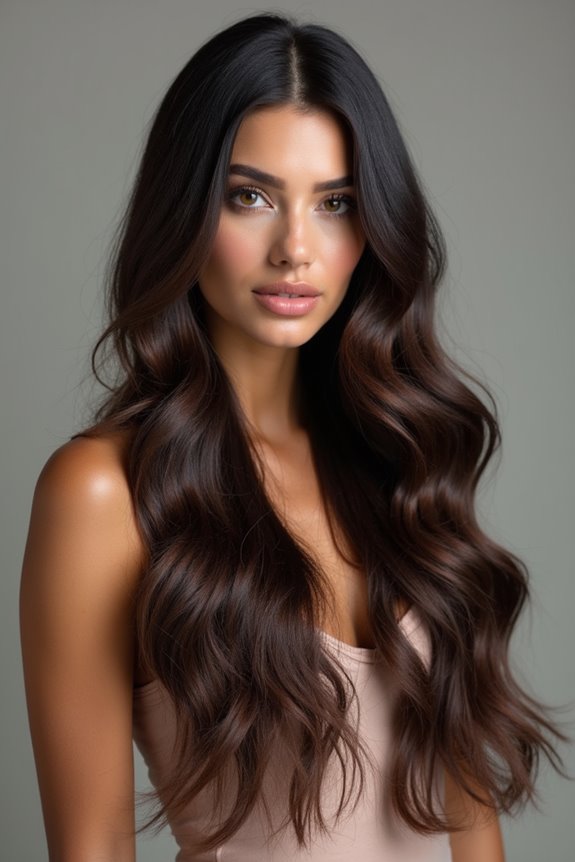
How do you make 20-inch hair work beautifully on a curvier frame? Strategic layering creates the balance and volume you need without adding bulk where you don’t want it.
Consider these styling approaches:
- Face-framing layers soften your features and draw attention upward
- Gentle, longer layers create vertical lines that elongate your silhouette
- Textured waves add movement while keeping hair lightweight and airy
- Protective styling reduces heaviness on your torso and maintains hair health
Curly or wavy 20-inch hair requires careful layering to prevent overwhelming your fuller frame. The key is creating movement that flows downward, not outward. Softer bends enhance your curves without adding width at the hips. This approach keeps your look balanced, intentional, and flattering to your unique body shape.
How to Layer 20-Inch Hair for Your Body Type
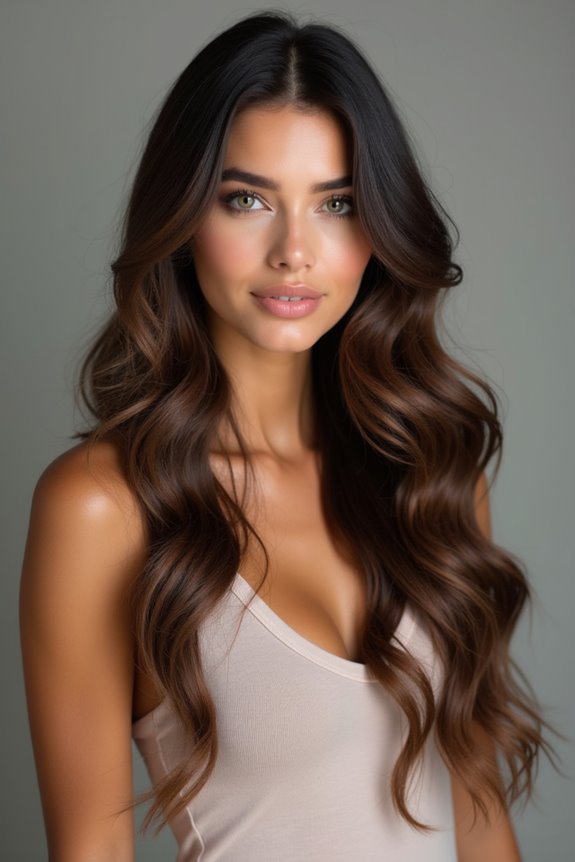
Layering isn’t one-size-fits-all; your body shape should guide where you place each cut. Your unique proportions determine how different layering strategies will work for you with 20-inch hair.
For oval and diamond shapes, layers reduce crown width while creating vertical lines that elongate your silhouette. Rectangle and banana body types need soft, face-framing layers that add gentle movement without bulk.
Hourglass figures gain balance when mid-length layers sit around the shoulders, enhancing the relationship between bust and hips. If you’re petite or have a short torso, shorter face-framing layers prevent overwhelming your frame while preserving length.
Taller frames benefit from layered 20-inch hair that falls around your waist or mid-back, adding movement around your face. The most effective approach matches your layers directly to your proportions.
Weight, Comfort, and Lifestyle: Managing 20-Inch Hair Extensions
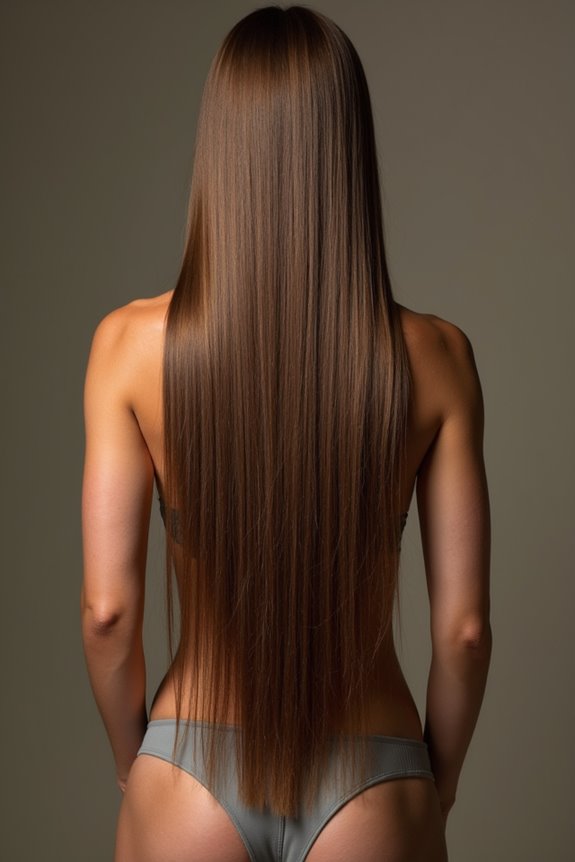
Managing 20-inch extensions means balancing length with what your scalp and daily routine can handle. The weight impacts your comfort throughout the day, especially during workouts or commuting. You’ll want to distribute that weight evenly across multiple bundles to prevent strain and slippage.
Managing 20-inch extensions requires balancing length with your scalp’s comfort and distributing weight evenly across multiple bundles.
Consider these lifestyle factors:
- Secure attachment methods prevent shifting that causes scalp discomfort
- Regular detangling routines reduce tension and breakage from daily movement
- Protective styling such as braids or buns lessens weight stress during active tasks
- Air-drying practices minimize damage from heat styling
Your texture choice matters too. Straight hair feels heavier; curly textures appear shorter visually. Choose what aligns with your active lifestyle. Whether you’re hitting the gym or working long shifts, proper maintenance keeps your extensions comfortable and natural-looking.
Styling Ideas That Work Across All Body Types
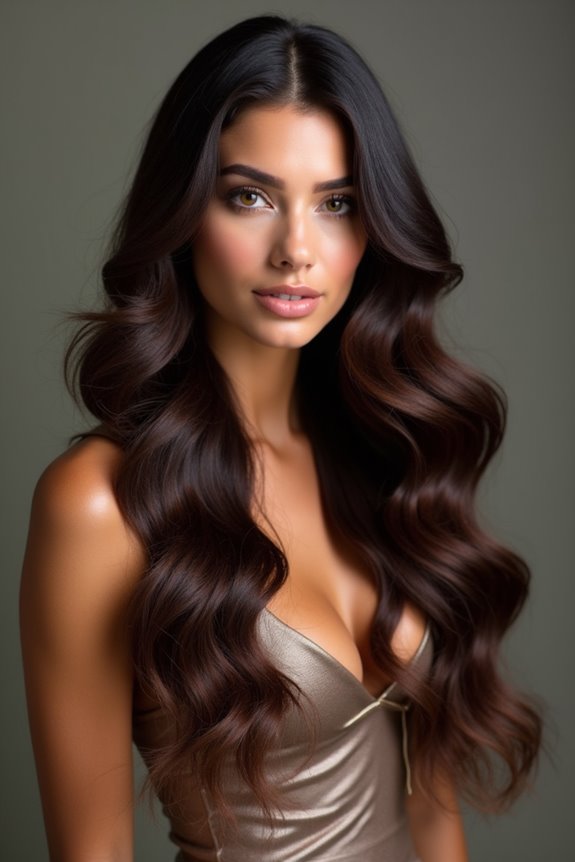
The beauty of 20-inch hair is its flexibility. You have enough length to create dramatic styles without overwhelming your frame. This hair length works well across all body types when you choose the right styling ideas.
| Body Type | Best Styling Ideas |
|---|---|
| Petite | Half-up styles, textured waves, side-swept layers |
| Tall | Full ponytails, sleek straight looks, voluminous curls |
| Curvy | Layered cuts, off-center parts, flowing waves |
| Athletic | Textured bobs, braided styles, tousled waves |
Layering creates dimension without sacrificing length. Half-up looks balance proportions nicely. Full ponytails work when you want sophistication. Experiment with styling ideas that complement your shoulders and frame.
Your hair length gives you options. Mix updos with flowing styles. Rotate between textured and sleek finishes. Find what makes you feel confident.