Growing longer hair takes patience, consistency, and the right strategy. First, know your hair type; thick hair handles length better than fine hair. Shampoo two to three times weekly, condition after every wash, and trim every six to eight weeks to prevent split ends. Expect growth of 0.25 to 0.5 inches monthly. Partner with your barber using reference photos to guide cuts through awkward phases. The timeline varies: straight hair typically needs two to three years, while curly hair takes three to four. Understanding these fundamentals makes your journey from frustrating to manageable.
Know Your Hair Type Before Committing to Long Hair

Why does one person’s long hair look remarkable while another’s looks limp and scraggly? Your hair type plays a significant role. I’d recommend getting a consultation with a barber or stylist who can assess your specific hair characteristics. Thick hair handles length beautifully. Thin or fine hair may look stringy as it grows longer. Understanding your growth rate matters too; most hair grows roughly 0.25 to 0.5 inches monthly, so patience is needed. Before you commit, consider whether thinning or balding affects your scalp. Extra weight can expose more of these areas. Use this consultation to establish realistic length targets. Define your styling decisions based on what actually works for you, not just what looks good on others.
Build Your Daily Hair Care Routine (Shampoo, Condition, Protect)
How you treat your hair daily determines whether it’ll grow strong or break along the way. I’m sharing the essential routine that supports healthy hair growth.
| Step | Frequency | Purpose |
|---|---|---|
| Shampoo | 2–3 times weekly | Cleanse without stripping oils |
| Conditioner | After every shampoo | Protect mid-lengths and ends |
| Heat protectant | Before styling | Shield from damage |
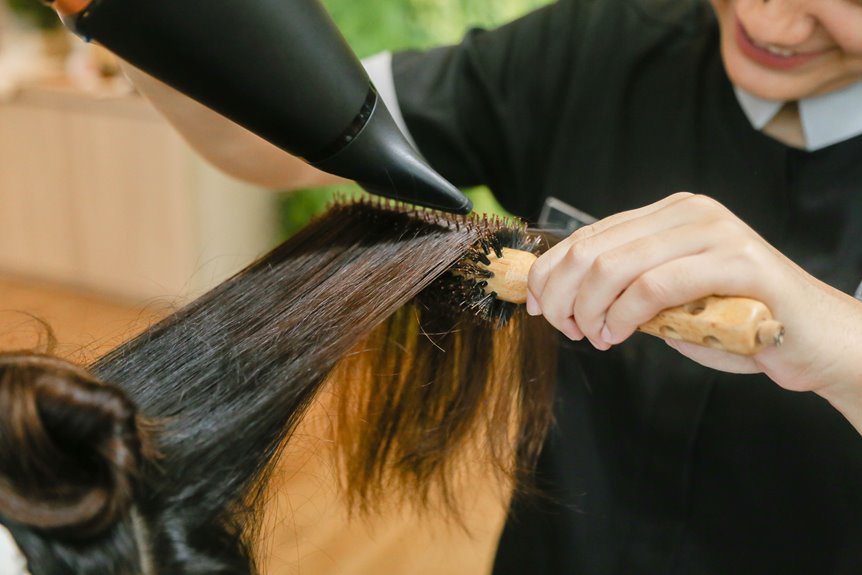
Start with a gentle, sulfate-free shampoo that won’t strip your natural oils. Apply hydrating conditioner to your mid-lengths and ends immediately after shampooing. Before using any heat tools, spray heat protectant throughout your hair.
Air-dry whenever possible to prevent breakage and frizz. Once product is applied, use a paddle brush to distribute everything evenly and remove tangles with a consistent brushing routine.
This foundation supports healthy growth.
Trim Every 6–8 Weeks to Prevent Split Ends
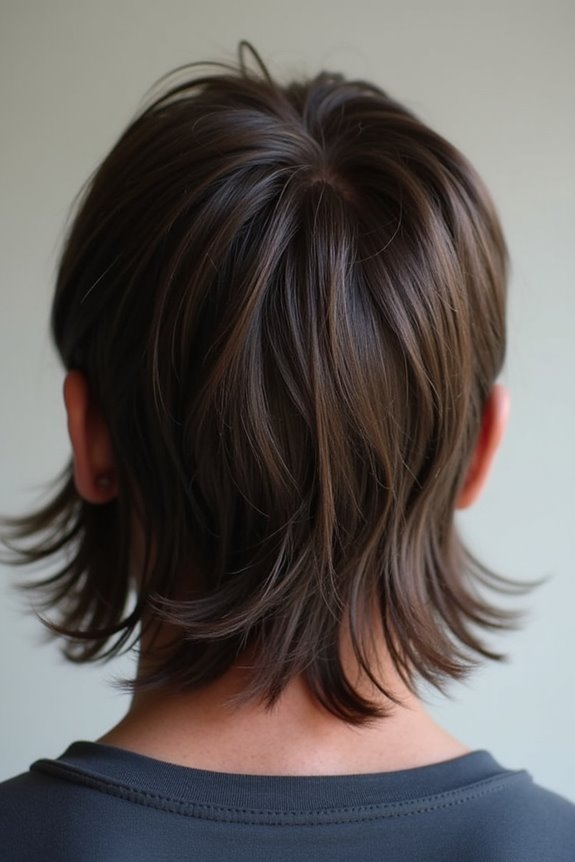
You’ll want to trim every 6–8 weeks if you’re serious about growing longer hair without compromising quality. This timing prevents split ends from creeping up your hair shaft and disrupting your growth progress, so you’re basically protecting the length you’ve already earned. I’d recommend working with a barber who understands your goal; they’ll make strategic cuts that maintain your shape while keeping those ragged ends from sabotaging your grow-out.
Split Ends Prevention Strategy
One thing that stops many guys from growing longer hair? Split ends. They make your hair look ragged and undo your progress. Here’s how I keep mine healthy.
I trim every 6 to 8 weeks. This removes damaged ends before they travel up my hair shaft. Between trims, I’m intentional about protection.
I limit heat styling and always use heat protection spray when I do blow-dry. I’ve switched to a gentle shampoo and conditioner that actually hydrate instead of stripping moisture. These hydrating products work well for maintaining hair health.
I also practice protective styling by keeping my hair in loose styles that prevent friction and breakage. No tight pulls or constant touching.
This routine keeps my ends healthy while I grow. You’ll notice less frizz, fewer tangles, and real progress.
Timing Between Trim Sessions
Keeping your ends healthy means scheduling trims strategically, not just whenever they look bad. I’d recommend spacing your trim intervals every 6 to 8 weeks to prevent split ends while maintaining momentum toward your goals.
Here’s why this matters for your growth plan: regular trims remove damaged ends without cutting appreciably into your length progression. When you wait 6 to 12 weeks between cuts, you’re allowing enough hair to grow while staying aligned with your shaping milestones.
Think of it this way. Too-frequent cuts sabotage your progress, but strategic timing keeps your silhouette looking intentional as you grow. Work with your barber to plan minimal, targeted trims that support your overall growth trajectory. This balanced approach keeps your hair healthy while you’re actually building the length you want.
Health Over Frequent Cutting
The real secret to growing longer hair isn’t avoiding the scissors; it’s using them strategically. I’ve learned that regular trims every 6 to 8 weeks actually support your growth goals. Here’s why: split ends travel up your hair shaft, causing breakage that stunts length. When you trim consistently, you remove damaged ends before they create bigger problems.
Think of it this way. Damage prevention through timely trims means healthier hair overall. You’ll experience less breakage during your growth journey. This approach lets you maintain a clean appearance while your length increases steadily.
The math is simple. Frequent small trims beat occasional dramatic cuts. Healthy hair grows stronger and longer. You’re investing in your hair’s foundation now for the results you want later.
Style Your Hair Through the Awkward Phases

The months between short and long hair can feel awkward, but you have solid styling tools to work with. Lightweight creams and sea-salt sprays work well for enhancing your natural texture while managing frizz during these in-between stages. Practical styles like a man bun or top knot are also effective; they disguise those frustrating lengths while you build toward your goal.
Product Selection During Growth
Why does product choice matter so much when you’re growing your hair out? The right growth products support your journey without sabotaging your goals. I recommend lightweight styling products that won’t weigh down your lengthening hair or cause clumping.
| Product Type | Best For | What to Avoid |
|---|---|---|
| Leave-in conditioner | Mid-lengths and ends | Heavy pomades |
| Texture sprays | Natural texture enhancement | Buildup-causing formulas |
| Heat protection | Styling safety | Excessive heat damage |
| Paddle brush | Even distribution | Tangles and breakage |
| Sea salt spray | Awkward phase styling | Weight and clumping |
Applying conditioner after shampooing keeps moisture balanced. Use texture sprays and leave-in conditioner to maintain fullness during awkward phases. Heat protection becomes necessary when you style, minimizing damage that interrupts growth progress. Brush products through evenly to reduce tangles and promote smoother, healthier lengthening.
Managing Awkward Length Phases
Once you’ve locked in the right products, you’ll face your biggest test: the awkward phases. This is when your hair isn’t long enough to style easily, yet too long to ignore. Here’s how you navigate it.
Create a growth template with your barber. This preserves natural layers and follows your head shape, reducing the urge to trim prematurely. Schedule barber visits every 3 to 4 months to maintain balance and address broken ends.
Use styling products strategically. A man bun or top knot adds texture and manageability during mid-growth. These practical options help you look intentional while your hair develops.
Patience matters most here. Avoid cutting too early; premature trims create harsh corners that disrupt your layering pattern. You’re building momentum, not rushing. Stick with the process.
How Long Will It Really Take? Timeline by Hair Type

How much patience you’ll need depends largely on your hair type and genetics. Your growth rate averages 0.25 to 0.5 inches monthly, but the timeline varies significantly.
Straight hair typically reaches long lengths in 2 to 3 years. Curly hair takes 3 to 4 years because it shrinks as it grows. Thicker hair may feel slower since you’re accumulating more volume, while fine hair appears longer faster but needs careful maintenance.
Plan trims and health checks every 6 to 8 weeks to keep your hair looking sharp. Regular trims prevent split ends and support your long hair goals. This journey requires consistency. You’re building something worthwhile that reflects your commitment to self-care and personal style.
Partner With Your Barber as Your Hair Grows
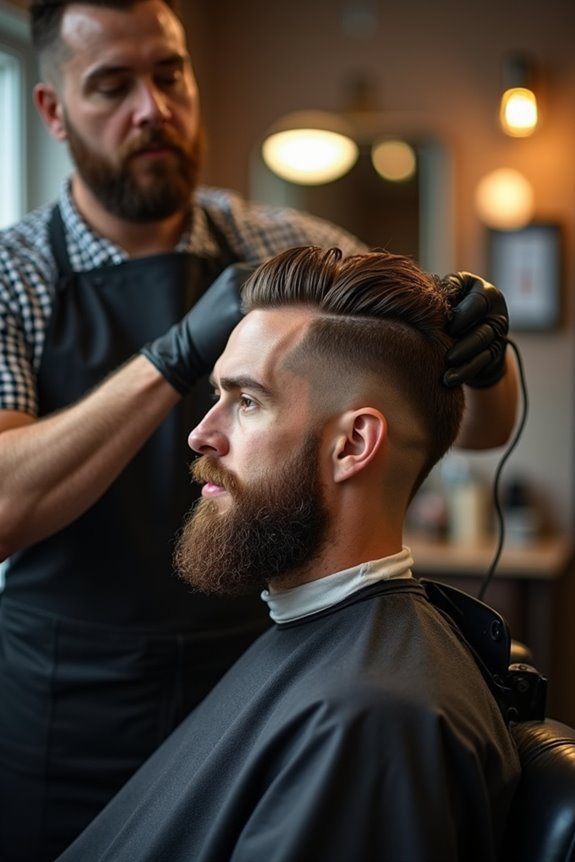
Your barber becomes your growth partner once you commit to longer hair. I’d recommend checking in every couple months to assess where you’re at and whether a trim serves your growth goals.
Strategic trims every 6 to 12 weeks keep your hair shaped as it lengthens. This barber collaboration prevents scraggly ends while maintaining your vision. Share your growth milestones upfront. Show your barber those Instagram or Pinterest images you’ve saved at various lengths. Visual goal-setting keeps both of you aligned.
Your barber’s expertise matters. They’ll adapt the cut as your hair grows, preventing awkward phases. They’ll also give honest feedback on what works. This partnership makes your growth journey manageable rather than frustrating. You’re not going it alone; you’ve got professional guidance every step of the way.
Reference Styles You Love to Stay Committed

What keeps your motivation alive during those awkward middle months? Pin down specific styles you’re chasing. This visual anchor transforms your growth timeline from vague to concrete. Bring reference photos to every barber visit: magazine cutouts, Instagram posts, anything showing your end goal. Your barber uses these images alongside your growth template to plan regular trims strategically. You’re not just growing hair; you’re building toward something you want to wear.
This style commitment matters because it guides your growth template decisions and keeps barber visits purposeful rather than reactive. When you see your hair matching your reference style, motivation increases noticeably. You’ve already invested months in this journey. Staying visually connected to your target style keeps you pushing through the awkward phases toward the look you’ve envisioned.