Start by tracing your face outline to identify your shape: oval, round, square, rectangle, heart, or diamond. Then match your hair texture. Fine hair needs lighter layers for lift, while thick hair benefits from texturizing.
Round faces gain definition through vertical lines and crown volume. Square faces soften with layered styles. Use inspiration photos of people sharing your face shape and texture, then discuss specific techniques with your stylist.
The right cut balances your proportions while fitting your lifestyle and maintenance routine.
Find Your Face Shape in Three Easy Steps
Ever wonder why certain haircuts look good on some people but not on you? Your face shape is the guide you’ve been missing.
Your face shape is the guide you’ve been missing to finding haircuts that truly work for you.
Step 1: Gather Your Tools
You’ll need a mirror, pencil, or marker. Find good lighting in your bathroom or bedroom.
Step 2: Trace Your Outline
Pull your hair back completely. Carefully trace your hairline, jawline, cheekbone endpoints, and chin. Don’t worry about being perfect; you’re just creating a basic outline to work with.
Step 3: Compare and Identify
Look at your outline. Is it longer than wide? Where’s the widest point? Compare your shape against six main categories: oval, round, square, long, heart, or diamond. You’ll quickly recognize which one matches yours best.
Oval Faces: Your Most Versatile Option
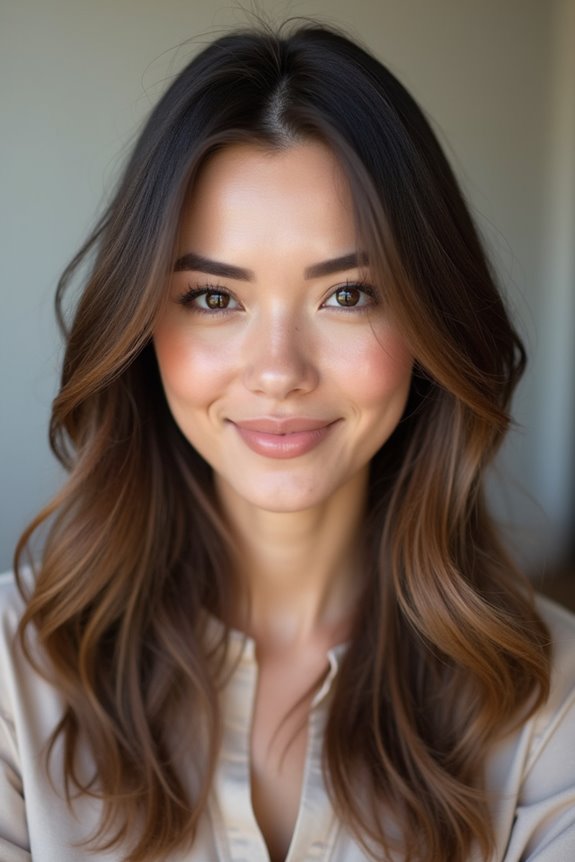
If you’ve identified your face shape as oval, you’re working with harmonious proportions that accommodate nearly any haircut. Your balanced features give you flexibility in styling choices without constraint.
Consider trying a blunt bob, sleek lob, or side-swept bangs. Straight or curly textures both work well for you. The key is maintaining balance without overwhelming your features.
What should you avoid? Skip heavy bangs that shorten your face or one-length cuts that lengthen it unnecessarily. Instead, experiment with different parts and face-framing layers to highlight your balanced proportions.
Your versatile face shape offers genuine freedom to express yourself through your haircut. Make the most of it.
Round Faces: Add Length and Definition
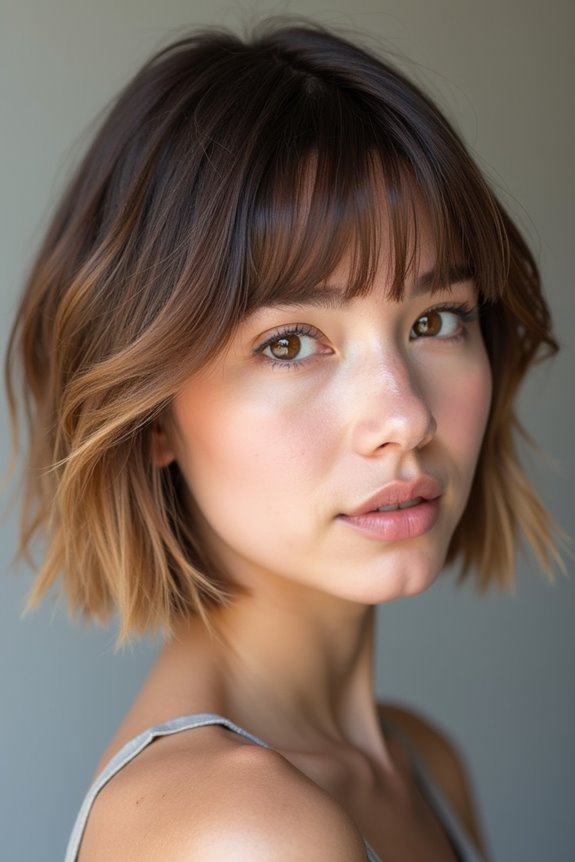
I’m here to show you how the right haircut can work for your round face shape. You’ll want to focus on creating vertical lines through your hair’s length and texture; this approach makes a real difference. Let me walk you through how layering and strategic styling give you the angles and definition you’re looking for.
Creating Vertical Illusion
Elongating a Round Face with Strategic Haircuts
The right haircut can transform a round face by creating vertical lines that lengthen your silhouette. Understanding how layers and volume work together is essential to achieving this effect.
| Technique | Purpose | Result |
|---|---|---|
| Layers | Break up horizontal lines | Added movement and dimension |
| Top volume | Draw eyes upward | Elongated appearance |
| Side-swept bangs | Create diagonal lines | Softened round edges |
How Layers Work
Layers are particularly effective for round faces because they interrupt the circular outline and naturally draw the eye vertically. By breaking up horizontal lines, layers add movement and dimension to your hair, which helps elongate your overall appearance.
Building Volume at the Crown
Adding volume at the crown is one of the most direct ways to create length. When you lift the hair at the top of your head, you immediately draw attention upward, making your face appear longer and more defined.
Using Side-Swept Bangs
Side-swept bangs introduce angles that work against roundness. These diagonal lines soften the edges of your face and contribute to the vertical illusion you’re looking for. Combined with layers and crown volume, side-swept bangs complete a cohesive approach to flattering your face shape.
This three-part strategy works because it addresses the core issue: horizontal lines emphasize roundness, while vertical and diagonal lines create the opposite effect.
Texture and Layer Benefits
Texture and Layers Benefits
Texture and layers work as effective tools for transforming a round face into a more elongated, defined silhouette. Here’s why they work so well.
Layers create movement and break up the circular shape you’re trying to minimize. When you add texture throughout your hair, you introduce dimension that draws the eye vertically rather than horizontally. This upward movement helps elongate your appearance naturally.
Volume on top is key. Strategic layering at the crown gives you that lift, making your face appear slimmer and more angular. Textured crops work similarly; they add visual interest without emphasizing roundness.
The benefit is that these techniques work with various hair types. Whether your hair is straight, wavy, or curly, texture and layers adapt to your natural pattern while serving your face shape goals.
Square Faces: Soften Your Strong Jawline
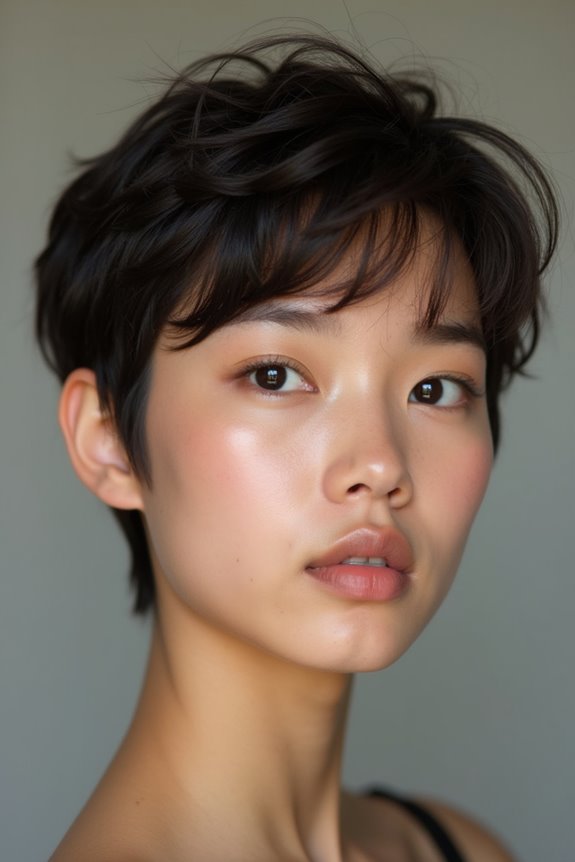
Do you have a squared-off face with a prominent jawline? You’re not alone. Layered hairstyles work well to balance strong facial features. They create movement and dimension that redirect attention away from your jaw.
Try side-parted styles with long layers. This approach introduces soft angles that work with your face shape. Shoulder-length cuts with gentle waves or curls also elongate your appearance effectively.
Wispy bangs serve an important function too. They pull focus upward, away from your jawline. Skip blunt bobs or jaw-length cuts, as they will emphasize what you’re trying to soften.
The solution lies in creating softness through texture. When you choose layered hairstyles with intention, you’ll feel confident in your appearance.
Rectangle Faces: Create Width and Balance
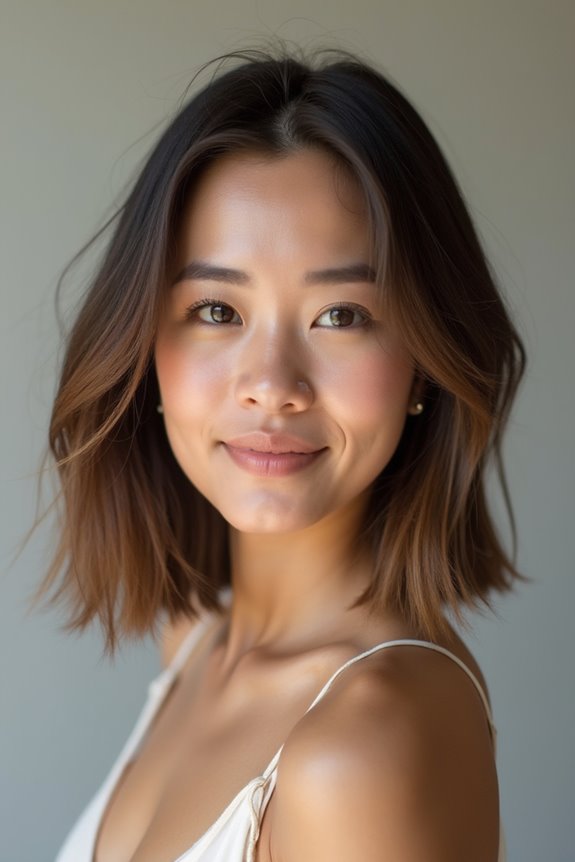
If your face is noticeably longer than it is wide, you’ll want to shift focus toward creating width and balance. A rectangle haircut works best when it adds dimension to the sides while keeping length minimal.
Side-swept fringes redirect attention to your cheekbones and eyes, instantly softening your appearance. Mid-length layered cuts introduce side volume that makes your face appear shorter and fuller. Consider a slicked-back undercut with moderate top length; this style avoids extra height while maintaining proportion.
Side-swept fringes and layered cuts add flattering width, while slicked-back undercuts maintain perfect proportion for longer faces.
Skip elongated, sleek styles and high-volume tops that emphasize length. Instead, use texturizing pastes or light waxes to build volume on the sides without weighing them down.
These strategic choices create the width and balance your rectangle face needs.
Heart-Shaped Faces: Balance Forehead and Chin
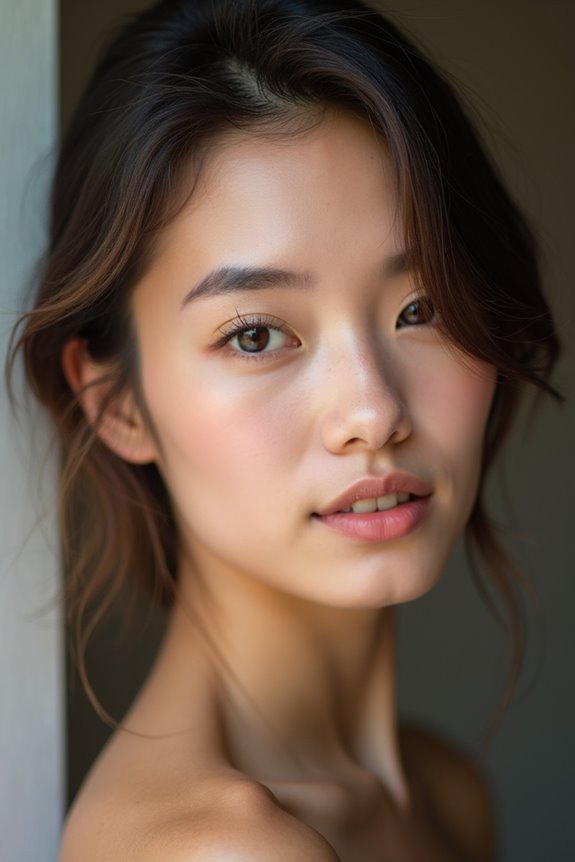
What makes a heart-shaped face unique? You have a wider forehead and high cheekbones that taper to a narrow chin. This means you’ll want to balance these proportions strategically.
The key is adding fullness around your jawline and lower face. I recommend trying shoulder-length lobs or chin-length bobs that clear your jawline completely. These styles work because they don’t add excessive volume on top.
Consider side-swept bangs or inward layers. They soften your forehead while keeping focus on your chin area. Avoid styles with too much crown volume, as they’ll emphasize what you’re already working to balance.
When you choose cuts that complement your heart-shaped face, you’re creating harmony throughout your features.
Diamond Faces: Frame Your Cheekbones
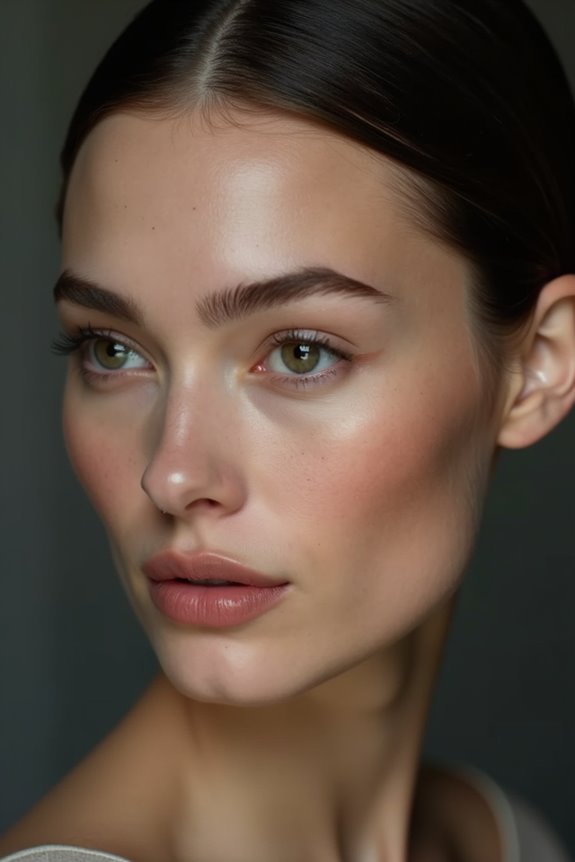
If you have a diamond face shape, you’re working with prominent cheekbones that deserve thoughtful styling. I’ll show you how to accentuate that natural structure while balancing your forehead and jawline for a more harmonious look. Let’s explore the cuts and techniques that will frame your features effectively.
Accentuate Cheekbone Structure
Have you noticed how certain haircuts can completely reshape your face’s proportions? Working with your cheekbone structure rather than against it proves far more effective for diamond faces.
Layered side parts create volume at the forehead while minimizing cheekbone width, which is exactly what you need. This styling technique draws attention upward and inward, softening those prominent cheekbones naturally.
Side-swept bangs work similarly by redirecting focus toward your center face instead of emphasizing width. Pair them with textured layers for added dimension.
A medium-length swept-back style offers another option. It keeps hair off your cheeks while adding fullness where you want it most.
The goal is to balance your face’s proportions by enhancing what works for your shape rather than fighting against it.
Balance Forehead And Jaw
Beyond minimizing your cheekbones, you’ll want to add fullness where your face needs it most: your forehead and jawline. This creates visual balance across your entire face shape.
A textured fringe or layered side part works well here. These styles direct attention upward, giving your forehead the volume it requires. You’re counterbalancing your wider midface with strategic height on top.
Consider medium-length swept-back styles as well. They emphasize your face’s center while softening cheekbone prominence naturally.
For added balance, try pairing fuller hairstyles around your forehead with a goatee or short beard. This combination anchors your jawline while keeping focus symmetrical throughout your silhouette.
The key is working with your stylist to confirm every element (fringe placement, length, texture) supports your overall face shape harmony.
Why Your Hair Texture Matters as Much as Your Face Shape
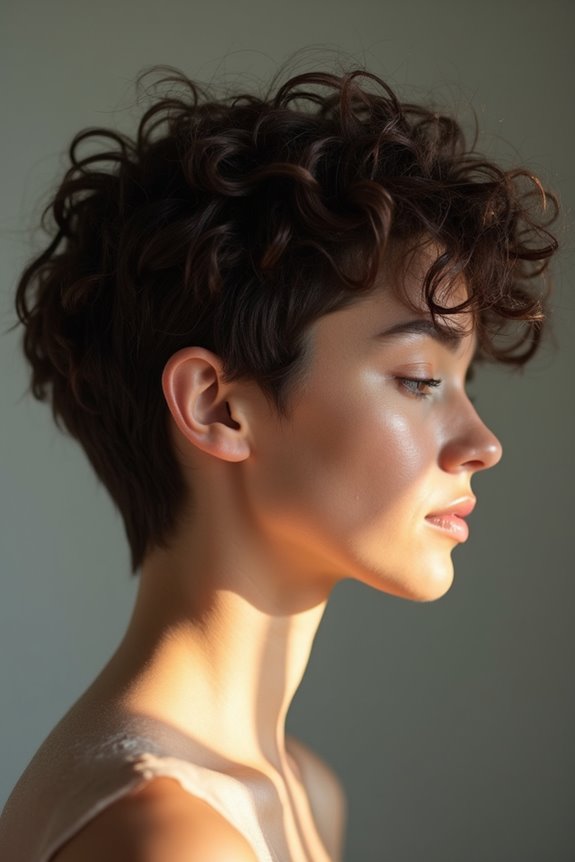
Why does the same haircut look dramatically different on you than it does on your best friend? Your hair texture is the answer. While face shape guides overall direction, your hair type determines how a cut actually performs. Fine hair needs lighter, layered cuts for lift. Thick hair requires texturizing to reduce bulk. Curl patterns affect how bangs frame your face; tighter curls need finger-combed layers to avoid unflattering shapes.
Texture finishes like waves and soft layers deserve real consideration. They soften strong jawlines and cheekbone angles, creating better balance for square and diamond faces. Understanding your unique hair texture helps you and your stylist create a cut that actually works for you, not just theoretically.
Choose a Cut You’ll Actually Keep Up With
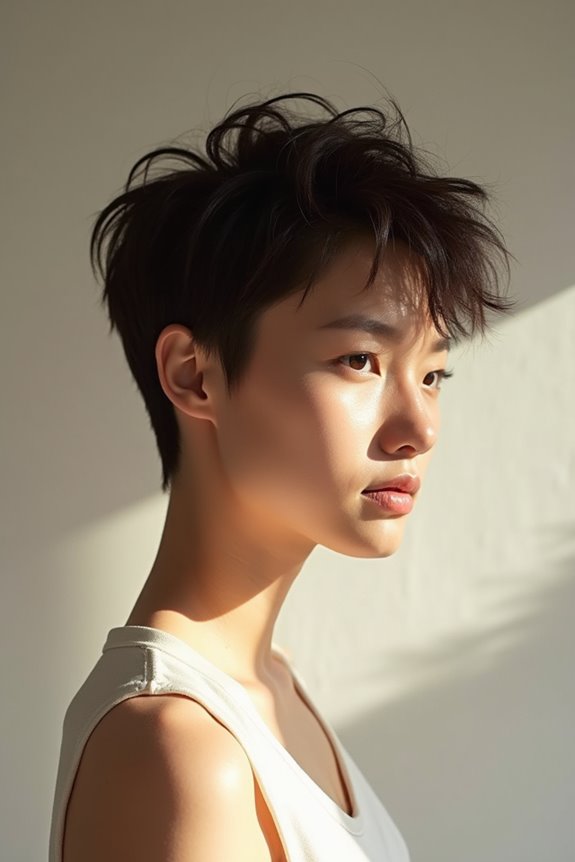
I’d argue that the perfect haircut doesn’t exist if you can’t maintain it. Your lifestyle and hair type need to align with your cut’s maintenance demands: whether that’s weekly styling, monthly trims, or daily product application. Before you commit to that sleek undercut or layered style, ask yourself these questions. Do I have time for regular upkeep? Does my hair type naturally cooperate with this look?
Maintenance Requirements and Lifestyle
How much time are you willing to spend styling your hair each morning? That’s the real question. Your lifestyle determines which cut works best for you.
Some cuts need daily styling products: pomade, wax, or cream to look sharp. Others work great with just a quick wash. Consider your routine honestly. Do you have fifteen minutes or five?
Regular touch-ups matter too. Shorter cuts need visits every three to four weeks. Longer styles stretch to six weeks between trims.
Think about your job and activities. Athletes might prefer low-maintenance cuts. Office workers can handle styles requiring more styling products.
The best haircut isn’t trendy; it’s one you’ll actually maintain. Choose something matching your real life, not an imagined version of it.
Hair Type Compatibility Matters
Your hair’s natural texture is just as important as your face shape when picking a cut. A style that looks good on your friend might not work for you if your hair behaves differently. This is because maintenance and styling demands vary based on your unique texture.
Consider these compatibility factors:
- Straight hair handles blunt edges well; wavy hair needs layers for movement
- Fine texture requires lightweight cuts that don’t weigh down your strands
- Thick, coarse hair benefits from texturized styles that reduce bulk
- Curly hair demands cuts designed for curl pattern, not against it
When you choose a cut that matches your hair’s natural behavior, you’ll actually maintain it. You won’t spend hours styling or fighting your texture daily. That versatility and ease keep you confident and looking polished.
Use Inspo Photos Strategically: Without the Letdown
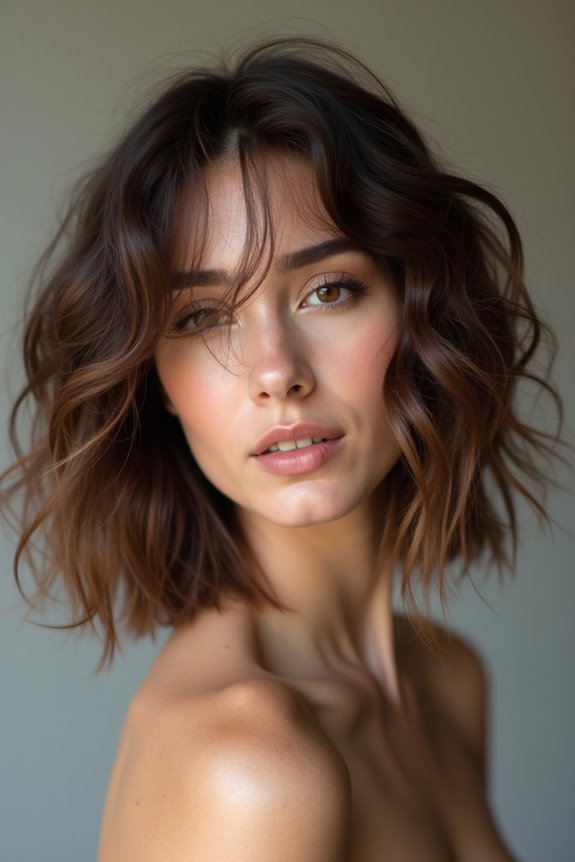
When you’re scrolling through Instagram or Pinterest looking for your next haircut, it’s easy to fall in love with a style that looks great on someone else, but then disappoints when you sit in the chair. That’s where strategic comparison helps you avoid that letdown.
Find reference photos of people who share your face shape and hair type. Notice how their proportions differ from yours. Ask yourself: Do they have a longer jawline? Thicker texture? These details matter because they directly affect how a cut will sit on your head.
Find reference photos of people who share your face shape and hair type, then notice how their proportions differ from yours.
Share your research with your stylist by highlighting specific elements: the angle of the bangs, the layering technique, the length relative to your shoulders. Rather than expecting identical results, focus on understanding which aspects of the style work for their features and how those same techniques might work for yours.
This proportion comparison approach means you’re working with your actual features, not against them. Your desired cut becomes realistic when you respect what you’re working with. The best haircut isn’t about copying someone else’s style; it’s about adapting the elements that suit your unique bone structure and hair characteristics.
Don’t Make These Common Shape-Matching Mistakes
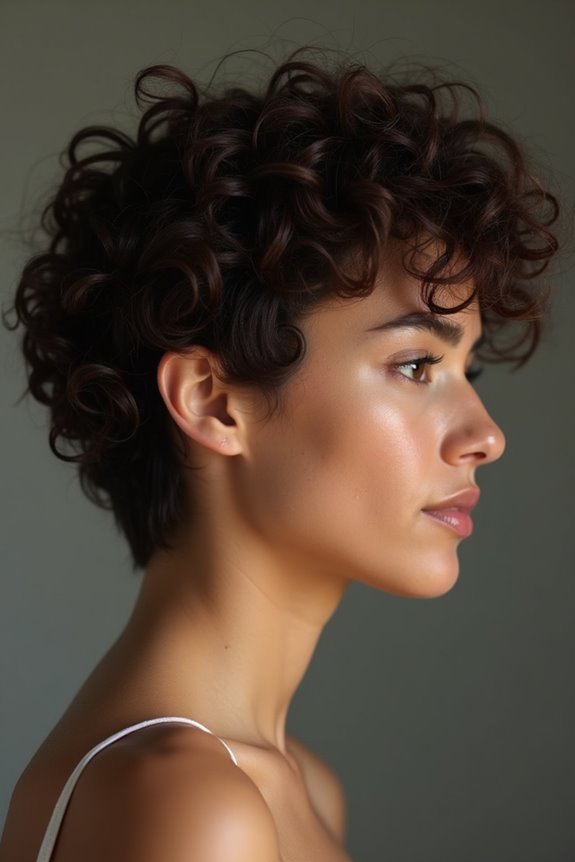
Even with great inspiration photos in hand, I’ve seen people make missteps when they ignore their actual face shape. Your hairstyle mistakes often happen when you skip the fundamental step of identifying your true face shape first. Understanding your hair type matters too, but shape-matching guidance should always come first.
Here’s what to avoid:
- Choosing blunt bobs for round faces, which shorten your appearance instead of adding length
- Picking short cuts for diamond faces that over-highlight cheekbones
- Ignoring your natural hair texture when selecting layered styles
- Assuming one hairstyle works for everyone with similar face shapes
Your face shape is unique to you. Get honest guidance by tracing your face outline, comparing it against the six main shapes, then matching accordingly. This foundational step prevents costly salon regrets and builds your confidence.
Get Expert Help When You’re Unsure

Still struggling to identify your face shape or figure out which cut will work best for you? That’s completely normal. Professional stylists offer expert help tailored specifically to your unique features and hair type.
During a consultation, your stylist assesses your face shape, hair texture, and lifestyle needs. They provide personalized haircut guidance based on what actually flatters you, not trends. This professional approach saves time and prevents costly mistakes.
| Consultation Benefit | What to Expect | Why It Matters |
|---|---|---|
| Face shape analysis | Stylist traces your features | Ensures proper proportions |
| Hair type assessment | Texture and density evaluation | Determines ideal cut style |
| Lifestyle discussion | Daily styling time available | Creates manageable results |
| Customized recommendations | Tailored haircut guidance | Maximizes your confidence |
Investing in expert help improves your appearance and simplifies your routine.
How to Style Your Cut Between Salon Visits

Your new haircut looks great fresh from the salon, but how do you keep it looking sharp at home?
Maintaining your cut between visits protects your investment and keeps your hairstyle flattering your face shape. I’ll share strategies that work for different cuts and hair types.
Key maintenance tips:
- Dry styling techniques – Use a blow dryer to recreate volume and layering your stylist added
- Product selection – Choose lightweight products matching your hair texture to enhance your cut’s shape
- Refresh layering – Lightly texturize ends weekly with dry shampoo for maintained movement
- Schedule trims – Book touch-ups every 4–6 weeks to preserve your cut’s original balance
Consistent care between salon visits keeps your hairstyle looking polished and working with your features.