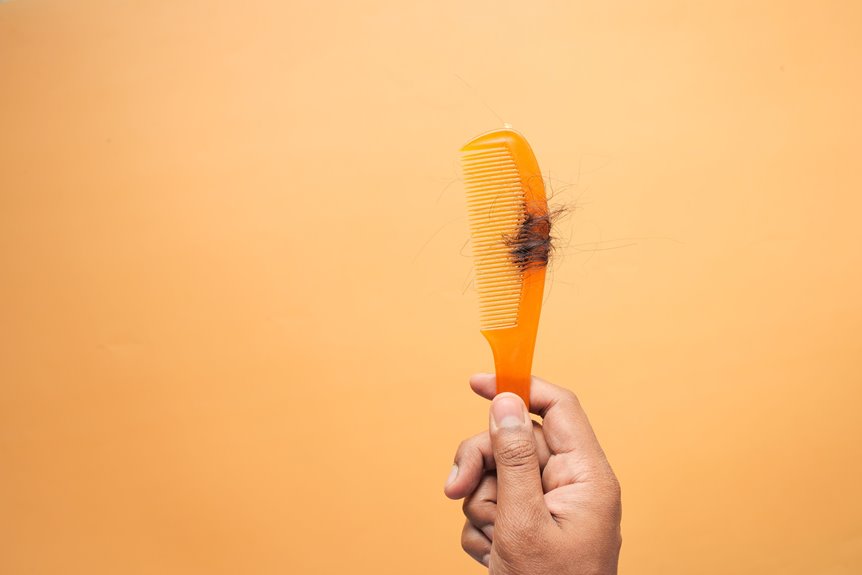
No, long hair doesn’t shed more; it just looks that way. You shed about 50 to 100 hairs daily regardless of length because your follicles operate on their own growth cycle. Longer strands simply appear more dramatic when they fall out and occupy more visible space.
If you’re noticing clumps, tight hairstyles and aggressive brushing might be causing breakage instead of normal shedding.
Understanding this distinction helps you figure out whether you’re dealing with typical hair loss or something worth addressing with a professional.
The Truth About Hair Shedding and Hair Length
Why does long hair seem to shed more? You’re noticing visible shedding, not actual increased hair loss. Here’s the reality: you shed 50 to 100 hairs daily, regardless of hair length. Your follicles operate on their own growth cycle, independent of shaft length.
Long strands simply appear more dramatic when they fall out. A short hair might go unnoticed, but a long strand catches your eye immediately. That’s perception, not biology.
Your hair length doesn’t affect follicle health or shedding frequency. What you’re experiencing is visibility working against you. The longer your hair, the more noticeable each strand becomes.
Understanding this distinction helps you recognize normal shedding patterns and distinguish them from actual concerns.
Why Long Hair Seems to Shed More
Have you ever noticed more hair in your shower drain after growing it out? That dramatic pile doesn’t mean you’re shedding more. It just looks more noticeable because long strands are simply more visible than short ones.
Several factors make long hair shedding appear worse:
Tight hairstyles, aggressive brushing, and heat styling make long hair shedding appear more dramatic than it actually is.
- Tight hairstyles create constant tension, causing traction alopecia that worsens over time.
- Aggressive brushing and detangling, especially when wet, increase breakage rather than true shedding.
- Heat styling and chemicals weaken your hair structure, making breakage more likely.
Understanding your hair care routine matters here. Chemical treatments like bleaching actually damage the bonds holding your strands together, leading to increased breakage. The key difference lies in this: real shedding involves hair falling from roots, while breakage happens along the shaft. Both look similar, but they require different solutions.
Normal Shedding in Long Hair: What’s Actually Typical
You’re shedding between 50 to 100 hairs daily. That’s normal. Your hair follicles follow a natural growth cycle that includes a shedding phase. This happens regardless of whether your hair is short or long.
The key difference is that length makes shedding visible. A single 24-inch strand catches your eye on your pillow. A 2-inch strand doesn’t.
When you find a clump after washing or notice strands in your brush, it’s typically within normal range. Your hair follicles aren’t overworking. They’re just cycling through their regular process.
Understanding this distinction helps you recognize what’s actually concerning versus what’s simply noticeable. You’re likely experiencing completely typical shedding.
Shedding vs. Breakage: Understanding the Difference
There’s an important distinction between hair falling out naturally and hair breaking apart.
Shedding occurs during the telogen phase, your hair’s natural resting period before it sheds. Breakage, however, results from damage to your hair shaft itself. Understanding this difference changes how you care for your hair.
Here’s what sets them apart:
- Intact roots/bulb = shedding (normal, healthy)
- Broken mid-shaft = breakage (damage-induced)
- Telogen effluvium = excessive shedding from stress or illness
The simple test involves examining lost hairs closely. Those with white bulbs at the end are shedding naturally. Strands without roots indicate breakage from rough brushing, heat, or chemical treatments.
Understanding this distinction helps you address the real issue. You’ll stop blaming length and start protecting your hair properly.
How Tight Hairstyles Contribute to Hair Loss
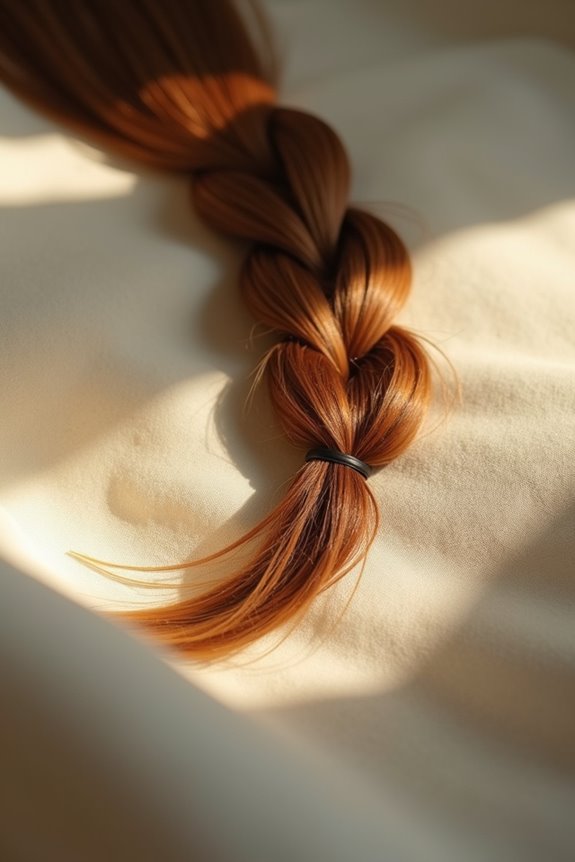
When you pull your hair back consistently into ponytails or braids, you’re putting chronic tension on your hair follicles. This condition is called traction alopecia. The good news is that if caught early and your hairstyles are loosened, your hair can grow back since the damage is reversible rather than permanent balding.
To protect your follicles, consider these steps: switch to looser styles, use fabric-covered hair ties, and give your roots regular breaks from tight updos.
Tension-Induced Follicle Damage
How often do you wear tight ponytails or braids? Constant pulling on your scalp can damage hair follicles over time, leading to traction alopecia. This tension hair loss happens gradually as repeated stress weakens your roots.
Here’s what happens when you pull too tight:
- Follicle miniaturization: Roots shrink and thin along stressed areas
- Mechanical damage: Persistent tension breaks down follicle structure
- Permanent loss risk: Prolonged pulling can create lasting bald spots
The positive aspect is that early intervention works. If you reduce tension soon enough, your hair often regrows naturally. Your follicles are resilient when given relief.
Start protecting yourself today. Alternate your hairstyles, use soft fabric-covered elastics, and avoid excessive pulling. Small changes now prevent significant damage later.
Reversibility And Early Intervention
Traction alopecia is reversible if you catch it early. When you reduce tension on your hair follicles, they can bounce back. Many people regain healthy growth simply by switching to looser hairstyles and softer hair ties.
Timing matters significantly. The sooner you act, the better your results. If you’ve noticed thinning or hair loss from tight styles, don’t wait. Your hair follicles need relief now.
For long-term damage that has developed over years of tension, you might need medical help to stimulate regrowth. However, reversibility remains possible. The key is stopping the pulling immediately and giving your follicles time to heal. Your hair will respond to this change.
Heat and Chemicals: The Real Cause of Shedding in Long Hair
Ever notice more hair in your brush after using a flat iron or getting your hair colored?
That’s not coincidence. Heat damage and chemical processing are the real culprits behind excessive shedding in long hair. When you apply heat or chemicals, you’re weakening the keratin that holds your strands together. Longer hair means more damaged sections to snap off.
Here’s what weakens your strands:
- High heat temperatures break down protein bonds in your hair shaft
- Bleaching and coloring permanently alter hair structure, causing brittleness
- Repeated chemical treatments accelerate breakage along your entire length
The solution involves three key steps. Use heat protectants before styling to create a barrier between your hair and damaging temperatures. Lower your styling temperatures whenever possible; even a 50-degree reduction makes a difference. Space out chemical treatments so your hair has recovery time between processes.
Your longer lengths deserve protection. Small changes prevent major shedding. You’ll notice the difference when you’re gentle with your hair.
Why Your Hair Length Doesn’t Affect Your Growth Cycle
Your hair’s growth cycle operates independently of how long your strands are. Each follicle produces about one centimeter of new growth monthly during the anagen phase, whether you have a pixie cut or waist-length hair. The real factor affecting shedding isn’t length; it’s the natural cycle every strand goes through, which remains consistent regardless of whether your hair is short or long.
Hair Growth Cycle Basics
Why does long hair seem to shed more than short hair? The answer lies in understanding your hair growth cycle, not in the length itself. Your scalp contains over 100,000 follicles cycling through three phases:
- Anagen: Active growth lasting 2–5 years at roughly 1 centimeter monthly
- Catagen: Transition period spanning 2–3 weeks
- Telogen: Resting phase affecting about 8–9% of follicles
Here’s what matters: shedding occurs regardless of hair length. You’ll naturally lose 50–100 hairs daily. The biochemical processes governing your follicles don’t change when you grow or cut your hair. Longer strands simply remain visible longer after shedding, creating the illusion of increased hair loss. Your anagen status and shedding rate stay constant throughout your hair’s journey.
Length Does Not Influence Follicles
Growing your hair long doesn’t change how your follicles work. Your follicles operate on their own biological schedule, completely independent of hair length. Whether you’re sporting a pixie cut or waist-length locks, each follicle produces hair at the same growth rate; about one centimeter monthly.
The follicle itself doesn’t know whether your hair is short or long. It can’t sense length and adjust shedding rates accordingly. Your hair above the scalp is dead protein. That means keeping hair long won’t alter the biochemical processes controlling follicle health or miniaturization.
Genetic and hormonal factors drive hair loss patterns. Hair length simply doesn’t accelerate or slow these processes. What you’re actually experiencing is perception, not biology.
Shedding Remains Consistent Regardless
When you find a handful of hair in your shower drain, it’s natural to wonder if your longer locks are the culprit. Here’s the truth: your hair shedding rate stays constant regardless of length.
You shed 50 to 100 hairs daily. Your hair growth cycle progresses at the same pace for everyone. Length doesn’t speed up or slow down this process.
What changes is visibility:
- Long strands appear more noticeable in drains
- Shorter hair blends into your brush more easily
- Clumps feel heavier when wet
That bundle you’re seeing? It’s redistribution, not increased loss. Your 18-inch hair simply takes up more space than shorter lengths. Understanding this difference helps you stop worrying and start appreciating your hair’s natural cycle. You’re shedding normally.
7 Science-Backed Ways to Reduce Shedding in Long Hair
If you’ve noticed more hair in your shower drain lately, you’re not alone. The good news is that you can actually control how much shedding you see. While your daily shedding rate stays consistent, you can minimize visible hair loss through intentional care practices.
1. Loosen tight hairstyles to prevent traction alopecia, which damages follicles over time.
2. Detangle gently using a wide-tooth comb; avoid harsh ripping that causes hair breakage.
3. Reduce heat exposure and apply heat protectants before styling.
4. Shampoo 2–3 times weekly with scalp-friendly products that support follicle health.
5. Skip harsh chemicals that weaken strands.
6. Apply lightweight oils for moisture without buildup.
7. Be consistent with these habits for lasting results.
Scalp Care That Reduces Shedding in Long Hair
Your scalp’s health directly impacts how much shedding you’ll notice in your long hair. When your scalp thrives, you’re managing shedding visibility at its source.
What transforms your scalp care routine:
- Gentle cleansing 2–3 times weekly with balanced shampoo prevents oil buildup that traps shed hairs
- Regular light oil treatments (coconut or argan) strengthen hair and reduce protein loss
- Healthy scalp environment minimizes greasy roots where shedding becomes most visible
Think of your scalp like soil. Healthy soil grows stronger plants. Your scalp care directly affects your long hair health and reduces how noticeable shedding becomes.
You’re not just washing hair. You’re investing in the foundation that prevents excessive breakage and supports follicle strength from within.
When to See a Dermatologist About Hair Loss
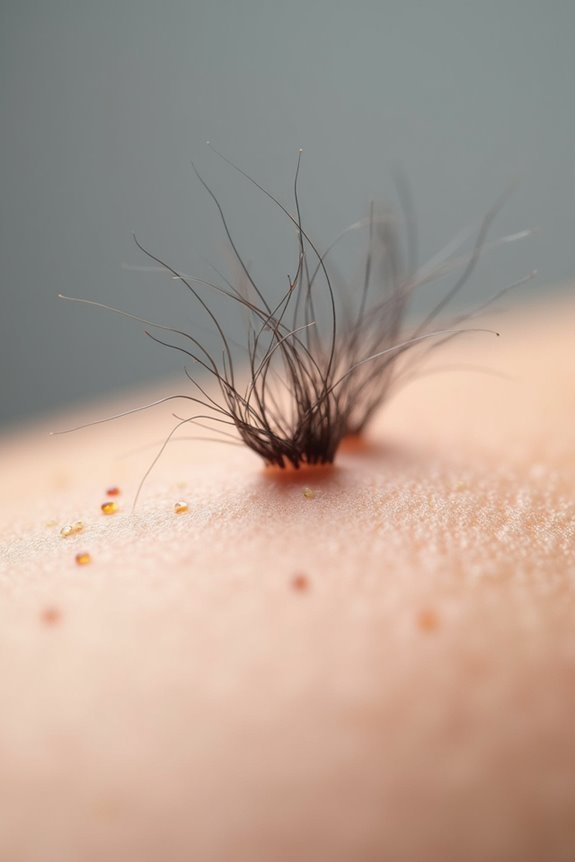
If you’re noticing sudden clumps in your brush or visible patches on your scalp, it’s time to schedule an appointment with a dermatologist. While normal shedding is expected, persistent loss lasting more than 6 to 12 weeks, especially if accompanied by fatigue or scalp sensitivity, signals an underlying condition that deserves professional attention. A dermatologist can run targeted tests and create a treatment plan tailored to your specific situation, whether that’s addressing thyroid issues, hormonal imbalances, or starting medical therapies like minoxidil.
Signs Of Concerning Loss
When does normal shedding cross the line into something that needs medical attention? You’ll find the answer by watching for specific changes in your hair loss patterns.
Normal daily shedding ranges from 50 to 100 hairs, so don’t panic over a few strands. However, certain signs warrant professional evaluation:
- Sudden bald spots or patchy areas appearing within days or weeks
- More than 10% of hairs in telogen effluvium phase, indicating prolonged shedding cycles
- A home pull test yielding over 2 to 3 hairs per gentle tug
Additional red flags include diffuse thinning spreading across months, new scalp lesions, redness, or scaling. These changes suggest your hair needs assessment from a dermatologist. Underlying causes such as thyroid disease, nutritional deficiencies, and autoimmune conditions deserve targeted testing. Don’t wait; early evaluation prevents further progression.
Professional Evaluation And Treatment
How do you know if it’s time to bring in a professional? When you notice sudden clumps, patchy areas, or excessive shedding beyond normal daily loss, it’s worth scheduling an appointment.
A dermatologist performs a professional evaluation to identify what’s actually happening. They’ll examine your scalp and ask about your styling habits, recent stress, and medical history. This helps them distinguish between conditions like telogen effluvium (stress-related shedding) and traction alopecia (damage from tight styles).
Your clinician may order blood tests checking thyroid function, iron levels, and vitamin D. Treatment options vary by diagnosis: topical minoxidil, low-level laser therapy, or surgical procedures like FUE.
Early intervention matters significantly. The sooner you address traction alopecia, the better your chances of reversing it through style changes and proper care.
Your 5-Step Plan for Strong, Healthy Long Hair
Now that we’ve cleared up the shedding myth, let’s focus on what actually matters: keeping your long hair strong and healthy.
You’re part of a community that values good, resilient locks. Here’s your actionable plan:
- Detangle gently using wide-tooth combs on damp hair to prevent breakage that mimics shedding
- Limit heat styling and use protective products when you do blow-dry or straighten
- Nourish from within by eating iron and protein-rich foods that support your hair growth cycle
Consistent scalp hygiene keeps your follicles thriving. Trim every 8-12 weeks to prevent split ends from traveling upward. This isn’t about stopping normal shedding; you’ll still lose 50-100 hairs daily. Instead, you’re minimizing visible damage and breakage that makes shedding appear worse.
Your long hair care routine compounds over time. Small daily habits create noticeable results.