
Layered curly hair thrives when you match your cut to your curl pattern. Dry-cutting allows you to see how each curl actually springs, so you can place shorter layers at your crown to lift weight and prevent that heavy, triangular shape.
Lightweight, silicone-free products paired with diffuser drying or plopping techniques keep curls bouncy and separated.
Schedule trims every 6 to 8 weeks to maintain freshness. The specifics shift depending on your curl type and maintenance approach.
Understanding How Layers Add Movement to Curly Hair
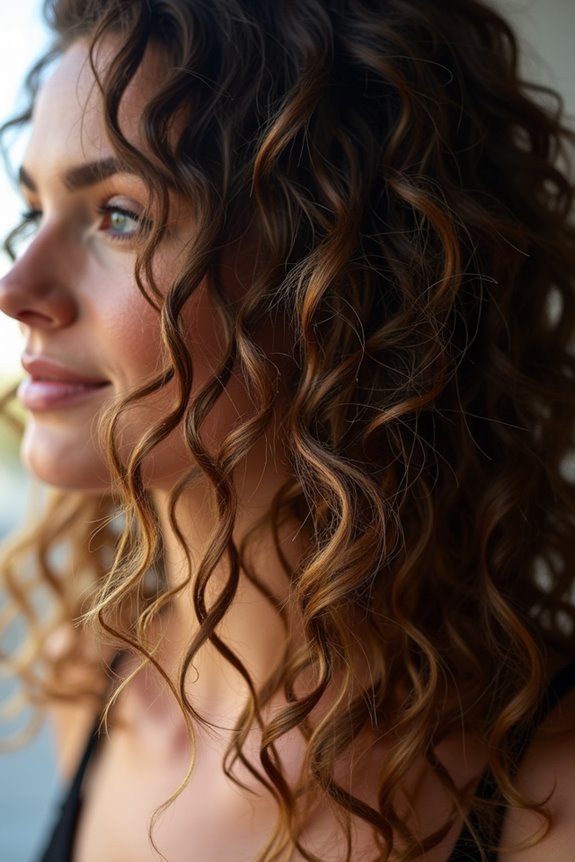
Ever wonder why some curly haircuts look flat while others seem to bounce with life? Layering is the answer. A layered cut removes weight from heavy sections, allowing your curls to spring up freely. When hair stays thick throughout, curls get weighed down and lose their natural bounce.
Layering distributes curl energy evenly across your head. This prevents that triangular shape and lets your curly hair move as intended. Shorter layers on top and around your face create a rounded silhouette, making your layered curls appear more defined and voluminous.
Layering distributes curl energy evenly, preventing triangular shapes and creating the rounded silhouette your curls deserve.
When you get a layered cut, you’re giving your curls the space to be themselves. Each curl can express its own movement without competing for room.
Choose Layer Placement to Maximize Crown Volume
Where you place your layers matters more than you might think. I position layers above the crown to remove weight and create lift at roots; this is where the results happen. For dense curls, I use shorter top layers with longer underneath pieces to prevent that bottom-heavy look while building height exactly where you want it.
I rely on dry-cut techniques to see how your natural curls fall. This helps me keep crown volume intact. Face-framing layers near your crown disperse weight evenly, encouraging curls to spring upward rather than flatten against your scalp.
The result is layered curls that move beautifully with genuine dimension. Schedule trims every 6–8 weeks to maintain that crown lift and prevent heavy regrowth from weighing you down.
Dry Cutting: Reading Your Curl Pattern Before the Scissors

Placing layers strategically sets the foundation, but I can’t actually see how your curls will move until I cut them in their natural state. That’s where dry-cutting comes in; it’s how I understand your true curl pattern.
When you arrive with cleansed, dry hair, I can watch how each curl springs and stacks naturally. This reveals exactly where your volume peaks and how your layers will settle. I’m not guessing anymore. I’m reading your curls’ actual behavior.
For longer hair, cutting the night after washing works perfectly. Your curls have fully settled by then, showing me their real movement preferences. I can then tailor layering to enhance your volume while preserving length. The result is a balanced silhouette that moves beautifully with your unique curl pattern.
Know Your Curl Type Before Planning Depth

How deep should your layers go? That depends entirely on your curl type. Understanding whether you’re working with Type 3 curls matters. A lot.
Your curl type determines how layers will affect your overall movement and volume:
- Type 3A and 3B curls need lighter, shorter top layers to prevent flattening
- Type 3C curls benefit from strategic mid-length removal for definition
- Denser curl patterns require careful layer placement to maintain bounce
- Face-framing layers work best when tailored to your specific curl structure
When you know your curl type, you’re not guessing anymore. You’re making intentional choices about your layered haircut. Heavier curls respond differently than looser patterns. Your stylist can position each layer to enhance your natural spring rather than weighing you down. This approach helps your curls actually move the way you want them to.
Lightweight Products That Won’t Compress Curls

Once you’ve nailed your layered cut, the right products become your concealed asset for maintaining that beautiful movement and volume.
I’ve found that lightweight products like foams, gels, and mousses work best for layered curls. You’ll want alcohol-free formulas with water-based carriers that won’t dry out your strands. Silicone-free blends protect your hydration and prevent buildup that flattens those gorgeous layers over time.
| Product Type | Best For | Application |
|---|---|---|
| Gel-foam hybrid | Defined curls with movement | Mid-length to ends |
| Lightweight mousse | Root volume | Scrunch gently |
| Water-based gel | Hold without crunch | Diffuse on low heat |
| Alcohol-free foam | Bounce and shape | Layer application |
Apply products from mid-length to ends, then lightly scrunch or diffuse on low heat. This approach preserves your volume without flattening back-layers.
Protect Against Over-Layering and Frizz
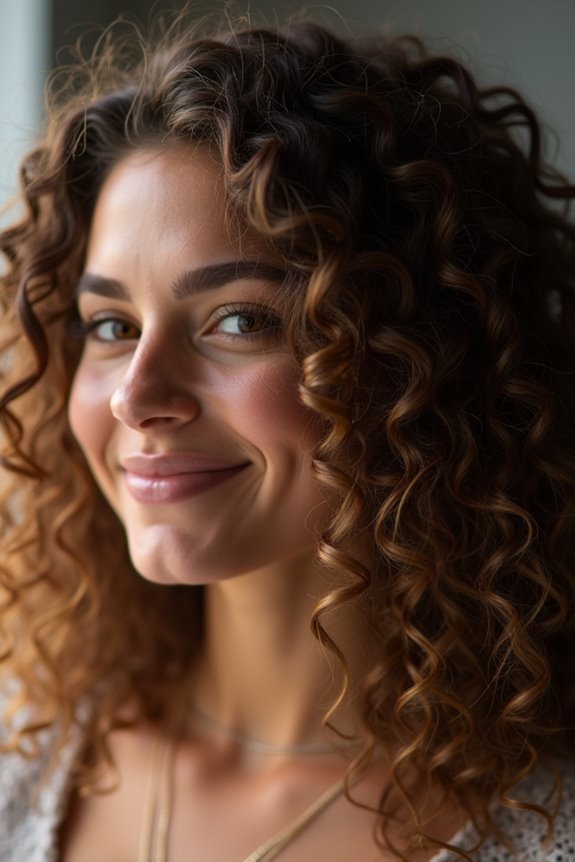
While lightweight products keep your curls bouncy, the real challenge is preventing layers from working against you. Over-layering creates too much weight distribution, disrupting your natural curl pattern and inviting frizz. Strategic layering, not excessive cutting, gives you the movement and volume you’re after.
To protect your layered curls:
- Schedule trims every 6 to 8 weeks to maintain shape and prevent split ends
- Dry-cut with curls in their natural state for proper layer placement
- Keep moisture levels high with hydrating products and consistent routines
- Avoid cutting too many short layers that fragment your curl pattern
Your layered curls thrive when you balance reduction with retention. The key is understanding that less aggressive layering often produces better results than heavy cutting. Work with a stylist who respects your curl pattern and takes time to assess how each layer will interact with your natural texture. This thoughtful approach prevents the fragmentation that leads to frizz and loss of definition.
Activate Volume: Scrunching, Plopping, and Air-Dry Positioning
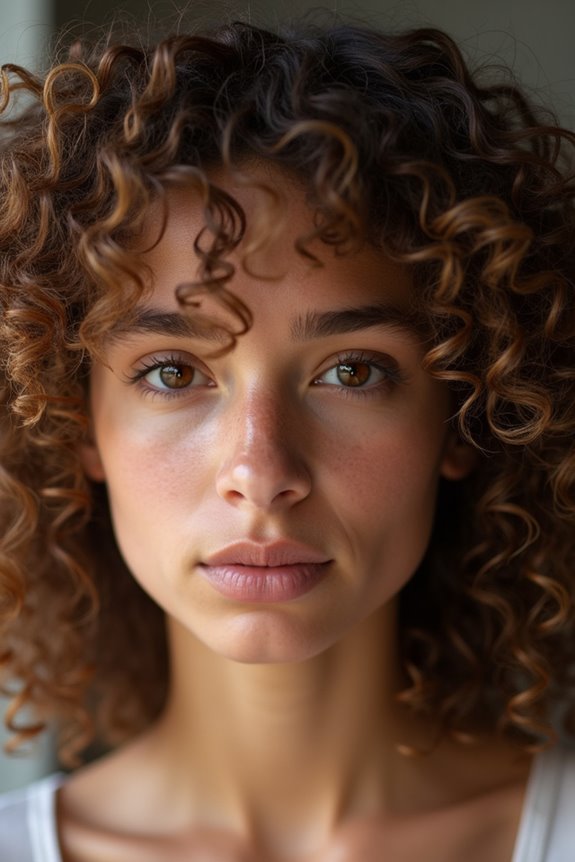
Now that you’ve protected your layers from frizz, it’s time to boost movement and fullness with targeted techniques. Scrunching with styling products, plopping with microfiber towels, and strategic air-dry positioning work together to lift your roots and define each curl. These methods build damp hair into voluminous, shapely curls that showcase your layered cut.
Scrunching Techniques For Volume
How do you transform limp, flat curls into bouncy, voluminous layers? Scrunching is your answer. I lift and curl strands upward from ends toward roots, encouraging natural formation and lift throughout my layered curls.
Here’s my scrunching method:
- Apply curl-defining products to damp mid-lengths and ends
- Scrunch upward in small sections, squeezing gently
- Use a diffuser on low-medium heat while scrunching
- Focus on mid-lengths to create layered volume above the crown
The diffuser enhances root lift without flattening my curls. I scrunch repeatedly during air-drying and tilt my head forward to prevent crown collapse. This targeted technique builds dimension and movement. When I combine scrunching with proper products and positioning, my layered curls develop that bouncy, defined shape I’m looking for.
Plopping Methods And Benefits
After scrunching your curls into shape, plopping builds on that foundation for enhanced volume. I wrap my damp, conditioner-coated curls in a microfiber towel or soft cotton T-shirt for 10–20 minutes. This technique gently lifts curls at the roots while reducing frizz naturally.
What makes plopping effective? It preserves your curl pattern by keeping strands in their natural position. Unlike rough towel-drying, plopping minimizes disruption to your layered curls’ structure.
I’ve noticed scrunching while the fabric’s still wrapped helps set definition and encourages uniform curl distribution. Combined with strategic airflow positioning afterward, plopping delivers noticeable volume without heat damage.
For anyone seeking movement in layered curly hair, plopping converts your drying routine into a volume-boosting ritual that produces consistent results.
Air-Dry Positioning Strategies
Once you’ve plopped your curls, strategic positioning during the air-dry phase determines whether your layered curls settle flat or spring up with volume. How you position your damp hair matters just as much as the plopping itself.
What works for maintaining that lift:
- Flip-flop between scrunching upward and gentle lifting motions
- Keep your head position varied; don’t rest it in one spot
- Use lightweight gel or mousse while hair’s still damp
- Avoid touching or brushing until completely dry
The key is consistency. When you alternate scrunching and lifting throughout air-dry, you’re training your layered curls to hold their shape. This approach distributes volume evenly across your crown and back, creating that movement you’re after without extra heat damage.
Diffuser Drying for Defined, Bouncy Curls

Diffuser drying consistently improves how your curls look and feel. Using low to medium heat with a scrunching motion enhances curl definition while minimizing frizz across layered curls. Before diffusing, apply a lightweight styling product or leave-in conditioner to each section. This prevents clumping and maintains separation between curls.
Position your diffuser at the curl ends, then lift toward your scalp. This creates volume at your crown and prevents the flat-back issue many people experience. Diffuser drying takes longer than air drying, but the results deliver more defined, bouncy curls with reduced bulk. Your layered curls gain movement and dimension that showcases your cut effectively.
Keep Layers Fresh With Strategic Trims
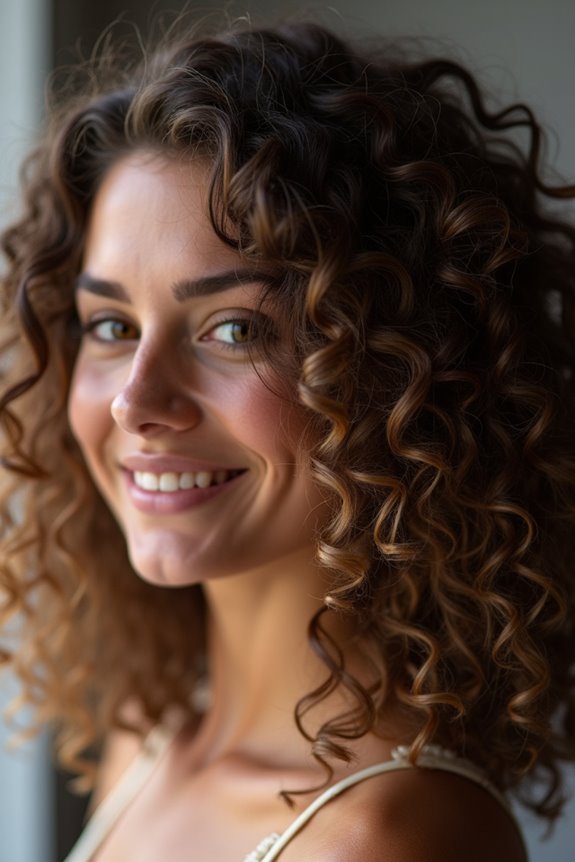
I’ve found that scheduling trims every 6 to 8 weeks is essential for maintaining your curl layer definition and preventing that shapeless, grown-out look. You’ll want to focus trims on reshaping the back strategically; restoring balance without cutting overall length allows your layers to blend seamlessly and maintain that cohesive silhouette. Regular maintenance prevents bulk from weighing down your curls, which means you’ll retain the lift and movement you’ve worked hard to achieve with proper drying techniques.
Trim Frequency For Curls
How often should you actually trim layered curls to keep them looking their best? I recommend scheduling trims every 6 to 8 weeks to maintain your layered curls’ shape and prevent uneven growth.
Here’s why consistent trim frequency matters:
- Prevents layers from weighing down your curls with excess length
- Keeps back layers thick and prevents thinning throughout your cut
- Refreshes volume and restores bounce between seasons
- Eliminates tangling buildup that dulls curl definition
Regular trims work with your layered curly hair’s natural growth patterns. When you maintain this schedule, you’re actively preserving the movement and dimension your stylist created. Point-cut or dry-cut techniques during these appointments protect your curl pattern while removing weight strategically. This consistent maintenance keeps your layers balanced, defined, and free from flat or puffy sections that compromise your overall volume.
Maintaining Layer Shape Definition
Beyond keeping a regular trim schedule, you’ll want to focus on what happens between those appointments. Your layered curls need consistent care to preserve their movement and volume.
Detangle gently from ends toward roots. This preserves your curl pattern while preventing breakage that dulls layer definition. Use silicone- and sulfate-free products designed for curls; they sustain moisture and keep layers crisp.
Between trims, volumizing foams and mousses support layer lift without weighing down your cut. Apply these to damp hair, focusing on roots and mid-lengths where movement matters most.
Think of maintenance as protecting your investment. Strategic styling keeps your layer shape sharp, so your curls stay defined and bouncy until your next appointment.
Preventing Bulk And Heaviness
When do your layered curls start feeling heavy instead of bouncy? That’s your sign you need strategic maintenance trims. Regular trims every 6 to 8 weeks keep your layered curls fresh and prevent bulk from reforming.
Here’s how to maintain healthy weight distribution:
- Schedule shorter touch-up trims after major growth phases
- Use dry-cut techniques so your stylist sees natural curl fall
- Target mid-lengths to ends where weight accumulates most
- Avoid cutting near roots to sustain volume on top
A curl professional can use strategic thinning or light point-cutting to reduce heaviness without sacrificing your length. This approach prevents pyramid or triangular silhouettes while keeping your layers defined. Your maintenance trims should focus on refreshing shape, not removing inches. That’s how you keep movement alive in your curls.
Adjust Layer Intensity for Your Curl Type
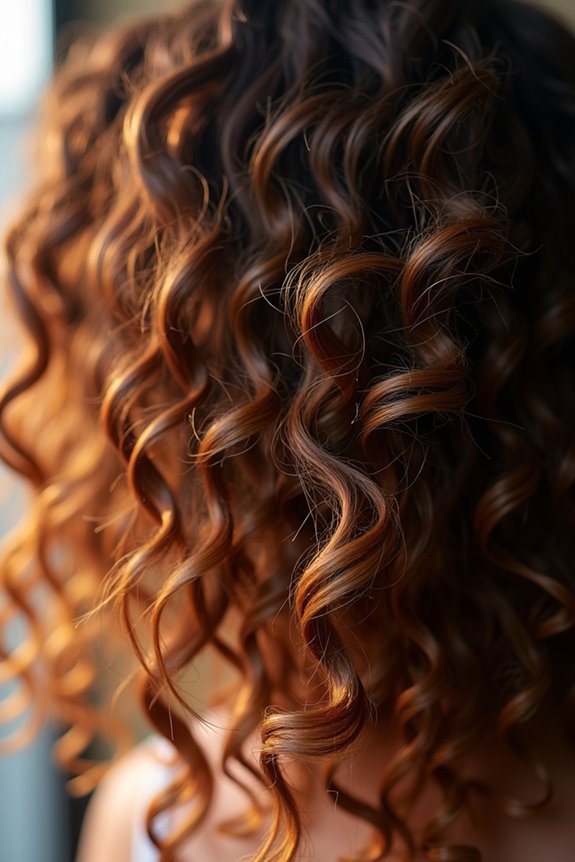
Why does the same layering technique fall flat on some curls but work beautifully on others? Your curl type requires specific layer intensity to create real movement and volume.
Tighter curls, such as 3B and 3C patterns, need shorter, frequent layers. This reduces weight that would otherwise collapse your curls and diminishes root lift. Shorter layers allow each curl to spring independently, creating the fullness you want.
Looser curl patterns can handle longer top layers without sacrificing lift. These curls naturally hold their shape, so you gain dimension while keeping definition intact.
Back layers deserve special attention. Deeper back layers add movement beautifully, but balance them with mid-length and front sections. This prevents that heavy, bottom-weighted look that flattens volume.
Match your layer intensity to your curl’s natural pattern. You’ll see the results immediately.