Low porosity hair shows a glossy, glass-like shine from tightly sealed cuticles that lay flat against your strands. You’ll notice water beads and rolls off rather than soaking in, and products sit on your surface instead of penetrating deeply. Your hair takes 10–15 minutes to wet and 4–6 hours to air dry.
Despite the shine, your ends feel dry while roots get heavy with buildup. Understanding these visual markers helps you choose the right techniques.
Spot the Shiny, Sealed Cuticles
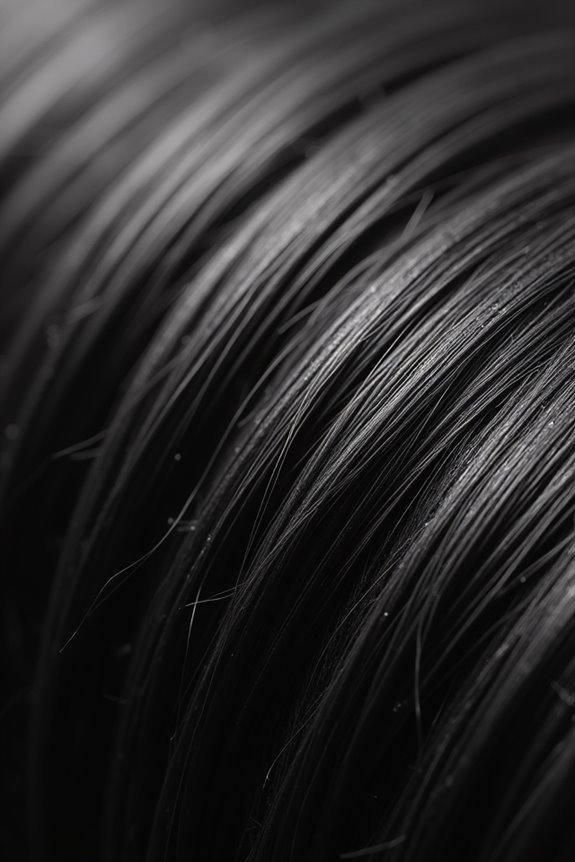
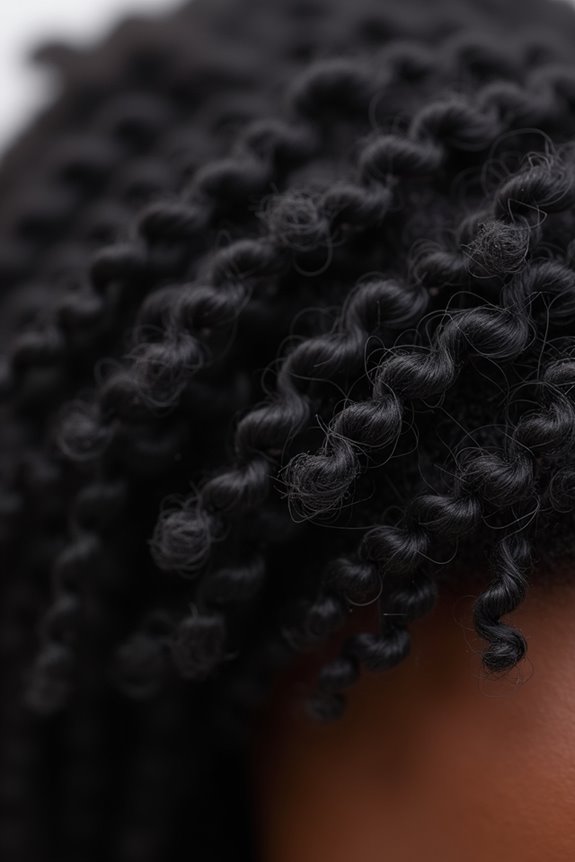
When you’re trying to identify low porosity hair, the first thing you’ll notice is its distinctive shine. That glossy appearance comes from tightly sealed cuticles that lay flat against each strand. These sealed cuticles reflect light beautifully, creating that sleek, glassy look you might admire.
Low porosity hair’s distinctive shine comes from tightly sealed cuticles that lay flat and reflect light beautifully.
Here’s what this means for your hair: your cuticle structure is excellent at moisture retention. Water and products sit on your hair’s surface rather than penetrating deeply. You’ll likely experience less frizz since those cuticles stay tightly closed.
The trade-off involves product buildup becoming visible quickly. You may notice residue coating your strands after styling. Your ends might feel dry despite your hair’s shiny appearance. Understanding this sealed-cuticle characteristic helps you choose appropriate low porosity treatments.
Understand Why Water Beads Off Your Hair
Have you ever noticed water rolling off your hair like tiny marbles instead of soaking in? That’s water beading, and it’s the hallmark of low porosity hair. Your hair’s porosity determines how well it absorbs moisture. When your cuticles lie flat and tight, water can’t penetrate easily. Instead, droplets sit on the surface, rolling right off.
This happens because low porosity hair has a sealed structure. Moisture absorption becomes difficult, so water beads rather than absorbs. Here’s what you’re experiencing:
| What Happens | Why It Occurs | What You’ll Notice |
|---|---|---|
| Water beading | Tightly sealed cuticles | Droplets rolling off |
| Slow absorption | Low porosity structure | Extended wetting times |
| Surface coating | Product buildup | Slightly dry feeling |
| Moisture retention | Sealed cuticles trap water | Shiny appearance |
Understanding this characteristic helps you choose better hair care strategies. When water beads off your hair, it signals that your cuticles are closed tightly. This sealed structure prevents moisture from entering the hair shaft. While this can make it challenging to hydrate your hair, the same mechanism also helps retain moisture once it does penetrate. Recognizing your hair’s porosity level allows you to select products and techniques that work with your hair’s natural structure rather than against it.
Recognize When Product Sits on the Surface Instead of Absorbing
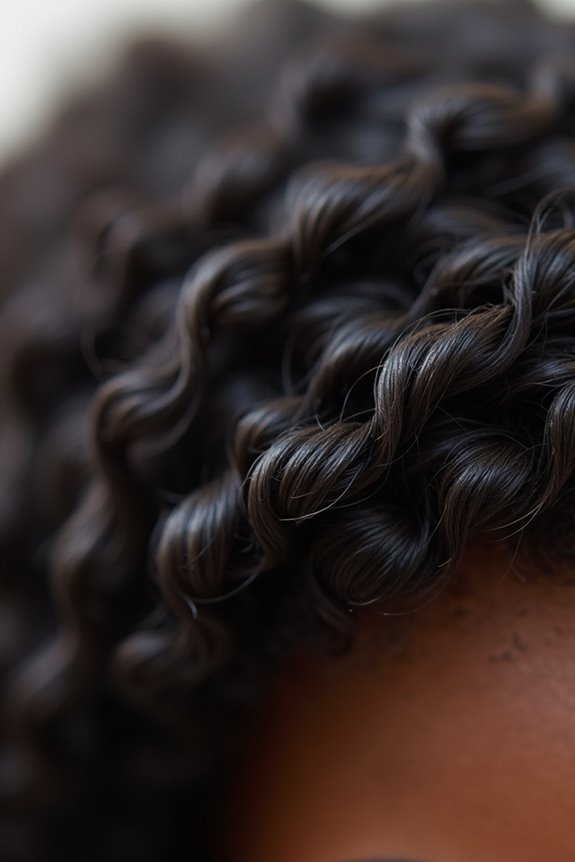
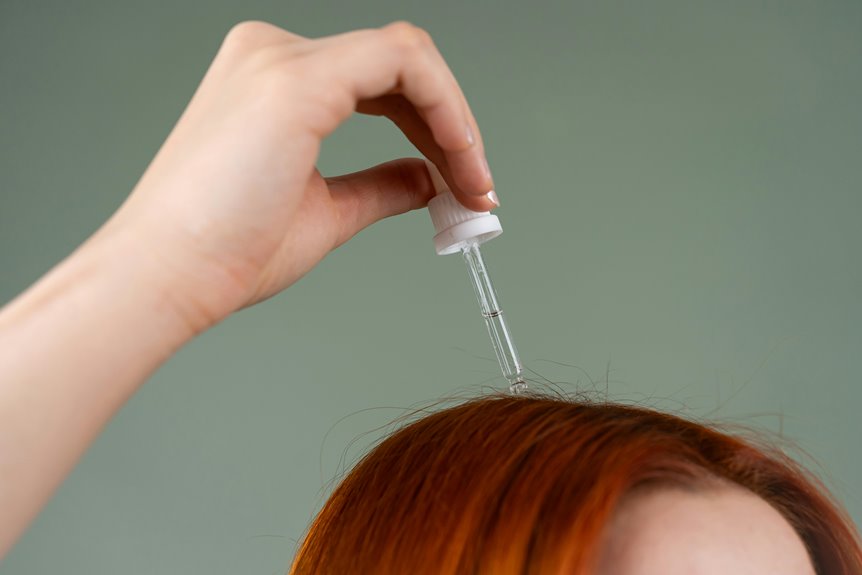
I’ve noticed that when I apply leave-in conditioners or oils to low porosity hair, they often sit on the surface instead of soaking in. This leaves my ends feeling tacky and my strands looking greasy and weighed down. You might experience this buildup yourself: your hair feels heavy, appears shiny on the surface, yet remains dry at the ends, and products transfer easily to your fingers when you touch them. This surface-level product presence signals that absorption isn’t happening the way it should, which we’ll explore next.
Product Buildup Signs
Product Buildup Signs
Because low porosity hair struggles to absorb moisture, products tend to accumulate on the surface rather than penetrate deeply into your strands.
You’ll notice product buildup when your hair feels heavy or coated after washing. Your strands might appear shiny yet feel stiff and unmanageable. This surface residue comes from silicones, oils, and butters that sit on top instead of absorbing.
Check if products transfer from your hair to your fingers or bathroom surfaces. That’s a clear sign they’re not penetrating. You’ll also experience persistent tangling and reduced manageability because buildup creates a barrier.
If you’re reaching for a clarifying shampoo frequently, your hair’s telling you something. This practical indicator suggests you need deeper cleansing to remove accumulated residue and restore your hair’s ability to absorb moisture.
Surface Vs. Absorption
When you apply product to low porosity hair, where does it actually go? Your strands likely show products sitting on the surface rather than absorbing deeply. You’ll notice your hair feels greasy or heavy after styling, even with lightweight formulas. This happens because your hair’s cuticles lay flat, blocking moisture penetration. Water takes longer to wet your strands and considerably longer to dry completely.
The real challenge involves surface buildup that accumulates from oils and butters that don’t sink in, making your hair look coated and dull. You might notice shine near your roots but dry, brittle ends, a telltale sign moisture isn’t reaching where it matters most. Clarifying treatments help reveal true absorption by removing residue that masks your hair’s actual porosity level.
Greasy Weighted-Down Hair
Ever wondered why your hair looks shiny and feels heavy even after you’ve just washed it? That’s low porosity hair in action. Your strands have a tightly closed cuticle layer, so products sit on the surface instead of absorbing. This creates surface buildup that makes your hair feel slick and coated.
You’ll notice this grease problem most at your roots and mid-lengths. Even lightweight products feel like too much. The culprit is simple: your hair can’t drink in moisture the way it should. Leave-in conditioners and oils linger on top rather than penetrating.
Try clarifying regularly. This removes buildup and helps you see what’s truly happening with your hair. You might discover that what feels greasy isn’t always your hair’s natural oil; it’s trapped product.
Test at Home: The Float and Spray Methods
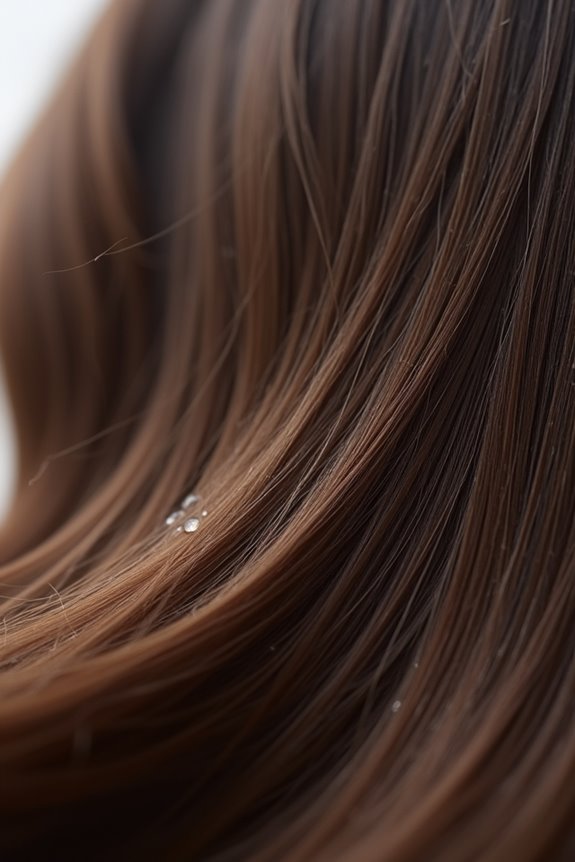
Determining your hair’s porosity doesn’t require a trip to a salon. You can discover it yourself using two simple, reliable tests.
Determine your hair’s porosity at home using two simple, reliable tests—no salon visit required.
The float test works like this: place a single hair strand in room-temperature water. If it floats, you likely have low porosity hair. Water sits on your strand’s surface rather than soaking in quickly.
Next, try the spray test. Mist clean, dry hair with water and watch closely. Low porosity hair repels water; droplets bead up and roll off instead of absorbing. Your strands stay relatively dry initially.
Both methods are quick and accessible. Keep in mind that results vary by strand location. You might find different porosity levels across your head, so test multiple areas for accurate results.
Notice Slow Wetting and Extended Drying Times
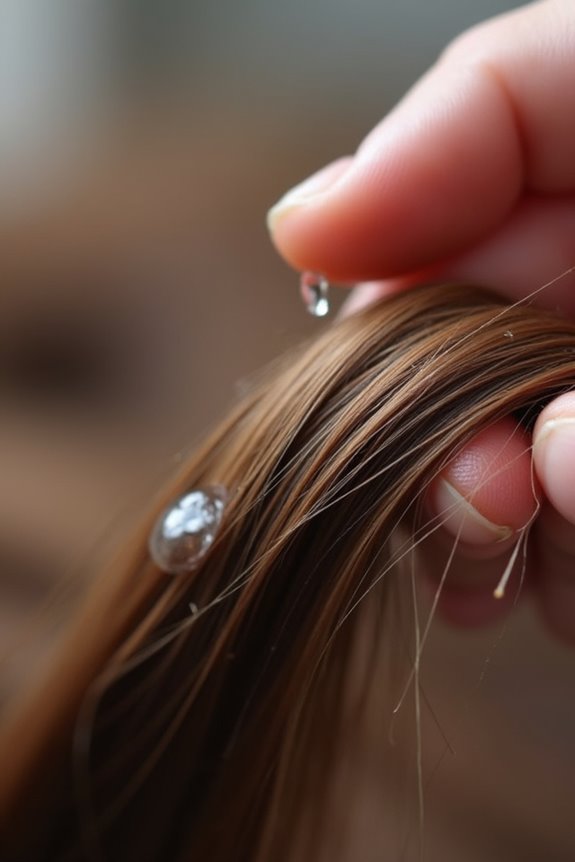
Have you ever noticed your hair takes forever to get fully wet? That’s a classic sign of low porosity hair. When you shower, water beads up on your strands instead of soaking in. Your cuticles are tightly sealed, creating a barrier that resists moisture penetration.
| Characteristic | What Happens | Timeline |
|---|---|---|
| Wetting process | Water beads on surface | 10-15 minutes |
| Air drying | Moisture evaporates slowly | 4-6 hours |
| Blow drying | Still takes longer | 20-30 minutes |
| With heat/steam | Speeds up absorption | 2-3 hours |
This extended drying time frustrates many people. Understanding your hair’s behavior helps you develop better routines. Heat and steam can shorten drying times by helping moisture penetrate deeper. Without these tools, patience becomes necessary when managing low porosity strands.
See Why Volume Fails and Hair Feels Heavy
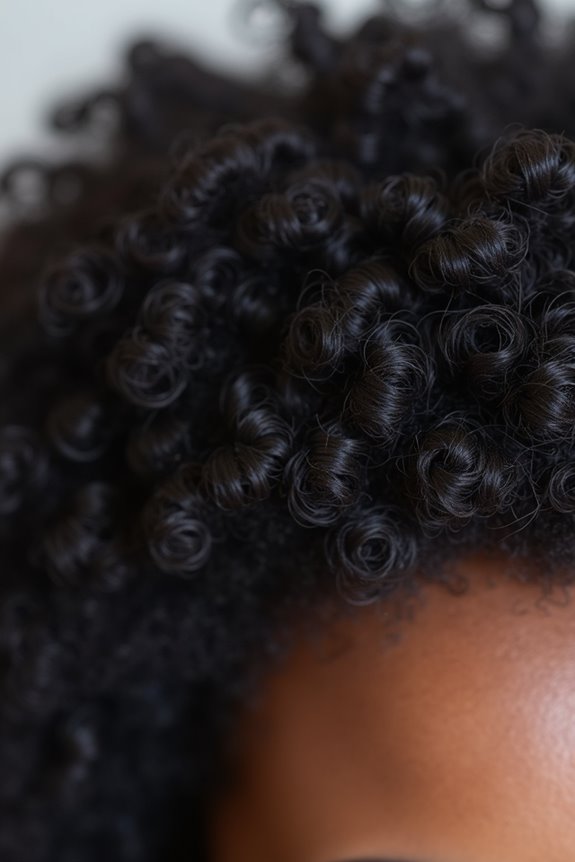
Beyond the extended drying times, low porosity hair creates another frustrating challenge: it’s incredibly hard to achieve volume. Your tightly sealed cuticle prevents products from absorbing properly, so they sit on the surface instead. This buildup weighs your hair down, making lift nearly impossible even after styling.
You’ll notice your strands feel stiff or heavy after washing. That weighed-down sensation comes from product accumulation that your hair can’t absorb. Your cuticles stay so tightly closed that moisture and styling products can’t penetrate deeply.
The result is flat, limp hair that resists fullness. You’re not alone in this struggle. Understanding why your volume goals feel out of reach helps you choose better techniques and products tailored to your low porosity needs.
Recognize Glossy Texture as a Telltale Sign
Recognize Glossy Texture as a Telltale Sign
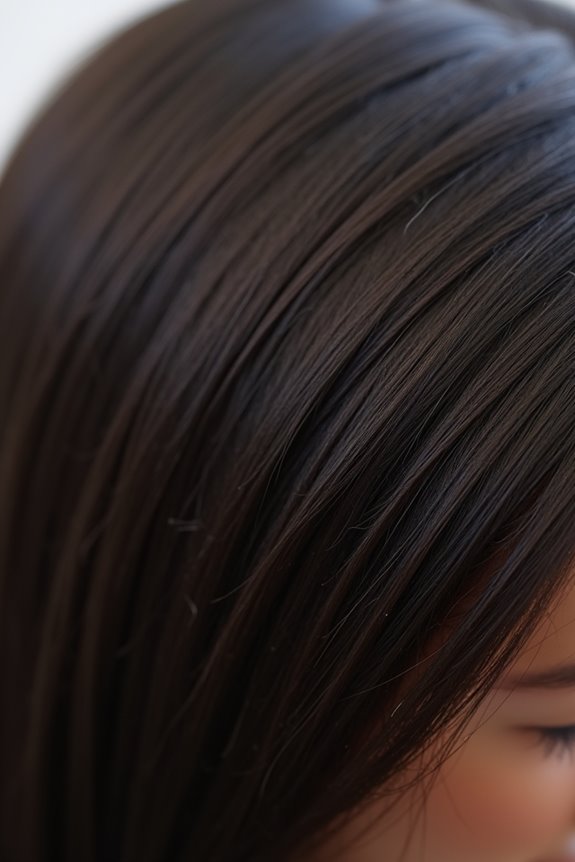
Why does your hair look so shiny even when it feels dry? That glossy appearance is actually a hallmark of low porosity hair. Your cuticle tightness creates that sleek, reflective surface you’re seeing. Because your cuticles lie flat, they resist moisture absorption while reflecting light beautifully.
Here’s what you’re noticing: your strands appear frizz-free and polished, yet your ends feel stiff or parched. This contradiction of low porosity involves surface shine masking internal dryness. Product buildup intensifies this glossy look since heavier formulas sit atop your strands instead of penetrating. Additionally, natural oils travel slowly down your hair shaft, concentrating at the scalp and reinforcing that oily, shiny appearance.
Identifying this visual sign helps you recognize your hair type with confidence.
The Paradox: Your Hair Holds Moisture but Won’t Absorb It
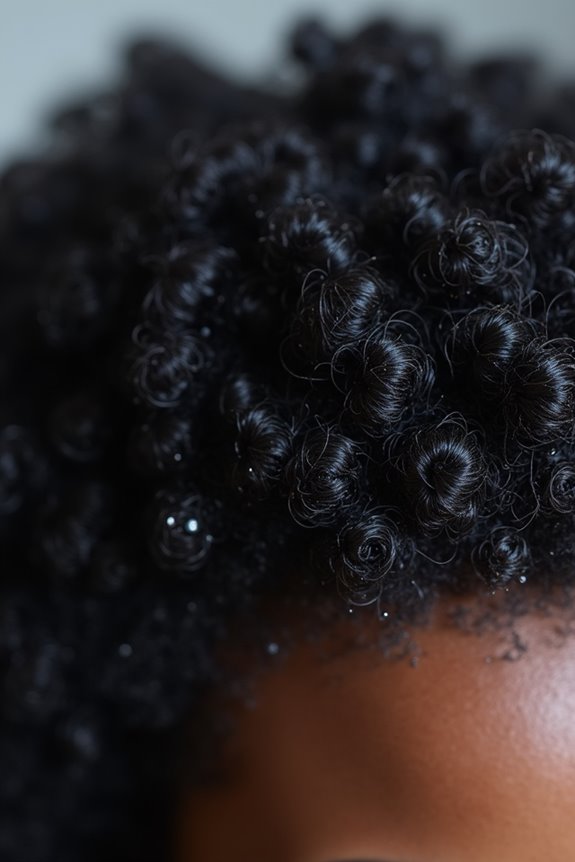
You’ve probably noticed this frustrating reality: your hair feels dry and stiff even after you’ve moisturized it thoroughly. That’s because your tightly sealed cuticles won’t let hydration penetrate deep into your strands, so moisture just sits on the surface instead. Once you understand this paradox (your hair resists absorption yet clings to whatever moisture does get through), you’ll realize why standard deep conditioning alone won’t solve your low porosity problems.
Moisture Retention Without Absorption
Your hair holds onto moisture once it’s inside the strand, yet resists letting that moisture in during the absorption phase.
Your cuticle tightness creates this frustrating cycle. Products sit on your surface rather than penetrating deeply. You’ll notice your hair feels greasy or weighed down even after styling, because moisture retention happens only when water actually gets inside, which takes time.
| Challenge | What Happens | Result |
|---|---|---|
| Slow absorption | Products linger on surface | Greasy appearance |
| Cuticle resistance | Moisture struggles to enter | Extended drying time |
| Heat response | Steam opens cuticles | Better penetration |
The key is not skipping heat treatments. Steam and warm water help release those sealed cuticles, allowing moisture to finally penetrate. Once inside, your hair grips that hydration firmly. This represents a genuine strength worth the wait.
Sealed Cuticles Block Hydration
The real problem isn’t that your hair can’t hold water; it’s that water can’t get in easily. Your sealed cuticles lay flat and tightly packed, creating a barrier that resists moisture uptake. When you apply water or products, you’ll notice water beading on the surface instead of soaking in immediately.
This sealed structure means hydration requires extra time or heat to penetrate. Once moisture finally breaks through, your hair holds it effectively, which is actually beneficial. You won’t need constant rehydration like other hair types do.
The challenge? Products tend to sit on top rather than absorb, leaving a coating feel. Understanding this mechanics helps you work with your hair’s natural resistance, not against it.
Is It Low Porosity or Just Product Buildup?
Is It Low Porosity or Just Product Buildup?
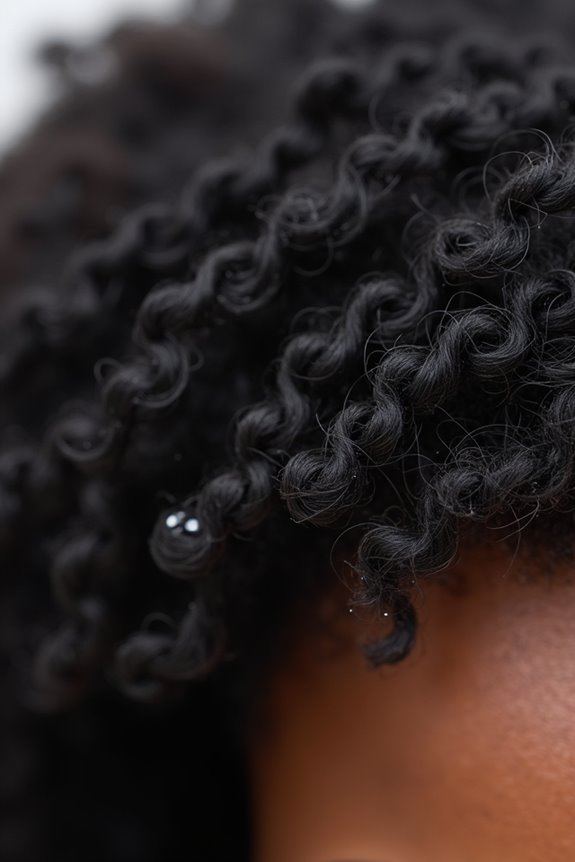
Have you ever wondered why your hair feels heavy and won’t absorb moisture, even though you’re conditioning regularly? You might actually have product buildup, not true low porosity. Here’s how to tell the difference.
| Buildup Signs | True Low Porosity |
|---|---|
| Oils transfer to hands | Water beads on surface |
| Improves after clarifying | Persists after clarifying |
| Heavy, shiny appearance | Slow absorption always |
Product buildup creates a surface coating that blocks absorption and mimics low porosity. When you clarify your hair, buildup resolves quickly. True low porosity shows water beading even after heating or extended conditioning.
Test yourself by clarifying thoroughly, then conditioning. If absorption improves and drying times normalize, you’ve identified the real issue: product buildup rather than inherent porosity problems. Regular clarifying treatments reveal your hair’s true characteristics.
How to Confirm Your Findings
Once you’ve ruled out product buildup, you’ll want to verify that you truly have low porosity hair before adjusting your routine. I recommend repeating multiple porosity tests over several weeks. Try the float test, spray test, and slide test together.
Pay attention to your hair cuticle’s behavior: does it consistently feel smooth and dense? Notice your absorption rate during each test. Water should bead and sit on your strands rather than soak in quickly.
Check different sections of your scalp and various hair strands. Variability happens naturally, but consistent results across multiple tests confirm low porosity.
Document what you observe. This confirmation helps you confidently select products and techniques that will work best for your specific hair needs.