Your hair looks thinner when wet because water saturates your strands, adding up to 30% weight that pulls them downward and causes clumping. This clumping makes your scalp more visible, amplifying that thin appearance. Additionally, wet hair reflects light uniformly, creating a sleeker, darker look that reduces volume perception.
The positive aspect is that this thinning is usually temporary. Once your hair dries, it typically regains its normal fullness. However, if thinning persists after drying or across different conditions, that’s worth monitoring further.
Why Your Hair Looks Thin When Wet
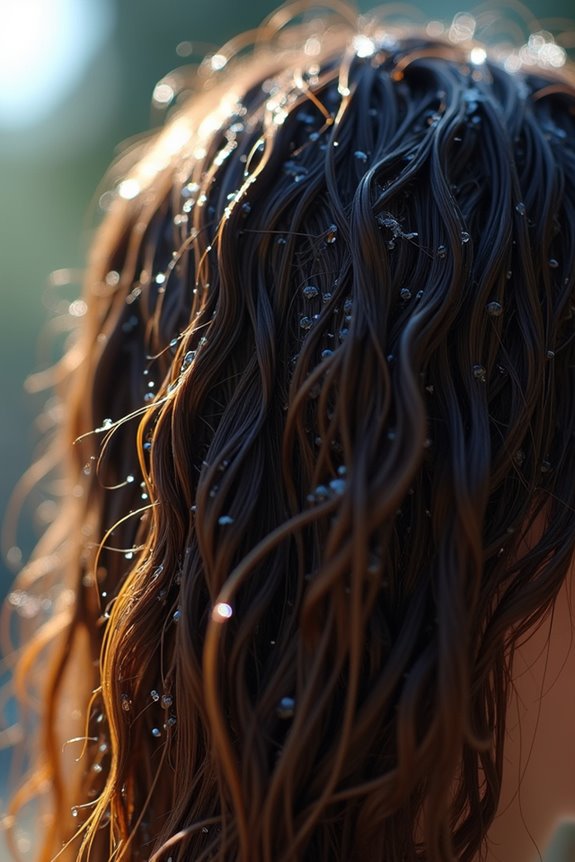
Ever noticed how your hair seems to disappear when you step out of the shower? You’re not alone, and there’s actual science behind it.
Hair seems to vanish when wet, but it’s just an optical illusion—not actual hair loss.
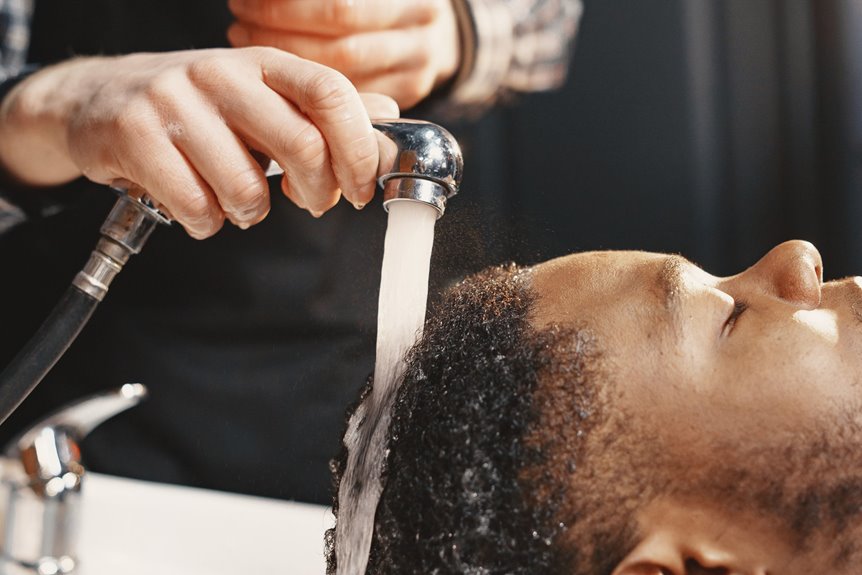
When your hair gets wet, water saturates those porous strands, adding up to 30% weight that pulls everything downward. This causes clumping, where individual hairs stick together instead of standing separately. The result is increased scalp visibility, making your hair look thinner than it actually is.
Light reflection also plays a role. Wet hair reflects light uniformly, creating a sleeker, darker appearance that amplifies the visual thinning effect. Combined with the weight dragging your hair flat against your scalp, this creates a powerful illusion of reduced volume.
Understanding these drying dynamics helps you recognize that what you’re seeing isn’t necessarily hair loss. It’s simply how wet hair behaves. Your actual hair thickness remains unchanged; the perception shifts with moisture levels.
The Science of Thinner-Looking Wet Hair
Why does wet hair cling to your scalp like it’s trying to disappear? Water absorption is the culprit. When you wet your hair, each strand absorbs water and becomes heavier, pulling downward and eliminating the loft you normally enjoy, especially if you have fine hair.
Light reflection plays a role too. Wet hair reflects light uniformly, creating a sleek appearance that looks thinner than your textured dry hair. Meanwhile, surface swelling from water exposure thins your hair’s outer layer, making scalp visibility increase noticeably.
Clumping intensifies the problem. Non-uniform wetting creates irregular gaps and patches across your head, contributing to that inconsistent, thinner overall look. Understanding these optical illusions helps you recognize that your hair’s actual volume hasn’t changed; only its appearance has temporarily shifted.
Is This Normal Thinning or a Sign of Hair Loss?
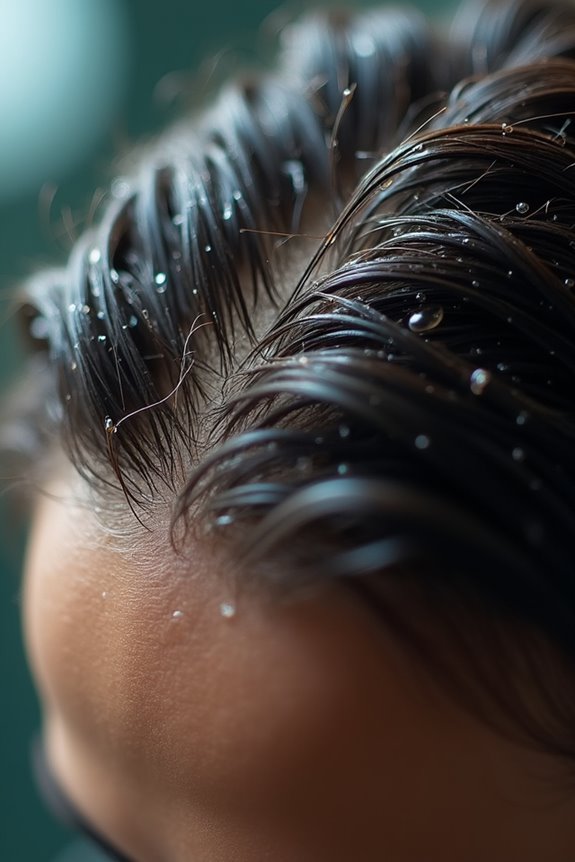
Now that you understand why wet hair looks thinner through optical illusions, you might wonder if what you’re seeing is actually normal or something to worry about.
Most thinning appearance from wet hair is temporary. Water weight and clumping flatten your strands, creating an illusion rather than revealing actual hair loss. Once you dry your hair, volume typically returns to normal.
However, watch for genuine hair loss signs. If your hair looks thinner even after drying, or you notice increased shedding, thinning spots, or changes in hair texture over weeks, consider consulting a dermatologist.
The key difference is this: real hair loss persists across various conditions, while wet hair appearance changes with your hair’s moisture level. Don’t panic about temporary changes. Focus on patterns instead.
How to Prevent Hair Breakage When Wet
Wet hair’s fragility might surprise you. When you shower, water weight increases your strands by up to 30%, causing them to hang heavier and break more easily. Hydrogen bonds weaken in wet hair, making each strand elastic and vulnerable to snapping.
Here’s how to protect your hair health during this delicate time:
Gentle Towel Drying
Blot and squeeze excess water instead of rubbing vigorously. This reduces mechanical stress on wet hair significantly.
Smart Detangling
Use a wide-tooth comb on damp hair, starting at the ends and working upward. This method minimizes breakage and handles hair thickness when wet more effectively.
Heat and Tension Avoidance
Skip high-heat styling and tight updos while wet. These amplify breakage risk considerably.
These practices maintain hair health and prevent unnecessary thinning.
Keeping Fine Hair Thick Between Washes
While protecting wet hair from breakage keeps your strands strong, managing fine hair’s appearance between wash days requires a different approach. You’re not alone in wanting fuller-looking hair throughout the week.
Here’s what I recommend:
- Use lightweight volumizing products that won’t add weight from water absorption or create clumping
- Avoid heavy conditioners that flatten fine hair and increase scalp visibility
- Detangle gently with a wide-toothed comb to preserve volume and minimize strand stress
Between washes, these practices help maintain thickness by reducing the weight that typically causes hair to droop. Lightweight volumizers give you lift without the heaviness of traditional products. Gentle detangling prevents breakage while keeping strands separated so they don’t cling together. This approach keeps your fine hair looking fuller and more voluminous until your next wash.