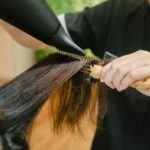
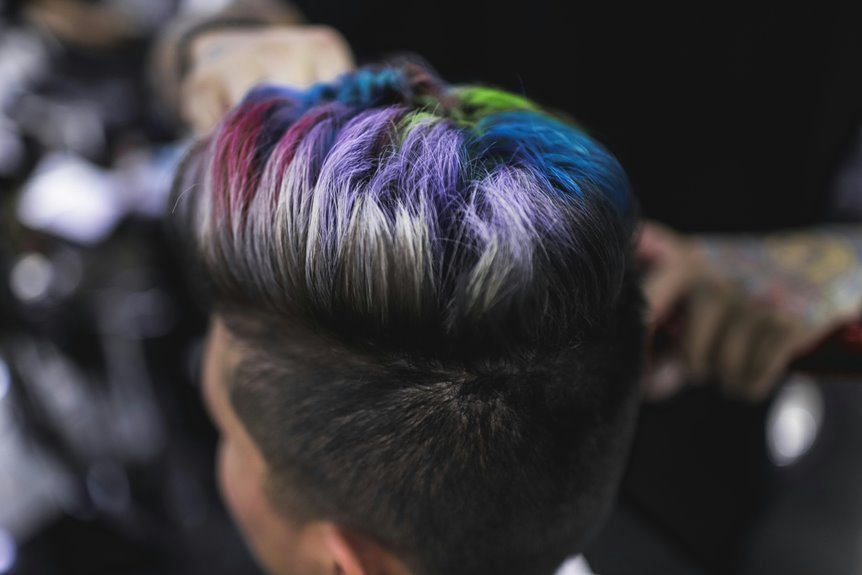
After coloring, wait 72 hours before basic blow-drying, a full week before straightening, and 15 days before curling or perming. If you need to style sooner, apply heat protectant spray to damp hair and keep temperatures between 200–300°F.
Select tools with ceramic tourmaline plates for even heat distribution.
Deep condition weekly to restore moisture and space out styling sessions to allow your hair recovery time. These practices protect your color investment and maintain hair health.
Why Colored Hair Needs Extra Heat Protection
Ever wonder why your freshly dyed hair feels different when you run your fingers through it? That’s because dyeing opens your hair’s cuticle to deposit color, leaving strands more porous and moisture-depleted than before.
Here’s what happens: increased porosity makes color-treated hair vulnerable to heat damage. When you apply hot tools without protection, heat causes pigment oxidation, which leads to color fade, especially soon after coloring. Repeated heat styling lifts cuticles further, causing moisture loss and brittle, breakable strands.
That’s why a heat protectant becomes non-negotiable. Always apply one before styling and keep your temperature between 200–300°F. This protective layer shields your hair while helping you maintain that color you invested in. Your future self will appreciate the effort.
How Long Should You Wait Before Heat Styling?
Now that you understand why heat protection matters, let’s talk timing. I recommend waiting at least 72 hours before basic blow drying your newly colored hair. For straightening, extend that to about one week. If you’re planning to curl or perm, hold off for 15 days.
Why these waiting periods? Your hair’s porosity peaks right after coloring, making it extra vulnerable. This rest period lets your hair regain moisture and allows pigment to fully settle.
If you can’t wait, I get it. Use a heat protectant and keep temperature settings between 200 and 300 degrees. Consider color-safe products like Unicorn Hair formulas, which offer moisturizing benefits. These steps minimize color fade and thermal shock while you style.
Select Heat Tools With Temperature Control Features
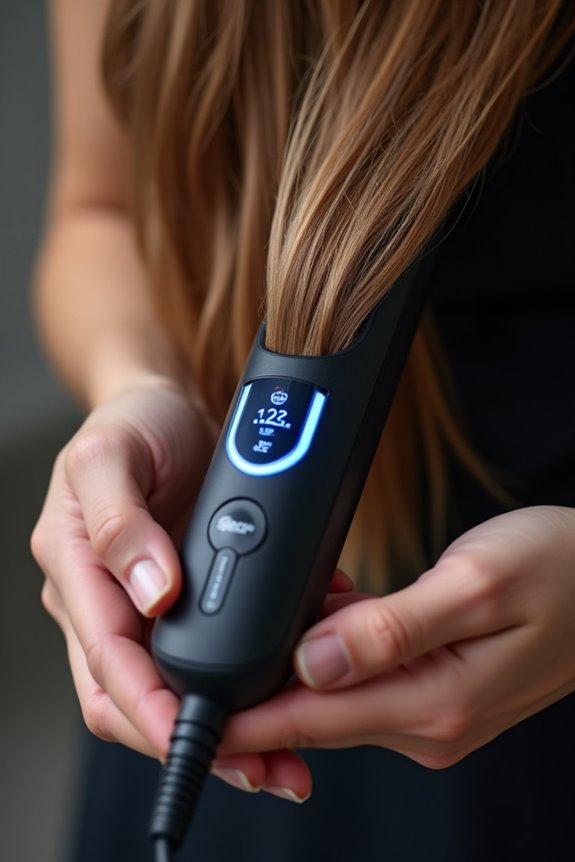
When you’re styling color-treated hair, choose a heat tool that lets you control the temperature, keeping it between 300–400°F to protect your color. Look for devices with ceramic tourmaline bristles or plates; they reduce friction and heat damage while you style. You’ll also want a tool with fast 60-second heat-up time and multiple settings so you can match the tool’s power to your hair’s specific needs.
Adjustable Heat Settings Matter
Why does temperature control matter so much for color-treated hair? Because your newly dyed strands are already stressed and vulnerable to further damage. When you use adjustable temperature settings, you’re taking control of your styling process and protecting your investment.
I recommend starting with low to medium heat, typically between 300°F and 400°F. This range minimizes thermal shock while still delivering results. Always apply a heat protectant spray first; it creates a barrier between your color-treated hair and the tool’s heat.
Adjustable temperature control is essential for several reasons: you can match settings to your specific needs. Fine hair needs lower temperatures than thick hair. Heavily processed strands require gentler settings than lightly colored ones.
Start at the lowest effective heat setting. Increase only if necessary. This damage prevention strategy keeps your color vibrant longer while maintaining hair health.
Ceramic Tourmaline Bristle Benefits
Once you’ve dialed in your heat settings, selecting the right styling tool is important. I recommend choosing brushes with ceramic tourmaline bristles for heat styling after coloring.
These specialized bristles reduce friction and static, smoothing your hair while minimizing snagging. The ceramic tourmaline combination promotes even heat distribution, preventing hot spots that damage color-treated hair’s cuticles. Temperature-controlled brushes keep heat at safer levels, typically between 300°F and 400°F, protecting your investment in vibrant color.
Here’s what matters most: tourmaline emits negative ions that seal your cuticle and enhance shine. A flexible brush head with tangle-free design reduces pulling and breakage, preserving your hair’s integrity. Together, these features provide comprehensive heat protection during styling.
Fast Heat-Up Technology Advantages
How much time do you actually spend styling your hair each day? Fast heat-up tools make a real difference in daily routines. When your styling tool reaches optimal temperature in under 60 seconds, you’re minimizing heat exposure significantly. This reduced dwell time protects color-treated strands from unnecessary damage.
| Feature | Benefit |
|---|---|
| Quick heat-up (under 60 seconds) | Less moisture loss |
| Temperature control settings | Customized protection |
| Rapid heat delivery | Faster styling sessions |
| Adjustable 300–400°F range | Color-safe flexibility |
Fast heat-up technology paired with heat protectant products creates protective heat styling that keeps your color vibrant. These color-safe tools deliver consistent warmth without the prolonged exposure that damages hair. Tools with built-in temperature calculators help you select the right settings for your specific hair type. Damaged hair protection becomes achievable when you’re spending less total time applying heat.
Spray Heat Protectant Before Every Style
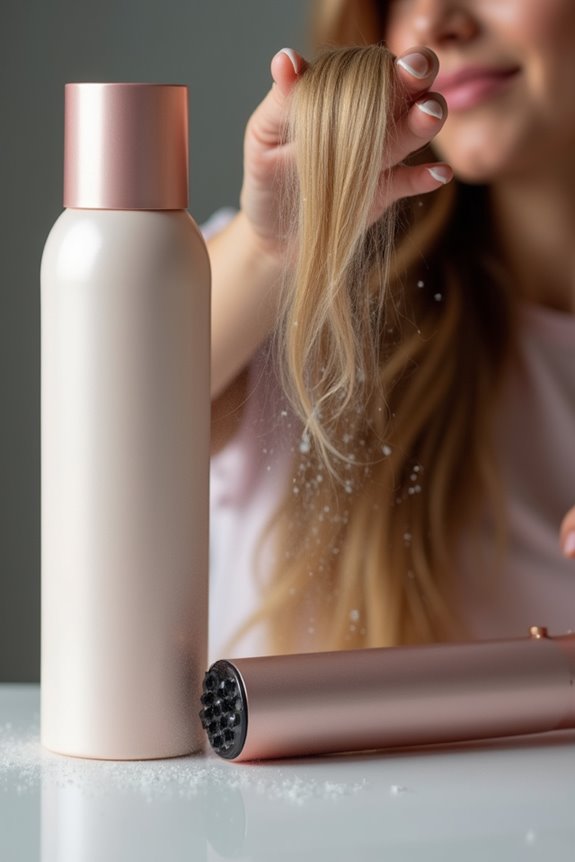
A heat protectant spray is your colored hair’s best defense against thermal damage. Apply it before every heat styling session to create a protective barrier between your cuticles and high temperatures.
Spray the protectant evenly onto dry or slightly damp hair after towel-drying. This approach ensures complete coverage before you pick up any styling tools. The lightweight formula won’t weigh down your strands while it shields your color from fading.
If you’re reheating a section, apply a light mist again. This minimizes thermal shock to already-stressed strands. Pair your heat protectant with lower styling temperatures, around 300°F to 400°F, for maximum color protection and moisture retention.
Start With Lower Heat Settings
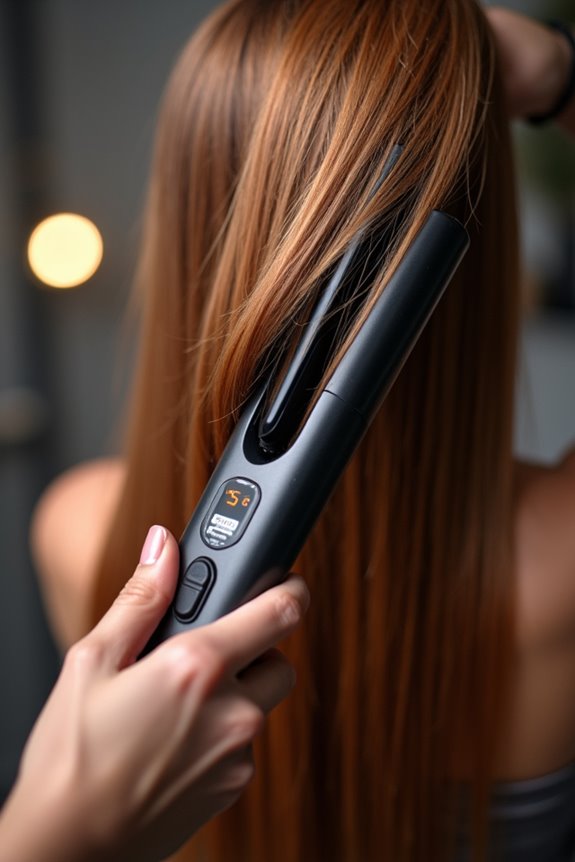
Because colored hair becomes more delicate after dye treatment, start with your tool’s lowest heat setting, typically 300°F to 350°F.
Because colored hair’s structure becomes more delicate after dye treatment, I’d recommend starting with your tool’s lowest heat setting, typically 300°F to 350°F. This approach protects your investment in your color while preserving moisture.
Lower heat settings matter for your hair for these reasons:
- They minimize thermal shock that strips moisture and causes color fade
- They reduce damage risk when combined with heat protectant products
- They give you control to gradually increase temperature only when needed
Start low, then assess your results. If you need more heat for styling, increase it gradually rather than jumping between extreme temperatures. This temperature control strategy prevents repeated thermal stress on colored hair.
Quality heat styling tools with ceramic tourmaline components help maintain consistent, lower temperatures effectively. Your colored hair will benefit from this thermal protection approach.
Use Sulfate-Free, Color-Safe Shampoo Between Sessions
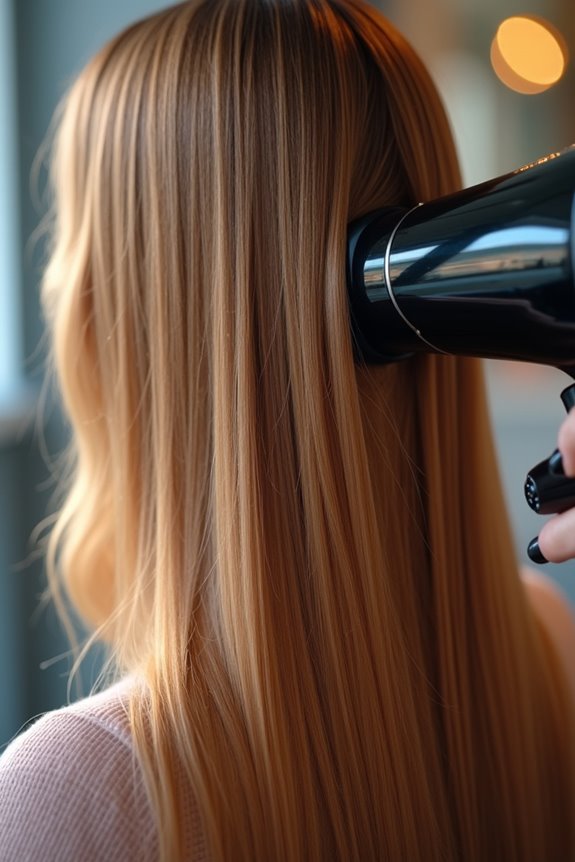
While protecting your hair with lower heat temperatures helps prevent damage, what you use to wash your colored hair matters just as much.
I recommend switching to a sulfate-free, color-safe shampoo that won’t strip away your newly applied pigment. These gentler formulas protect your cuticle layer and support fade prevention by maintaining your hair’s natural oils. Unlike traditional shampoos, sulfate-free options preserve moisture retention, keeping your color-treated hair vibrant longer.
Look for salon-recommended brands like Kérastase or Redken; they’re specifically designed for colored hair. Pair your shampoo with a matching conditioner to strengthen protection.
Space out your washes to just two or three times weekly. This simple adjustment extends your color’s longevity while keeping your strands healthy and hydrated.
Deep Condition Weekly to Repair Moisture Loss
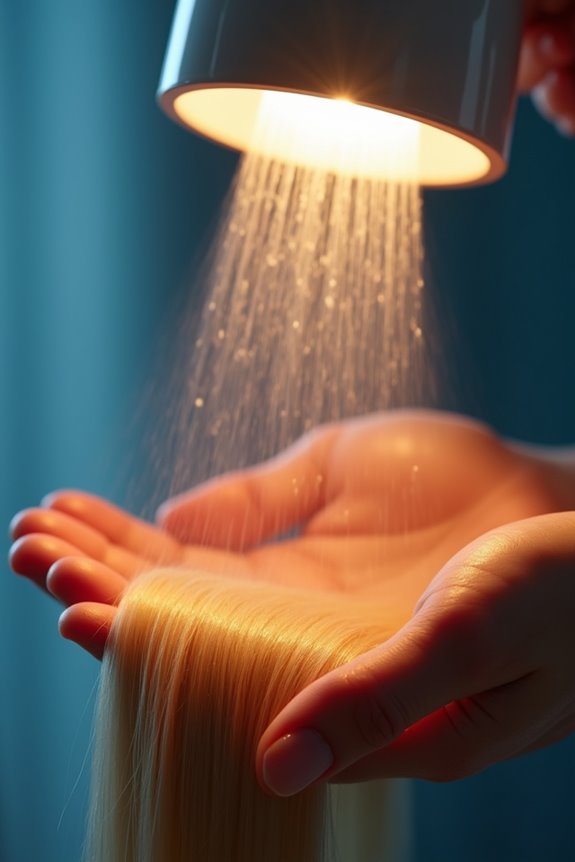
Why does your color-treated hair feel dry after heat styling? Heat exposure opens your hair’s cuticle, allowing moisture to escape. Weekly deep conditioning is an effective solution for restoration.
I recommend using a deep conditioner containing keratin or argan oil. These ingredients matter for specific reasons:
- Keratin rebuilds structural strength lost during coloring and heat damage
- Argan oil penetrates deep to restore shine and elasticity
- Regular treatments seal your cuticle, locking in hydration between styling sessions
A quality deep conditioner provides longer-lasting hydration than daily products alone. Apply it weekly for 15-20 minutes, focusing on mid-lengths and ends. Pair this routine with your color-safe cleanser to minimize moisture loss and keep your color vibrant. You’ll notice reduced tangling and improved tensile strength within weeks.
Space Out Heat Styling Sessions
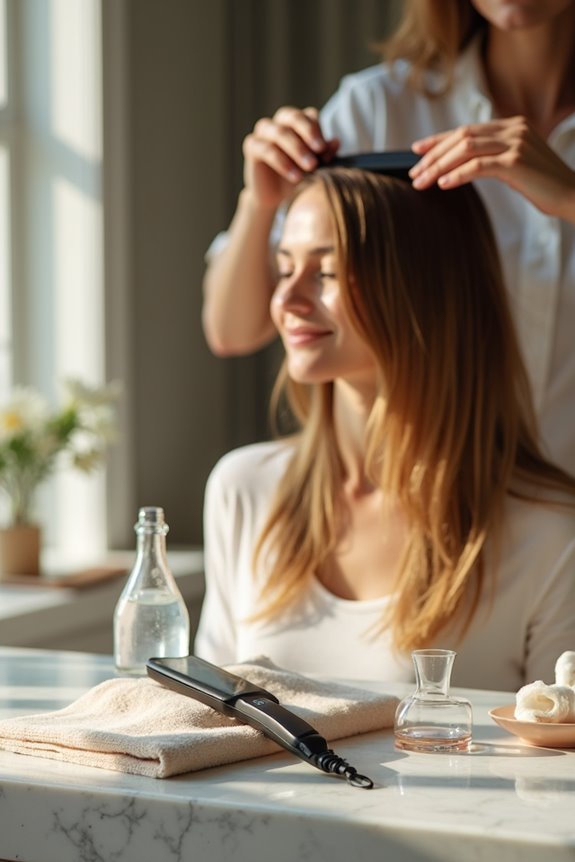
Beyond weekly deep conditioning, you’ll want to strategically limit how often you apply heat to your colored hair. I recommend waiting at least 72 hours after coloring before basic styling, and up to a week before straightening. For curling or perming, wait about 15 days to minimize color fade.
Spacing matters for several reasons. Your hair’s increased porosity after coloring makes it vulnerable to moisture loss with every heat session. When you repeatedly heat the same section, you risk thermal shock and cuticle lifting.
To protect your investment, always use a heat protectant and keep tool temperature between 200 and 300 degrees Fahrenheit. Between sessions, apply hydrating products or leave-in conditioners. These strategic breaks help your colored hair recover, maintaining vibrancy and preventing the damage that cumulative heat styling causes.