3C hair features distinctive corkscrew ringlets about pencil-width thick that start right at your scalp. You’ll notice a mixed pattern of S-curves and Z-curves creating dense, springy texture with noticeable bounce.
When wet, curls stretch and shine; as they dry, they shrink markedly, sometimes 30-50%, returning to their tightly coiled form.
Proper hydration keeps your curls defined and frizz-free, while environmental factors like humidity temporarily affect appearance.
Understanding these characteristics helps you style confidently and maintain realistic expectations.
The Distinctive Corkscrew Curl Pattern of 3C Hair
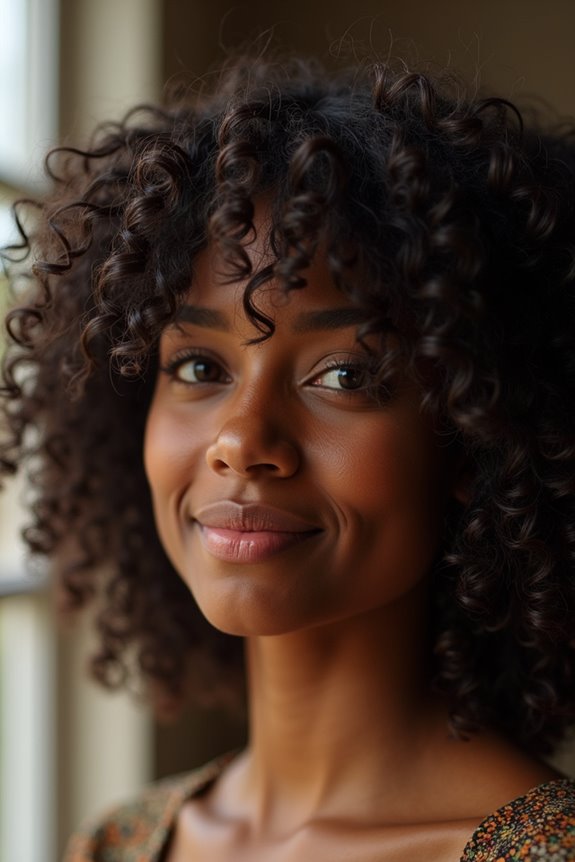
When you look at 3C hair, you’re seeing some of the tightest curls within the Type 3 category, and they’ve got a distinctive appearance. These corkscrew curls form ringlets about the width of a pencil, creating tightly coiled spirals that start right at your scalp. The curl pattern displays S- or Z-shaped formations even when you stretch them, giving your hair that densely packed texture you might recognize.
What makes Type 3C distinctive is how the spiral structure creates natural bounce and springiness. Your curls stack closely together, maximizing volume throughout your head. This tightly coiled texture means your hair appears fuller and more voluminous than looser curl patterns.
Why 3C Hair Is Dense, Voluminous, and Springy
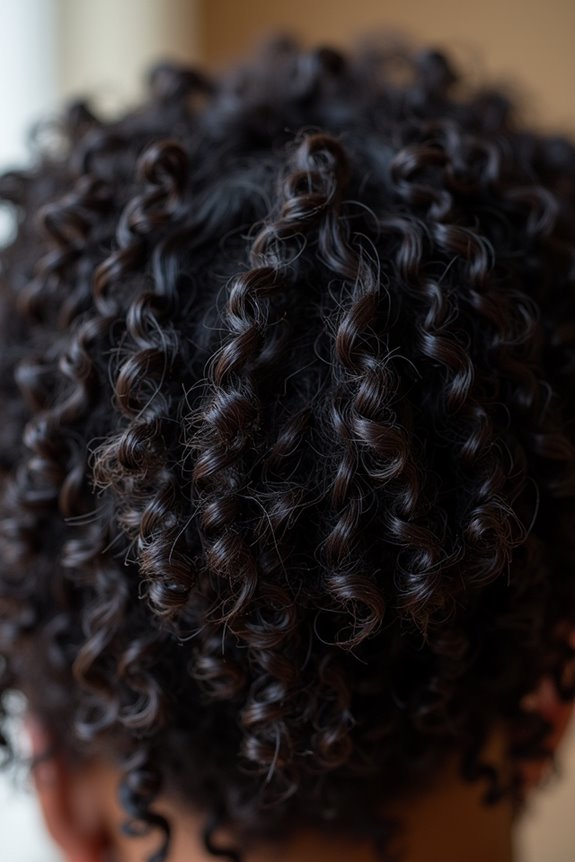
When you have 3C curls, you’re dealing with tightly packed spirals that naturally create fullness throughout your hair. The S- and Z-shaped pattern means each curl bounces back quickly after you stretch it, providing that characteristic springy movement and substantial volume. This density results from how closely the curls cluster together, particularly when moisture causes them to shrink and compress after washing.
Curl Density and Structure
The tightly coiled nature of 3C curls gives this hair type its signature fullness and bounce. Your 3C curls cluster closely together, creating dense coverage across your scalp. Each corkscrew-shaped curl spirals tightly, forming S- or Z-shaped patterns even when stretched. This tightly packed arrangement means you’ll notice significant shrinkage as your curls dry, sometimes losing half their stretched length.
The curl density contributes directly to your hair’s voluminous appearance. These pencil-width coils don’t lie flat; instead, they spring outward with natural elasticity. Your curls work together to create that full, textured silhouette you’re working with. Understanding this structure helps you appreciate why 3C hair requires specific care approaches. The density means moisture penetration matters more for you than for looser curl patterns.
Springy Bounce and Movement
Why does your 3C hair spring back so dramatically after you stretch it? Your corkscrew pattern creates natural elasticity that’s hard to match. When you pull a 3C curl downward, it’ll snap right back into shape because of its tightly coiled structure.
This springy bounce gives you that dense volume. Your curls pack closely together, creating fullness that straighter hair types can’t achieve. That movement you’re seeing? It’s your curl pattern doing exactly what it’s designed to do.
| What You’ll Notice | What It Means |
|---|---|
| Curls spring back when released | High elasticity and health |
| Significant shrinkage when dry | Normal 3C behavior |
| Bouncy, voluminous appearance | Densely packed curls |
| S- and Z-shaped patterns | Authentic 3C texture |
Understanding your curl movement helps you style with confidence.
S-Curves and Z-Curves: Understanding 3C Curl Formations
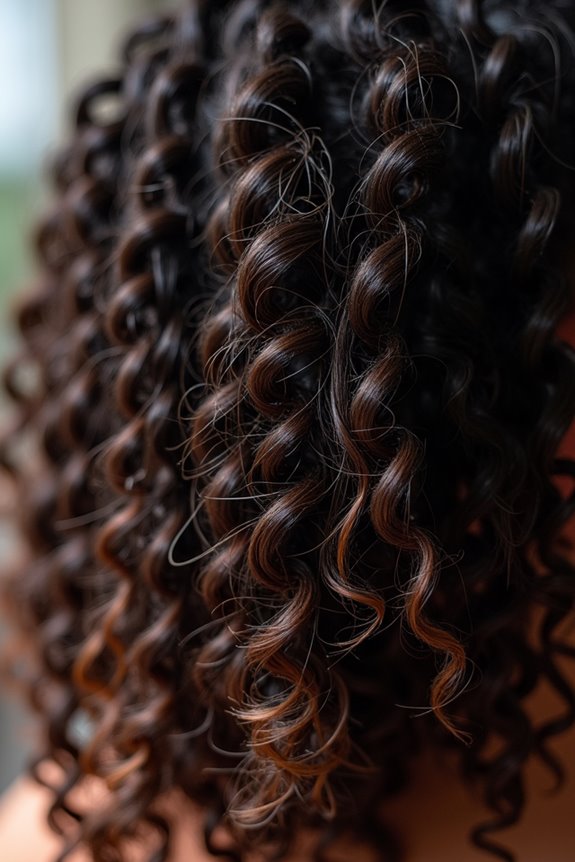
Two distinct curl patterns define 3C hair: S-curves and Z-curves. You’ll find both formations throughout your head, creating that signature mixed-pattern appearance characteristic of 3C curls.
S-curves flow in smooth, wave-like motions resembling the letter S. They’re graceful and create beautiful dimension when you stretch your corkscrew curls. Z-curves, by contrast, zigzag sharply like the letter Z, offering that extra density and volume.
What matters is how both tight curls work together. Your S-curves might dominate your crown while Z-curves cluster at your nape. These curl patterns aren’t random; they’re how your 3C hair naturally expresses itself.
Understanding these formations helps you work with your unique texture rather than against it. You’re not fighting your curls; you’re learning how they actually grow.
Pencil-Thick Coils: The Unique Size of 3C Curls
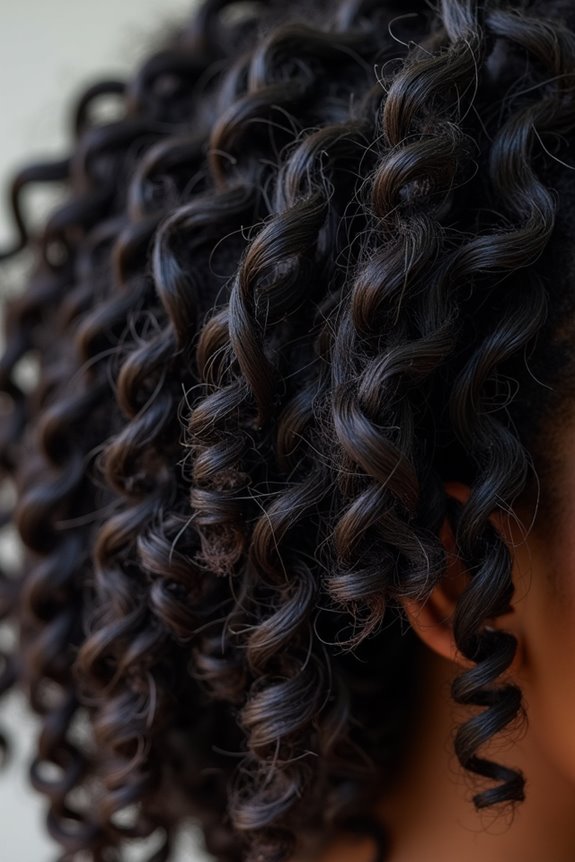
When you look at 3C curls, you’ll notice they’re noticeably thicker than their 3A and 3B counterparts; about the width of a pencil. This specific diameter creates that signature dense, voluminous appearance you see in 3C hair because the curls pack tightly together. Understanding this curl size helps explain why your 3C hair looks so full and why it shrinks visibly as it dries.
Curl Diameter And Width
How’d you like curls that practically spring off your head?
Your 3C curl diameter sits at pencil-thick, roughly the width of a writing pencil. This measurement defines your tight pattern and distinguishes Type 3C from looser curl types. Here’s what you’re working with:
- Pencil-thick coils create densely packed ringlets that cluster together for maximum volume
- Small to medium diameter produces a true corkscrew appearance, even when you stretch the curl
- Noticeable shrinkage occurs as your hair dries, making it appear shorter than its stretched length
Understanding your curl diameter helps you embrace your naturally textured hair. These corkscrew curls aren’t just visually striking; they’re uniquely yours. The tight pattern means your hair naturally gravitates toward fullness and definition. Recognizing these characteristics helps you care for your curls authentically.
Volume And Density Characteristics
Your 3C curls create that enviable full, springy appearance everyone notices because of their volume and density. Even at moderate lengths, the tight curls pack densely together, giving your hair considerable body and dimension.
This density works in your favor. Your spirals maintain their defined structure, refusing to flatten or lose shape easily. The tightly coiled pattern creates natural lift at the roots.
What you’ll experience is significant shrinkage as your 3C curls dry. Your hair might appear shorter than it actually is when fully stretched. This isn’t a flaw; it’s simply how your texture behaves. Understanding this shrinkage helps you appreciate your hair’s true length and plan your styling accordingly.
How 3C Curls Stand Apart From Looser and Tighter Patterns
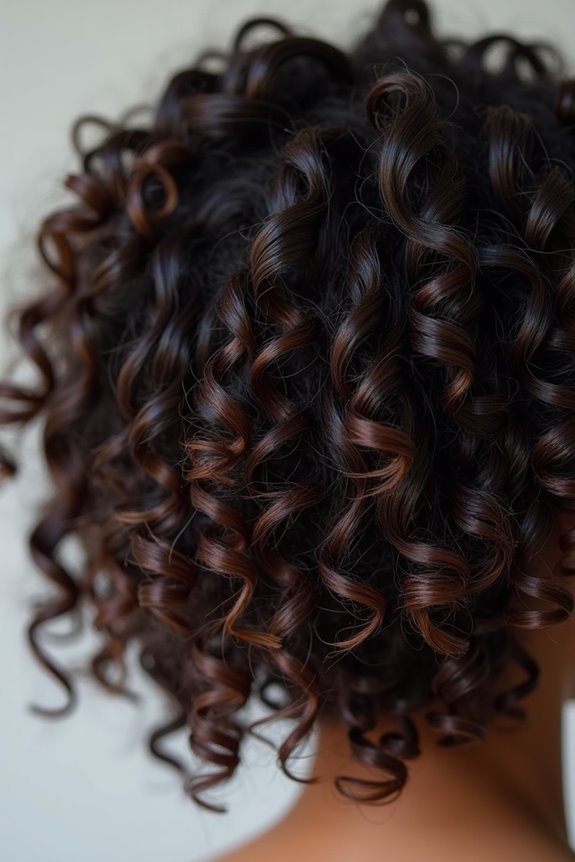
What makes 3C curls so distinctive? Your Type 3C curl pattern occupies a unique position that sets it apart from both looser and tighter textures.
Your 3C corkscrew curls represent a genuine middle ground in the curl spectrum. Here’s what defines them:
- Tighter than 3B – Your curls are more compact and springy, creating denser texture with greater shrinkage and volume
- Less kinked than 4A – You’ll notice more defined corkscrew patterns rather than tight kinks, offering that signature bounce
- Consistent definition – Your S- or Z-shaped curl pattern remains visible even when stretched, maintaining its integrity
The density of your 3C hair creates a full-bodied appearance that’s immediately recognizable. You’re experiencing the sweet spot where texture thrives with pronounced curl definition. This positioning makes your curl pattern remarkably versatile for styling while preserving that springy character.
Shrinkage Behavior: Why 3C Hair Appears Smaller When Dry
When you wash your 3C curls, you’ll notice they stretch to about pencil-width thickness. As moisture evaporates, those tightly coiled patterns compress and retract considerably. This curl pattern compression is the main culprit behind the dramatic shrinkage you see, since the dense packing of coils inherently shortens your visible length when dry. Understanding how moisture loss drives this behavior helps you set realistic expectations for your actual hair length and plan your styling accordingly.
Moisture Loss During Drying
Because 3C curls follow an ultra-tight corkscrew pattern, they’re particularly vulnerable to dramatic shrinkage as moisture evaporates. When water leaves your hair, the cuticle scales flatten and your curl pattern tightens noticeably. This process creates that compact, dense appearance you’ve probably noticed.
Understanding how moisture loss affects your 3C curls helps you manage shrinkage better:
- Water evaporation causes your curl pattern to contract and tighten further
- Cuticle flattening contributes to a denser, more defined look when dry
- Environmental conditions like humidity and heat influence how much shrinkage factors into your final length
You’re not alone in experiencing this. Many people with 3C hair see their stretched length reduce noticeably during the drying process. Using moisture-retentive products and sealing with oils protects against excessive shrinkage.
Curl Pattern Compression Effects
Your 3C curls actually shrink quite a bit as they dry, sometimes by 30-50% or more. This happens because moisture loosens your curl pattern, allowing those corkscrew strands to stretch and lengthen. As dryness sets in, your curls tighten back up.
The dense packing of your 3C curls intensifies this compression. Individual strands bunch closely together, creating a more compact appearance once moisture evaporates completely. You’ll notice your curl pattern reveals S- or Z-shaped formations when stretched, but these shorten dramatically as water leaves your hair.
Environmental conditions matter too. Humidity and dryness both influence how much shrinkage you experience. Understanding this compression effect helps you style strategically and set realistic expectations for your hair’s final look.
How Moisture Creates Shine and Reduces Frizz in 3C Hair
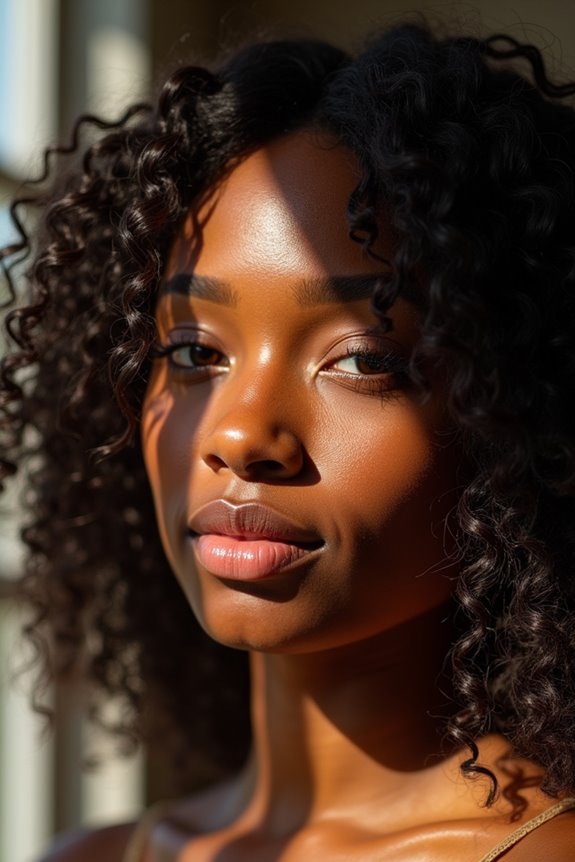
Hydrated 3C curls visibly change; they become shinier, bouncier, and far more defined. When you add moisture to your curls, the tightly packed corkscrew texture plumps up noticeably. This plumping reduces the dullness that comes from dryness.
Here’s how hydration works for your curl definition:
- Smoothed cuticles – Hydrated scales lie flatter and align better along each curl, minimizing frizz
- Enhanced clumping – Moisture helps curls group together, creating sharper definition between wash days
- Maintained elasticity – Weekly deep conditioning replenishes your hair’s bounce and glossy finish
Your moisture-rich routine featuring leave-ins, oils, and creams directly impacts how your 3C hair looks. Consistent hydration management keeps shrinkage controlled while maintaining the shine and definition you’re working toward.
Frizz Without Proper Hydration: What Happens to 3C Curls
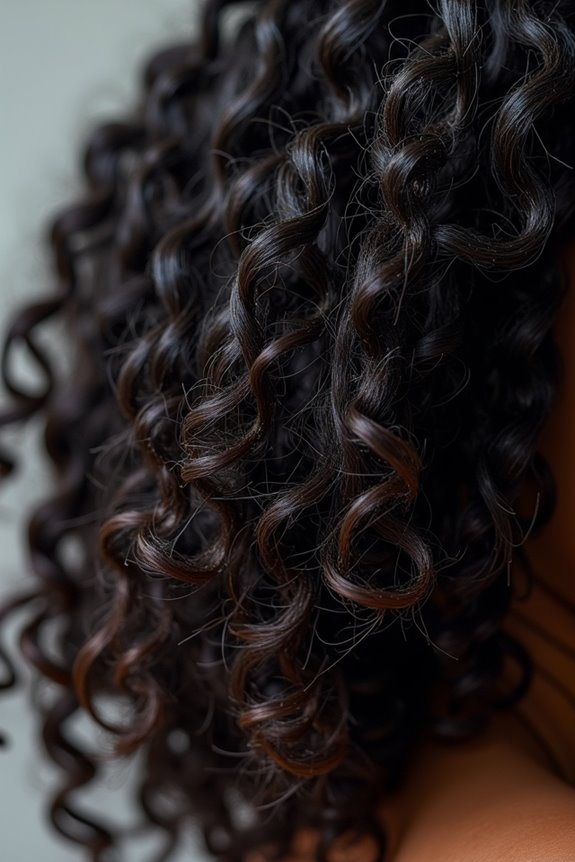
What happens when you skip moisturizing your 3C curls for a week or two? Your curl pattern starts breaking down. Without adequate hydration, your 3C curls lose their bounce and definition. The tight corkscrew texture amplifies surface roughness, making frizz more visible and harder to control.
Moisture loss causes several problems. Your cuticles elevate, creating dull-looking hair. Shrinkage intensifies, pulling strands tighter together. When curls cluster this way, they rub against each other constantly, generating more frizz and tangling.
To maintain your curl pattern and keep flyaways at bay, commit to regular moisture-rich routines. Deep conditioning treatments, leave-in hydrators, and humectants become your essentials. Consistent hydration supports healthy curl clumps, preserving shine and keeping your 3C curls bouncy and defined where it counts.
Why Your 3C Curls Look So Defined and Bouncy
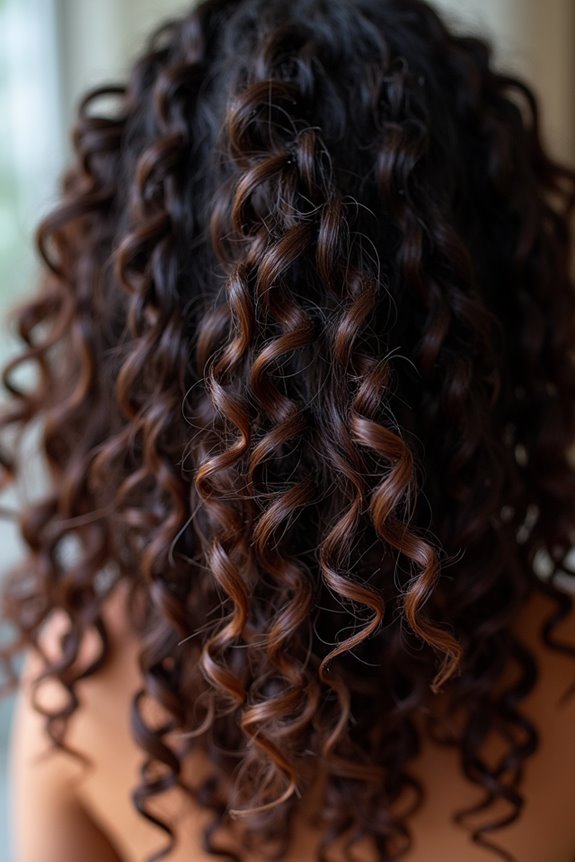
Once you establish a consistent moisture routine, you’ll notice something remarkable: your curls don’t just feel better, they look dramatically different. Your 3C curls thrive on hydration, and here’s why they respond this way:
- Corkscrew definition emerges. When your dense texture receives proper moisture, each corkscrew shape becomes visible and distinct rather than fuzzy or undefined.
- Shrinkage works in your favor. Your curl pattern contracts, creating that signature springy bounce and voluminous appearance you want.
- Volume multiplies naturally. Hydrated 3C curls pack tighter and fuller, giving you that coveted bounce without extra products.
Your curls aren’t just responding to moisture; they’re revealing their true potential. That defined, bouncy look you admire reflects your curl pattern finally expressing itself fully. Consistency with hydration keeps this effect going.
How Environmental Factors and Placement Affect 3C Curl Appearance
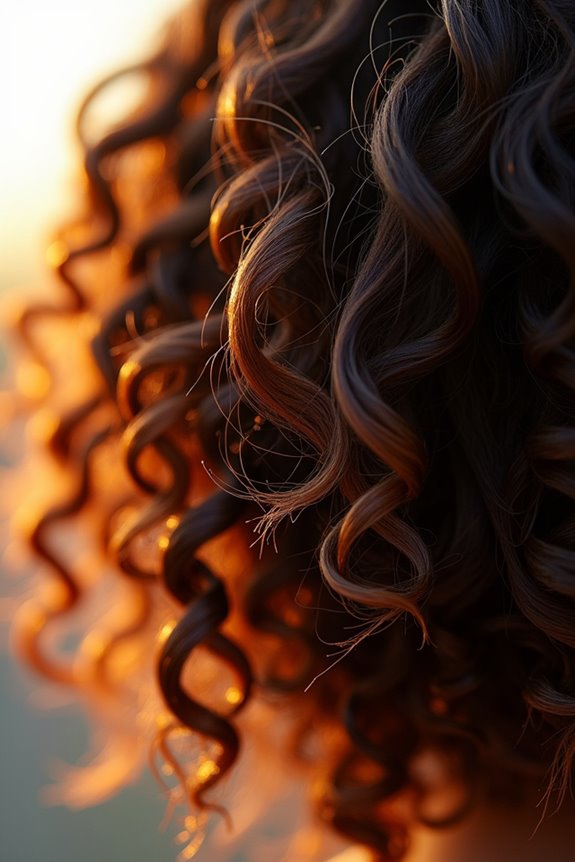
Your 3C curls don’t look the same everywhere on your head, and that’s completely normal. Curl placement matters significantly. Your crown and hairline areas often appear looser or more voluminous than mid-length sections due to natural variation and how curls cluster differently across your scalp.
Environmental factors reshape your 3C hair’s appearance in measurable ways. Humidity causes frizz and shrinkage, temporarily altering your curl density and definition. Heat and wind stretch your corkscrews temporarily, making them look looser until moisture reaccumulates and they revert to their natural shape. UV exposure dries out your strands, reducing shine and increasing frizz, especially near your temples where strands are thinner.
Understanding these variations helps you appreciate your authentic curl pattern rather than chase unrealistic consistency.
Keeping 3C Curls Healthy: Why Moisture Matters Most
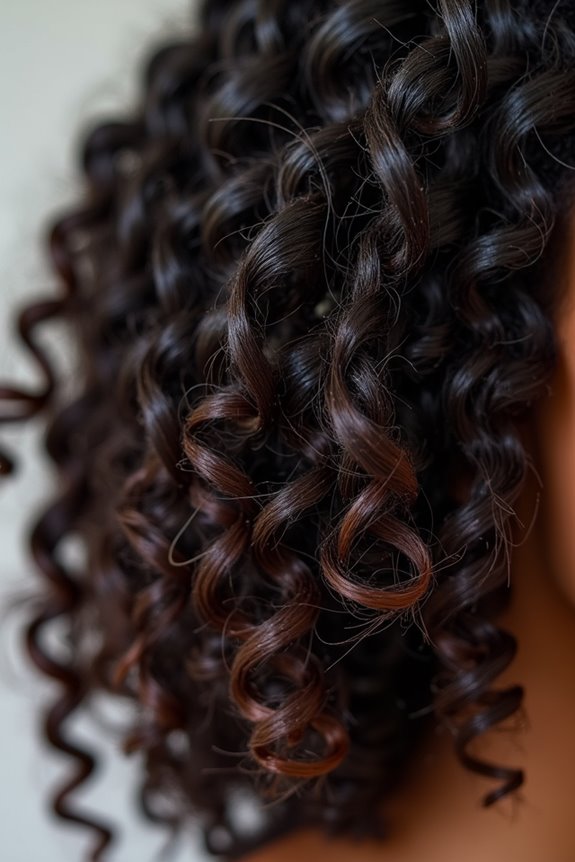
The foundation for healthy 3C curls starts with understanding how water moves through your hair. Your densely packed coils trap sebum at your scalp, leaving your ends dry and vulnerable to breakage. Consistent moisture in every step of your routine addresses this problem directly.
Your densely packed 3C coils trap sebum at the scalp, leaving ends dry and vulnerable to breakage—consistent moisture is essential.
Here’s what to prioritize:
- Sulfate-free cleansing removes buildup without stripping natural oils
- Deep conditioner treatments penetrate your curl structure weekly
- Sealing oils lock hydration into each coil after washing
Without consistent hydration, your 3C curls lose definition and become frizzy. Moisturized curls show better shine, springiness, and elasticity. Building a routine around hydration creates the foundation for healthy curls that maintain their strength and appearance over time.