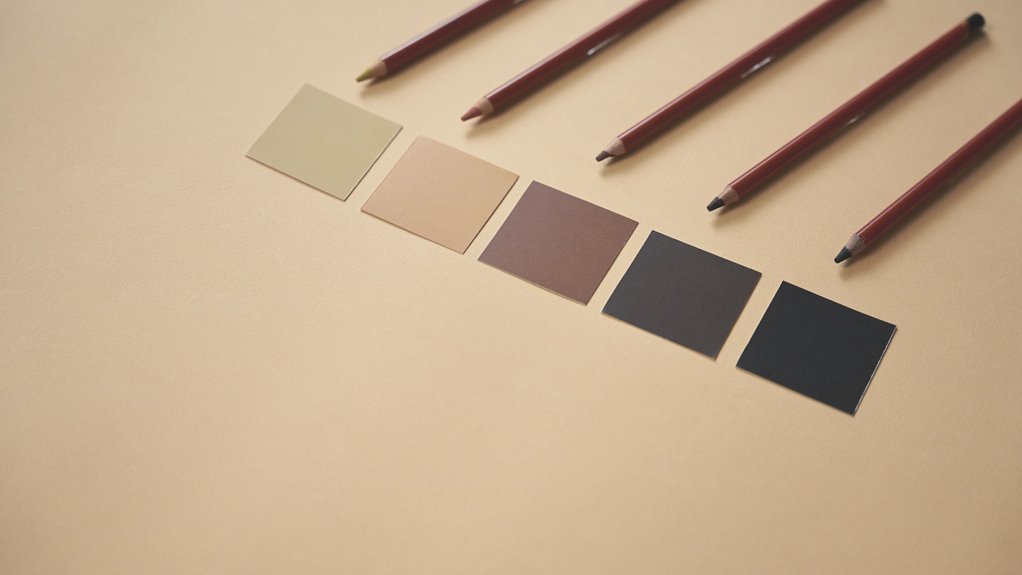
Finding your best hair color starts with identifying your undertone: cool, warm, or neutral. Cool undertones pair well with ash blonde, platinum, and jewel tones like plum and violet. Warm undertones complement honey blonde, caramel, and copper metallics. Neutral undertones work across both spectrums.
The key to success is staying within one to two shades of your natural level to prevent your complexion from appearing washed out. Regular toning every four to six weeks maintains color vibrancy and freshness. Continue reading to discover specific shade recommendations tailored to your unique complexion.
Find Your Undertone: Cool, Warm, or Neutral for Pale Skin?
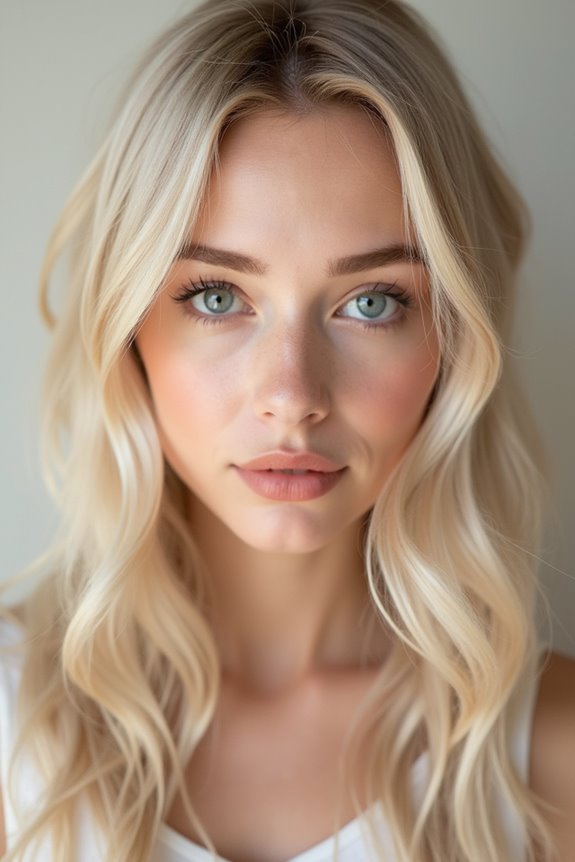
Ever wonder why some hair colors look great on your pale skin while others fall flat? Your undertone holds the answer. Understanding whether you have cool, warm, or neutral undertones will help you select shades that work with your complexion.
Your undertone, whether cool, warm, or neutral, determines which colors will enhance your appearance. Start by checking your veins. Blue veins indicate cool undertones that pair well with ash or platinum shades. If your veins appear greenish, you likely have warm undertones suited for golden or copper tones. If you can’t distinguish between the two, you probably have neutral undertones that balance both cool and warm hues.
Blue veins signal cool undertones perfect for ash shades, while greenish veins indicate warm undertones suited for golden tones.
You can also test with jewelry. Silver flatters cool undertones, while gold suits warm ones. Wear a white t-shirt and observe how your skin appears under natural light.
Once you identify your undertone, you can confidently choose hair colors that work with your natural complexion.
Ash Blonde and Platinum: The Gold Standard for Cool Undertones
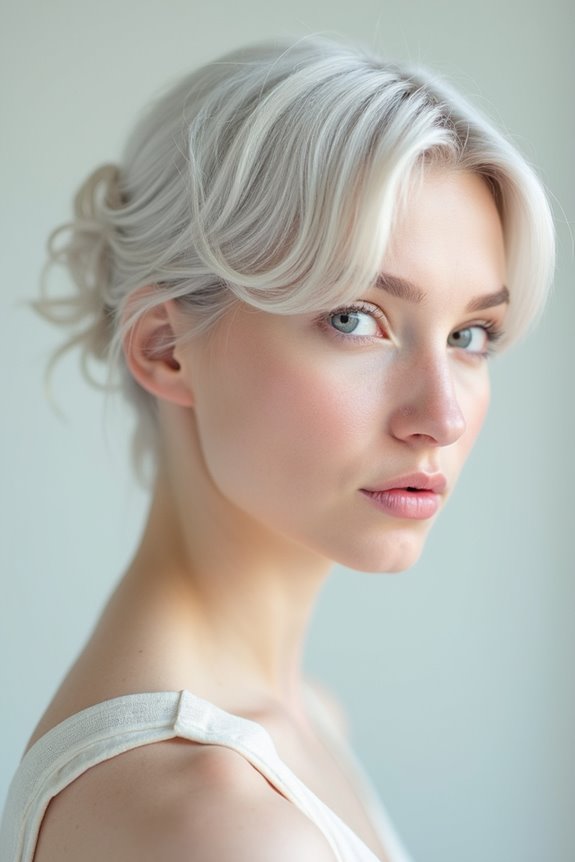
If you have cool undertones and pale skin, ash blonde and platinum shades work best for your coloring. These icy tones are effective because they counteract red and pink tints that can make pale complexions appear washed out.
Ash blonde offers a softer approach with cooler, more muted tones. Platinum blonde delivers maximum iciness for that chic, edgy look. Both shades complement blue-toned veins perfectly, which is a key indicator of cool undertones.
Maintaining these colors requires regular use of cool-toned toners. This prevents brassiness, which occurs when warm tones emerge as your color fades.
Preview these shades before committing to the color. Consult with a stylist who understands cool-toned coloring, as the right ash or platinum shade will enhance your overall appearance and create that polished look you want.
Honey, Caramel, and Golden Brown for Warm-Toned Pale Skin
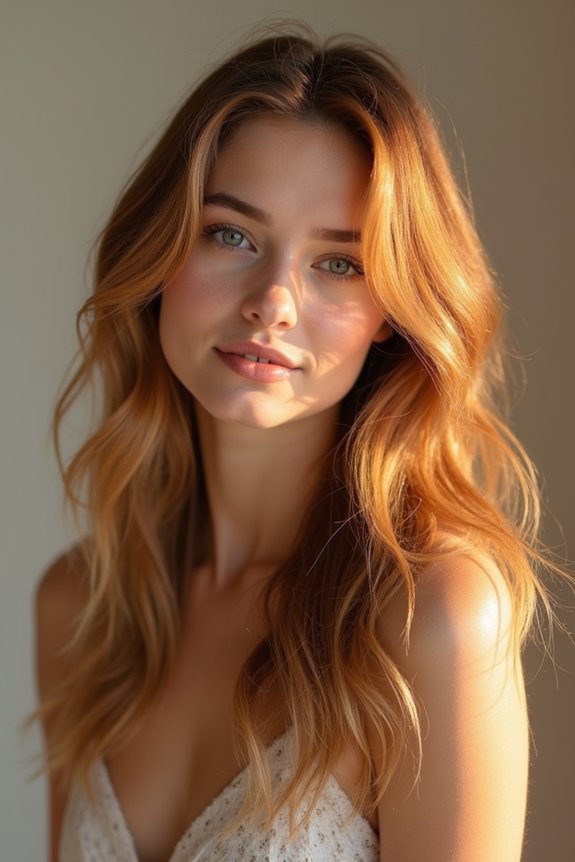
Do warm golden undertones describe your complexion? Then honey blonde and caramel shades are your perfect match. These warm tones complement your skin’s natural peachy glow beautifully.
Rich honey blonde brings out your complexion’s warmth while adding brightness. Caramel brown and bronze brown create gorgeous depth without appearing dull. Balayage highlights in lighter caramel tones give you that coveted sun-kissed dimension.
Here’s what matters: avoid ashy brunettes entirely. They’ll clash with your warm undertones and dull your radiance.
Maintenance is key. Use toning products to prevent brassiness. Neutralize yellow brassy tones regularly to keep your color looking fresh and natural. This keeps your hair looking radiant between salon visits.
Cool Browns and Soft Brunettes That Brighten Without Washing Out
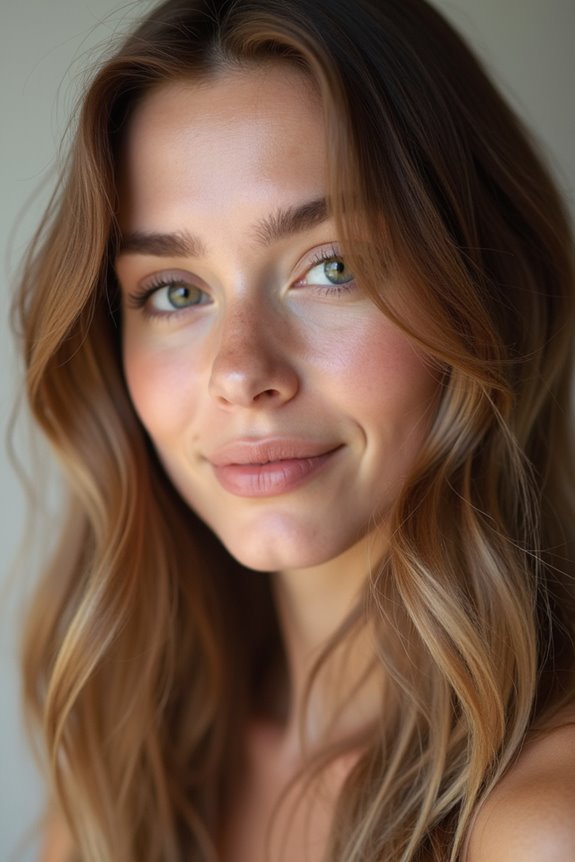
Unlike warm honey and caramel shades, cool-toned browns and soft brunettes work beautifully for pale skin with cool undertones. Ash brown hues add depth while preventing the washed-out appearance that warm tones can create.
Cool undertone shades matter because they maintain contrast with your complexion without introducing yellow or brassy tones. Ash brown specifically helps your facial features pop without appearing jaundiced or dull.
When selecting your shade, aim for levels 5–7 (brown to dark blonde range). This range balances brightness while avoiding overpowering your natural pallor.
Soft brunette shades with subtle cool undertones minimize brass buildup over time. Your eye color will appear more vibrant with these tones. These colors create harmony with pale skin and help you feel confident in your appearance.
Jewel Tones for Cool Undertones: Plum, Violet, and Deep Burgundy
If you’re drawn to bold color statements, jewel tones like plum, violet, and deep burgundy add richness and depth to your pale complexion without washing you out. These cool-based shades work because they complement your natural undertones. Plum reflects your skin’s pink undertones, while violet brightens blue and gray eyes with its cooler light. When selecting these jewel tones, choose shades with minimal warmth so they enhance rather than clash with your icy aesthetic.
Rich Jewel Tone Benefits
Cool-toned pale skin has a natural advantage regarding jewel tones. These rich colors (plum, violet, and deep burgundy) complement your complexion without washing you out.
Plum creates sophisticated contrast on pale skin, enhancing green or hazel eyes while deepening your cool undertone. Violet shades offer a striking visual effect by reflecting cooler light and brightening fair complexions. Deep burgundy delivers rich warmth without overpowering your natural coloring, maintaining balance between hair and skin.
To maximize these benefits, use toners or glosses that prevent brassiness. This keeps your color sharp and reflects light beautifully on cool-toned pale skin. These jewel tones are particularly flattering and worth incorporating into your color choices.
Application For Cool Skin
How do you guarantee that plum, violet, and deep burgundy actually stay true to their jewel-tone promise on your pale complexion?
The answer lies in strategic application paired with intentional maintenance. Here’s what I recommend:
- Use cool-toned toners during application to offset warmth and lock in authentic jewel tones
- Tone every 4 to 6 weeks to refresh color vibrancy and maintain cool undertone richness
- Choose color-safe, sulfate-free shampoos to protect your investment and prevent brassiness
These jewel tones work beautifully on cool undertones because they complement your skin’s natural harmony. When you apply these shades correctly, you’re creating a cohesive look rather than fighting against your complexion.
Your pale skin becomes the perfect canvas. Plum deepens mysteriously. Violet glows softly. Burgundy speaks sophistication.
Stay committed to maintenance, and you’ll keep that jewel-tone richness alive.
Copper and Auburn: Warm Metallics That Pop on Pale Skin
When you’re working with a pale complexion, copper and auburn shades offer something special: they’re warm metallics that actually enhance your skin rather than compete with it. Copper works beautifully on warm or neutral undertones, introducing golden and bronze highlights that mimic that coveted sun-kissed glow. Auburn delivers rich depth through red-brown tones, creating natural contrast while maintaining sophistication.
Here’s what matters: skip flat, ash-cool coppers if you have cool undertones. They’ll look dull and ashy instead. Both shades require commitment though. You’ll need regular toning treatments to prevent brassiness and keep colors vibrant against pale skin. The payoff is hair that looks dimensional, intentional, and perfectly suited to your complexion. That’s the warmth you’re seeking.
Pastel and Rose Gold: Cool or Warm Alternatives to Classic Shades
If you’re ready to move beyond traditional brunettes and blondes, pastels and rose gold offer softer, more modern alternatives that work beautifully with pale skin. These hues complement your pale skin undertones while creating that coveted contemporary look.
Rose gold specifically brightens pale skin with warm undertones, delivering peachy-rosy reflections that feel both soft and flattering. Pastels like lavender and soft pink work wonderfully for cool undertones, adding gentle brightness without overwhelming your complexion.
Rose gold and pastels deliver flattering, modern brightness for pale skin while honoring your natural undertones.
Here’s what you need to know:
- Keep pastels at light levels 7–9 to prevent washing out your face
- Pre-lighten hair to level 7–10 for maximum vibrancy and dimension
- Use semi-permanent glosses between appointments to maintain your chosen tone
Pair these shades with cool or neutral makeup and wardrobe pieces. This creates a cohesive, intentional aesthetic that celebrates your natural coloring while feeling distinctly modern.
Why Staying Close to Your Natural Shade Works for Pale Skin
Why Staying Close to Your Natural Shade Works for Pale Skin
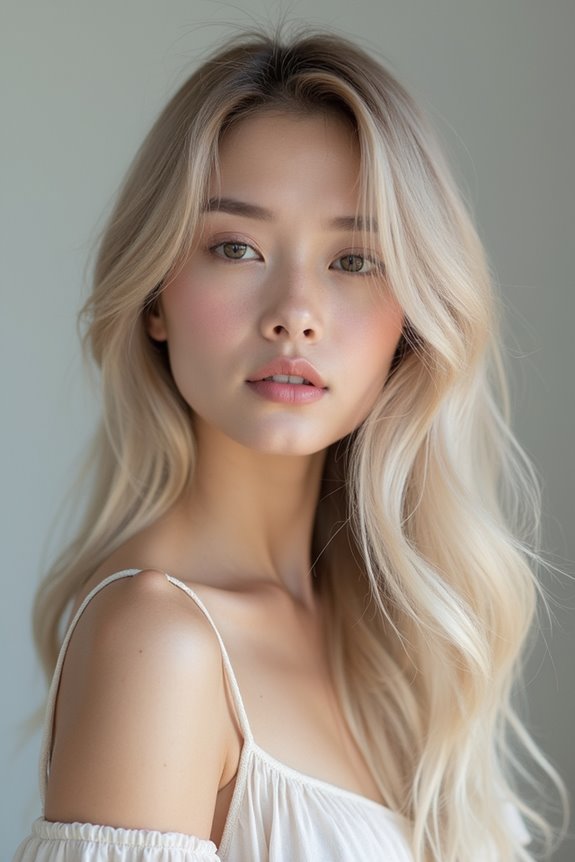
While bold color transformations grab attention, keeping your hair within one to two shades of your natural level is actually your best approach for pale skin. You’ll maintain harmony with your complexion while reducing damage and maintenance stress.
| Benefit | Impact | Why It Matters |
|---|---|---|
| Minimal Processing | Less breakage | Healthier strands |
| Undertone Alignment | Enhanced brightness | Flatters features |
| Lower Maintenance | Fewer touch-ups | Saves time & money |
| Natural Contrast | Avoids washing out | Preserves dimension |
Staying close to your shade prevents brassiness and over-processing. Your eye color and undertone alignment determine whether near-natural hues brighten or dull your complexion. Subtle shifts toward warmer or cooler tones work with your pale skin, not against it. This approach gives you dimension through toners or glosses without the commitment of drastic change.
Keep Your Color Fresh: Toning, Glossing, and Maintenance
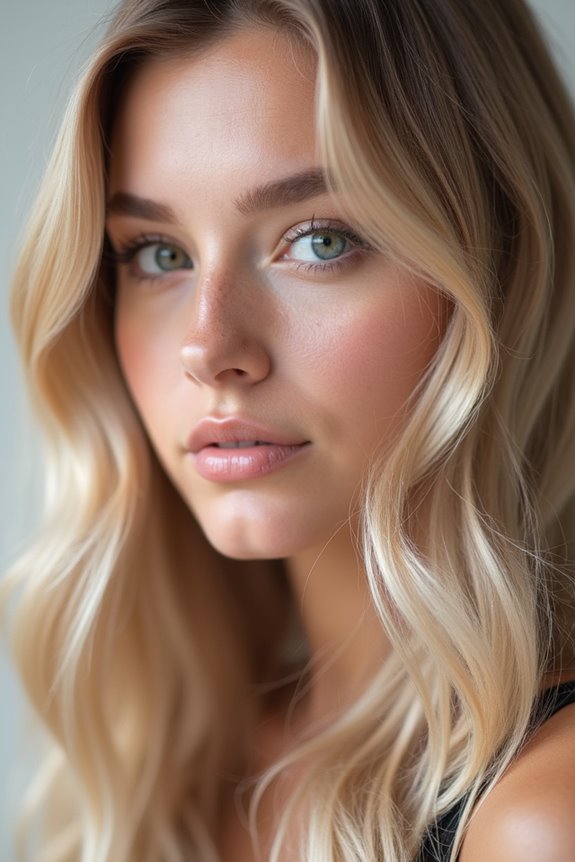
Now that you’ve chosen a shade that works with your pale complexion, the real work begins: keeping it looking salon-fresh between appointments.
I recommend these maintenance essentials:
- Schedule toning appointments every 4 to 6 weeks to neutralize brass and preserve cool undertones in ash or platinum shades
- Use at-home color-depositing masks between visits. Violet-toned ones work well for cool blondes without over-processing
- Book gloss treatments to add reflective shine and enhance your eye color while giving skin a healthier glow
Regular toning prevents yellowing and keeps your color vibrant. Gloss treatments are maintenance tools, not luxuries. Together, they extend your salon results and keep your investment looking intentional rather than faded.
Test Before You Commit: Smart Ways to Preview Your Shade
Before you book that salon appointment, consider testing your potential shade using semi-permanent color options or virtual preview tools. Semi-permanent formulas let you see how a color actually looks on your pale skin and hair texture without the long-term commitment, while digital tools help you visualize the final result with your current makeup and lighting. You’ll feel more confident moving forward once you’ve confirmed your choice matches both your undertone and personal style.
Semi-Permanent Color Testing
How can you find your perfect shade without the worry of permanent damage? Semi-permanent color is your answer. This testing method lasts 4–12 washes, giving you time to see how a shade actually looks on you before committing long-term.
I recommend these three approaches:
- Use color-depositing masks or glosses to evaluate undertone compatibility without full commitment
- Choose shades within 1–2 levels of your natural color to minimize damage during testing
- Perform a strand test on clean, dry hair and monitor how the shade shifts over 3–5 days
For pale skin with cool undertones, test ash or neutral tones first. If you’re warm-toned, try honey or caramel shades instead. Watch how light exposure changes your results; this tells you everything about whether you’ve found your match.
Virtual Shade Preview Tools
Technology has changed how we test hair colors. With virtual try-on tools like Garnier, you can view multiple shades in real-time on your photo or avatar with no commitment and no damage. You’ll see ash, platinum, and golden tones instantly, assessing brightness and how each shade complements your undertone.
| Lighting Type | What You’ll See | Best For |
|---|---|---|
| Natural light | True undertone matching | Overall compatibility |
| Warm indoor | Golden tone visibility | Evening readiness |
| Cool outdoor | Ash tone assessment | Daytime appearance |
| Studio lighting | Maximum contrast | Feature enhancement |
| Mixed conditions | Realistic daily preview | Confident decisions |
Preview apps simulate different lighting to show how your chosen shade reads throughout your day. Consider eye color and wardrobe too; they influence whether your selection enhances or washes out your complexion. Use previews as your starting point before committing to permanent color.