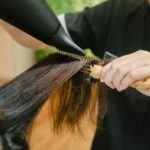
A high and tight haircut features closely clipped or shaved sides and back contrasted with longer hair on top, creating that crisp, polished look you’ve probably noticed.
This military-inspired style emerged in the late 1980s and became popular among civilians because it requires minimal upkeep and works for most face shapes.
The “high” refers to where the fade starts, while “tight” means how short those sides are clipped.
There’s more nuance to executing this cut correctly than you might expect.
What Is a High and Tight Haircut?
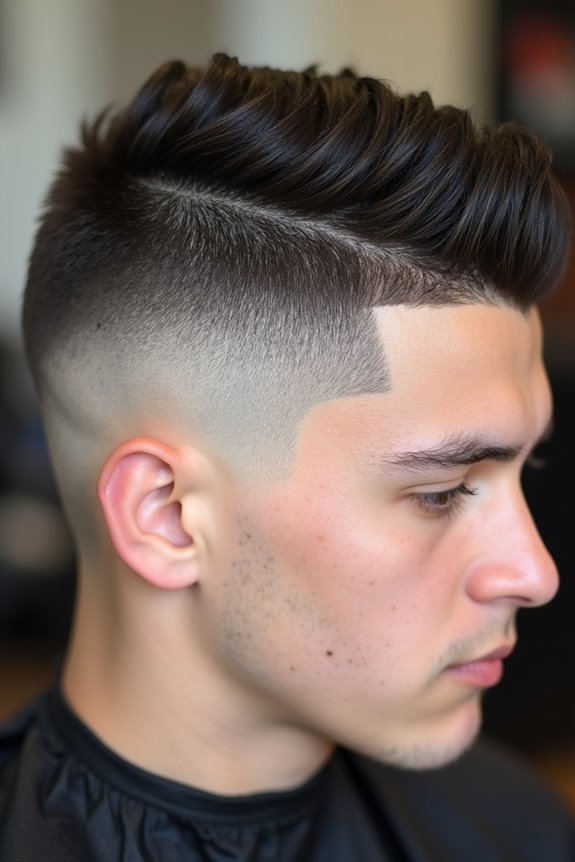
Ever wonder why the high and tight remains such a popular choice? I’ll explain this classic style that’s taken over barbershops everywhere.
Discover why the high and tight cut has become the go-to choice for barbershops and style-conscious individuals everywhere.
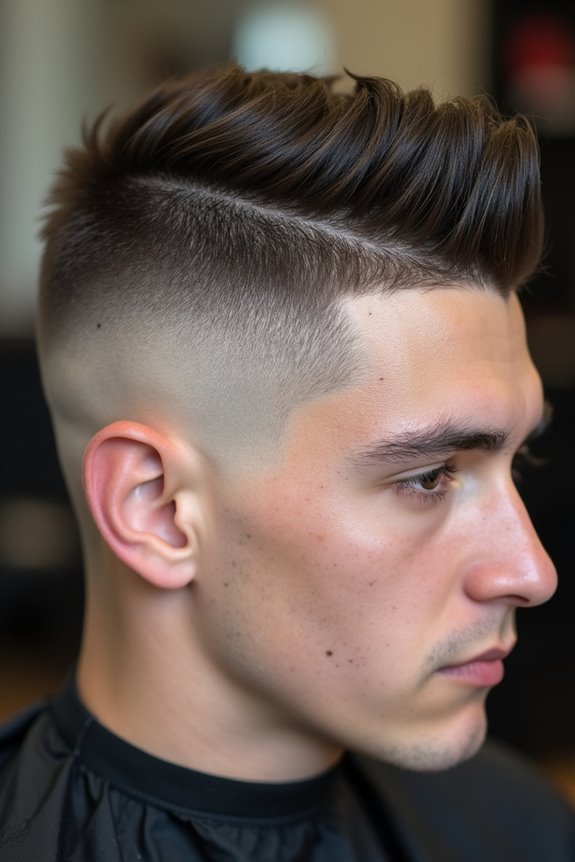
A high and tight features shaved sides and back with noticeably longer hair on top. The sides clip very close, often just 1/8 inch or 1/4 inch. Your top stays longer, typically between 5–10 mm, creating sharp contrast.
What makes this cut stand out? The fade. That smooth transition between your longer top and clipped sides gives the high and tight its signature clean look. You can choose a subtle taper or a dramatic skin fade, depending on your preference.
This military-inspired style demands minimal maintenance and works for most face shapes. You’re joining a community that values simplicity and polished appearance.
From Military to Civilian: How the High and Tight Crossed Over
The high and tight didn’t stay confined to military barracks for long. Starting in the late 1980s, this sharp military style gradually entered civilian culture. You’d see it spreading among diverse groups seeking that clean, authoritative look without the uniform.
| Aspect | Military | Civilian |
|---|---|---|
| Purpose | Regulation standard | Personal style choice |
| Adoption | Mandatory | Voluntary |
| Popularity | Professional military | Youth culture worldwide |
What made this transition work? The practicality factor. Barbers highlight minimal maintenance and easy home styling as major selling points. You’re not spending hours grooming. That efficiency appeals to anyone balancing busy schedules. Today, whether you’re serving or simply admiring the aesthetic, the high and tight represents belonging to something disciplined and intentional.
What’s the Difference Between High and Tight and High Fade?
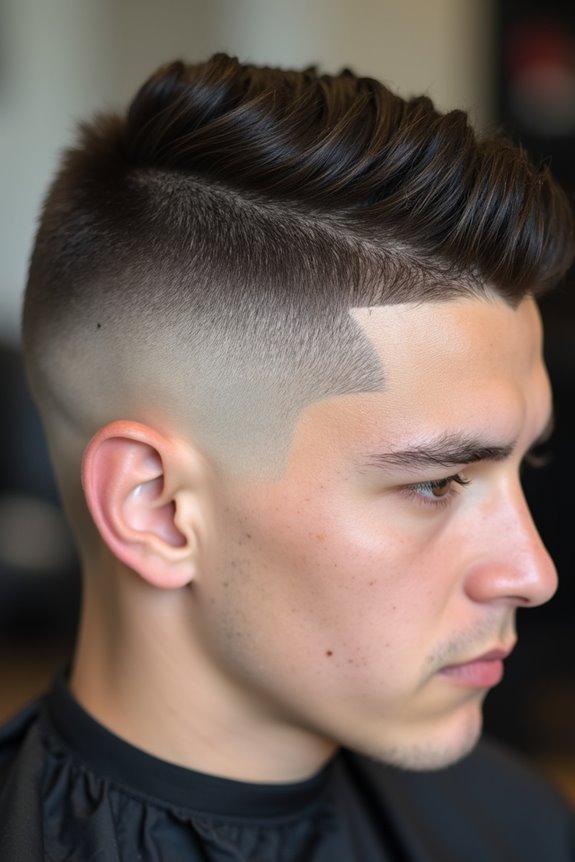
While both styles feature short sides and longer tops, they’re not the same cut. Understanding the key differences will help you choose the right option.
Both high and tight and high fade haircuts share short sides and longer tops, but they’re distinctly different cuts worth understanding.
A traditional high and tight maintains sharp boundaries between your short sides and longer top. There’s minimal blending; just clean, defined lines. This military-inspired look requires less maintenance and delivers that tight, polished aesthetic.
A high fade, by contrast, blends gradually from very short sides to longer hair on top. You can add a side part or hard part for extra style. This approach offers more flexibility with your top length.
Choose a traditional high and tight if you want no-hair-forward styling and minimal upkeep. Request a high fade when you’re seeking softer transitions or more frontward length. Both looks keep you sharp, just differently.
The Classic High and Tight: Traditional Military Look
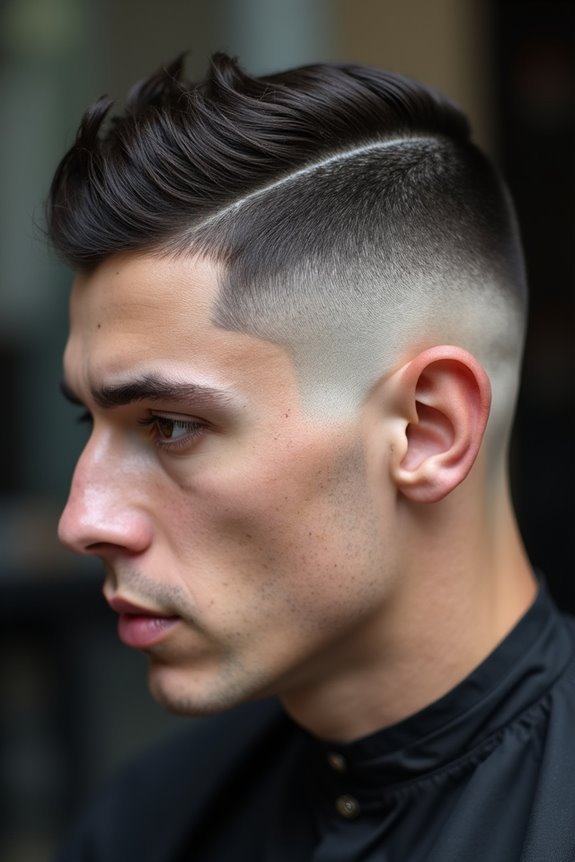
How’d this sharp military style become the gold standard for clean cuts? The classic high and tight military haircut delivers that disciplined aesthetic you’re seeking. Here’s what makes this style distinctly powerful:
- Very short sides and back, typically clippered close to the scalp
- Noticeably longer top, kept around one inch maximum
- Sharp boundary line between shaved sections and length on top
- Minimal blending with a simple taper transition
This high and tight approach emphasizes structure and precision. You’ll appreciate the minimal maintenance required; no daily styling needed. The military heritage behind this haircut speaks to reliability and professionalism. Your barber creates clean edges that demand respect. You’re choosing a look that’s proven effective for decades, offering timeless appeal.
Recon: Higher Boundary Variation
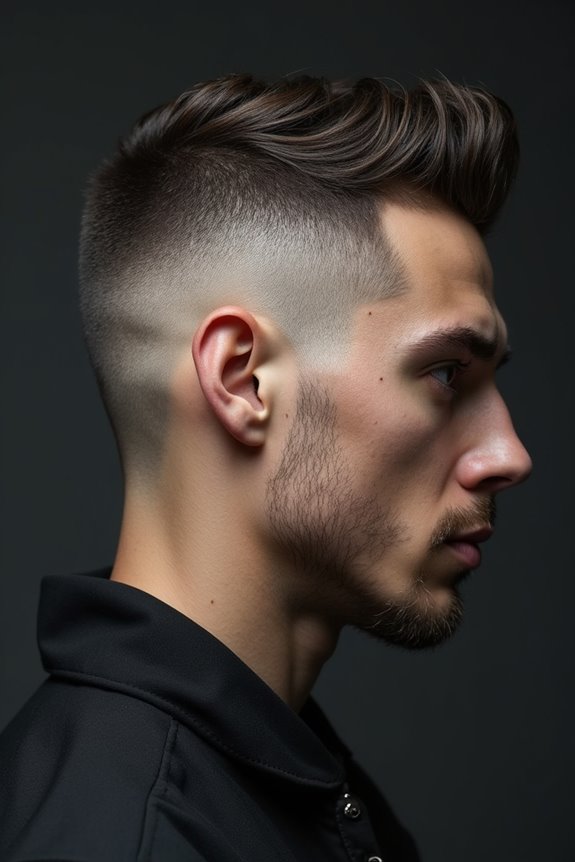
If you’re looking for something bolder than the classic military cut, the Recon variation pushes that boundary line significantly higher on your head. This high and tight style features hair starting well above the crown, creating a distinctive mohawk-like appearance without substantial length on top.
What sets the Recon variation apart is its sharp, defined upper boundary. Unlike gradual fades, you’ll notice a pronounced contrast between the cut hair and shaved sides. The back and neck remain uniformly short, maintaining that tactical precision found in reconnaissance units.
You’ll see this style across the U.S. Army, Marines, and Navy because it’s practical and combat-ready. If you want a distinctive, high-impact military look that commands attention, the Recon variation delivers exactly that.
Horseshoe Flattop: Bold Top Variation
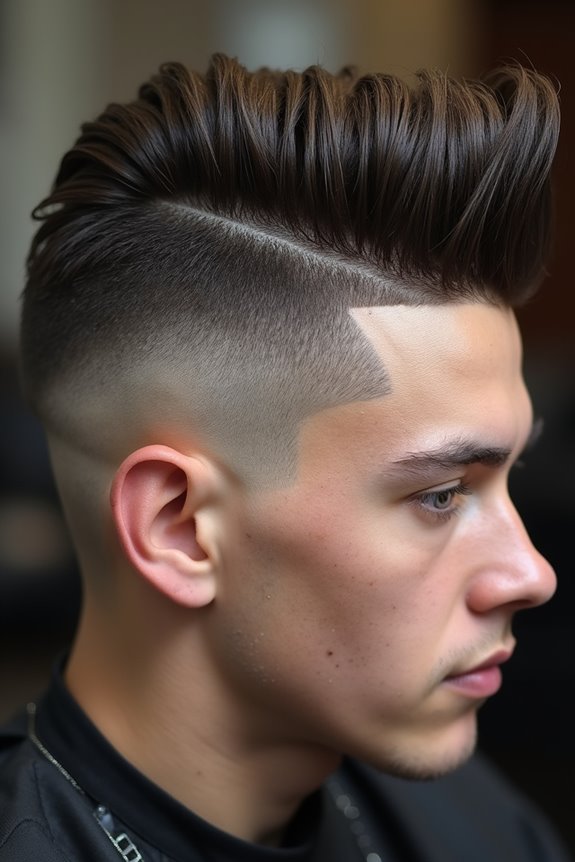
The horseshoe flattop takes the high and tight concept and makes it distinctly more dramatic. This style features a pronounced landing strip, an exposed scalp running down the center, that creates serious visual impact. Here’s what defines this bold variation:
- Flat, level top deck clipped along the centerline
- Close-shaved sides emphasizing sharp contrast
- Longer top length than standard high and tight cuts
- Rectangular silhouette with military-inspired edge
The flat top portion stays shorter than a full flat top but longer than typical versions, giving you that distinctive look. This variant appeals to those seeking bolder styling within the high and tight family. The landing strip effect really sets it apart, delivering confidence and attitude. You’re choosing a cut that commands attention.
Skin Fade, Textured Top, and Modern Adaptations
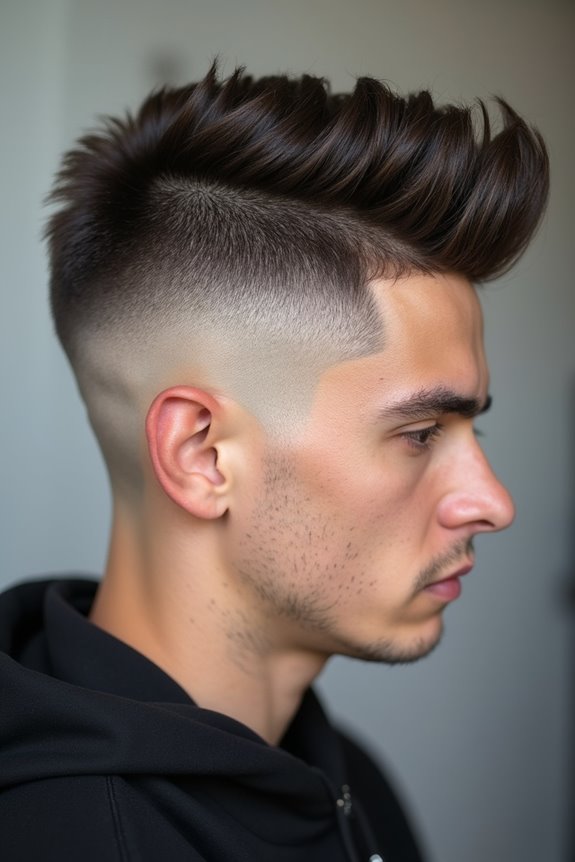
I’ll show you how skin fades and textured tops work together to create that sharp, modern high and tight look. You can blend the fade smoothly upward while adding texture to your top through layering and movement, building contrast that stands out. The key is using lightweight gels or pomades to keep everything styled while maintaining that clean, military aesthetic.
Skin Fade Blending Techniques
Creating that sharp, smooth transition from bare skin to longer hair on top requires consistent practice and proper technique application. Success depends on understanding progressive guard transitions and controlling your clipper angles precisely.
You’ll need the following tools:
- Cordless clippers with guards ranging from #0 to #2 for exposing skin
- Mid-range guards (#3 to #6) for blending layers smoothly upward
- Trimming scissors for adding texture and dimension on top
- Inverted clipping near ears and neckline for reinforced contrast
Work systematically from bare skin upward, overlapping each guard length slightly. This approach creates invisible lines where guards meet. The blending technique requires patience and steady hand control. You’re building a gradient that transitions naturally into your textured top, producing that professional, polished high and tight appearance.
Textured Top Styling Options
Once you’ve mastered the skin fade foundation, you’re ready to style what sits on top. I’ll show you how to transform your high and tight into something distinctly yours.
Keep your textured top between 5–10 mm for optimal movement and hold. Apply a fingertip-sized amount of gel or light pomade, working it through with your fingers to create natural texture without stiffness.
Consider a recon-style approach, which features a higher boundary resembling a subtle mohawk. This maintains that clean silhouette you’re after.
Modern adaptations let you blend your top seamlessly into the sides or keep a pronounced boundary; your choice. Re-blend every few weeks using a guard-based clipper to preserve shape and definition.
Asking Your Barber for a High and Tight
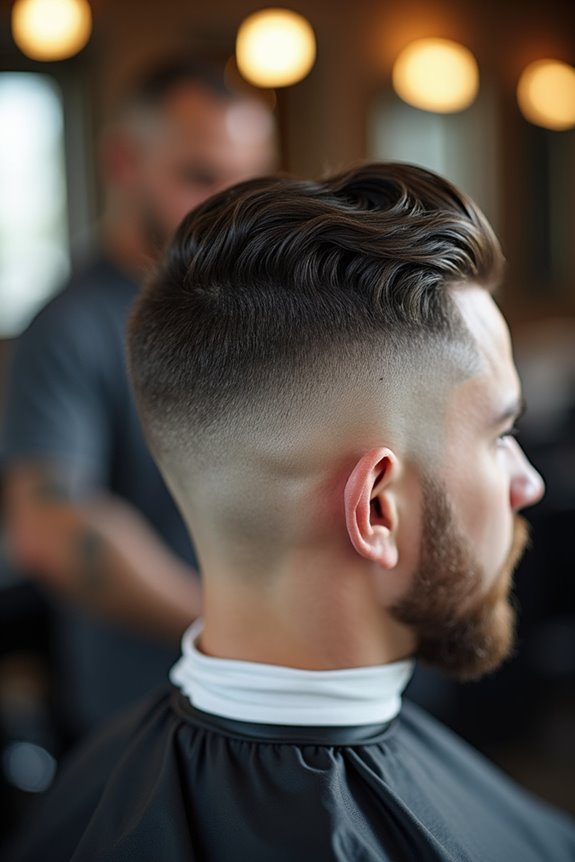
When you’re ready for a high and tight, start by telling your barber your preferred top length. Decide whether you want it short and neat or slightly longer for texture. Next, specify how tight you’d like the sides and back. You can choose between options like a skin fade for maximum contrast or a guard length for a softer transition. Being clear about these details helps your barber achieve that crisp military-style look you’re after.
Communicate Your Desired Length
To get the high and tight you’re picturing, you’ll need to tell your barber exactly what you want before they start cutting. Here’s how to communicate your desired length plainly:
- Specify top length precisely: say “top 5–10 mm” or “about 1 inch”
- Choose sides tightness like skin fade, guard #0–#2, or clipped undercut
- Decide if you want sharp lines between top and sides or a blended fade
- Mention minimal front-facing length for that classic military aesthetic
Bring a reference photo or detailed description of your vision. Tell your barber you want tight sides with a slightly longer top and no hair falling toward your face. This clarity prevents miscommunication and helps you walk out with the sharp, polished look you’re after. Your barber values specificity. It’s what separates a good cut from a great one.
Specify Fade and Tightness Preferences
Now that you’ve got the basics down, it’s time to get specific about the fade and tightness. These details make the difference between a standard high and tight and one that actually looks sharp.
You’ve got two fade options. A skin fade takes you down to nearly bare skin on the sides and back. A guard-based fade uses clippers to blend from short to longer gradually.
For tightness, you’re choosing how close those clippers go. Very tight means 1/16 to 1/8 inch on the sides and back. A slightly longer shield sits around 1/4 inch.
Tell your barber whether you want a sharp line where the top meets the sides or a smooth blend. These choices will improve your cut from basic to well-polished.
Step-by-Step: Cutting a High and Tight at Home
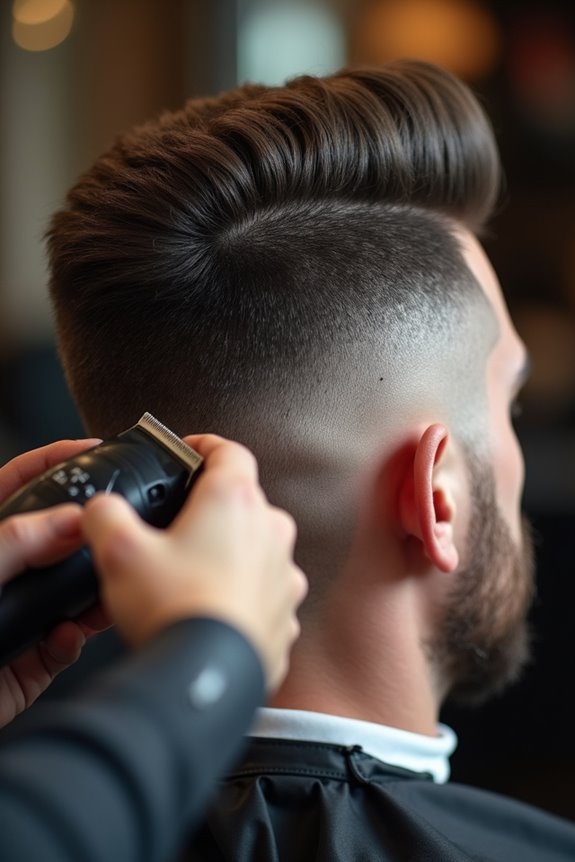
Cutting a High and Tight at Home
Before you start, assess your comfort level with clippers. This process involves several straightforward steps that will help you achieve clean results.
Prepare your hair by dampening it and brushing it downward. This keeps everything flat and allows for even cutting. Follow this approach:
Dampen and brush your hair downward to keep it flat and ensure even cutting throughout the process.
- Buzz the back and neck using guard #1 or #2 with upward motions
- Clip the top with guard #5 or #6 to maintain the signature length
- Blend the sides and neck using guard #2 or #3 for smooth transitions
- Use the inverted clipper technique around the ears and back
These clipper settings will create the sharp fade you want. Dampen your hair between steps as needed. Apply styling product at the end for hold and definition.
Keeping Your High and Tight Fresh Between Trims
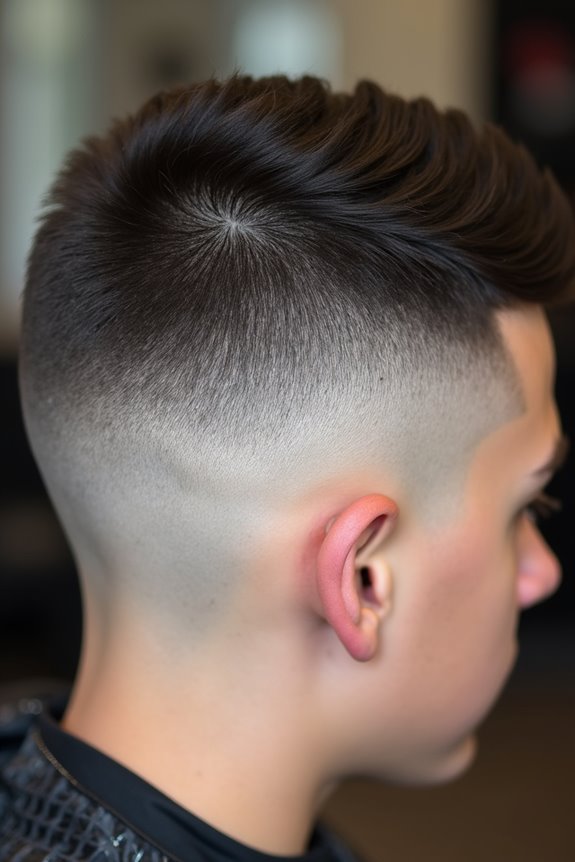
I’ll show you how to maintain that sharp, clean look between barber visits. You’ll need a solid trim schedule, the right product application technique, and a few simple at-home maintenance tips to keep your high and tight looking fresh. Let’s break down what actually works to preserve that contrast and crisp blend.
Regular Trim Schedule
Every two to three weeks, visit your barber to keep your High and Tight looking sharp. This consistent maintenance schedule is necessary for preserving the style’s clean aesthetic.
Here’s what happens during each trim:
- Your barber refreshes the faded sides using proper guard settings
- The longer top gets trimmed to maintain length and shape
- The blend between sections gets re-established for seamless transitions
- Your barber ensures uniform silhouette across the entire cut
Sticking to this routine prevents your High and Tight from losing definition. You’ll notice the contrast between shaved sides and longer top stays crisp. This regular upkeep also reduces styling time daily, making maintenance straightforward. By committing to timely trims, you invest in looking polished consistently.
Product Application Techniques
While regular trims keep your High and Tight structurally sharp, the right products maintain that crisp look between barber visits. I recommend using a fingertip-sized amount of gel or pomade to preserve that contrast between your shaved sides and longer top.
Apply product after lightly towel-drying your hair. This prevents heaviness and keeps your top manageable without weighing down the sides. Work a small amount through your top from front to back using a brushed-up technique to maintain your intended silhouette.
Comb your top daily to keep hair lying in one direction. Reapply product as needed between trims to maintain hold and scent. This routine keeps your High and Tight looking fresh and intentional.
At-Home Maintenance Tips
How to Keep Your High and Tight Sharp Between Barber Visits
Maintain your High and Tight’s crisp appearance with smart upkeep between appointments. These steps preserve the sharp sides and back while protecting the clean contrast of your cut.
- Trim every two to three weeks using clippers with guards (1/8″ to 1/4″ for sides and back)
- Keep hair damp during touch-ups to improve clipper alignment around your ears and neckline
- Re-blend the top with guard #2 or #3 after growth appears to preserve clean transitions
- Apply light hold product to maintain shape without weighing down your top
Consistent upkeep between barber visits keeps your High and Tight looking intentional and sharp. You’ll maintain that professional appearance while staying part of the community that values quality grooming. Regular maintenance keeps the cut looking fresh and intentional.
How Did the High and Tight Become a Global Trend?
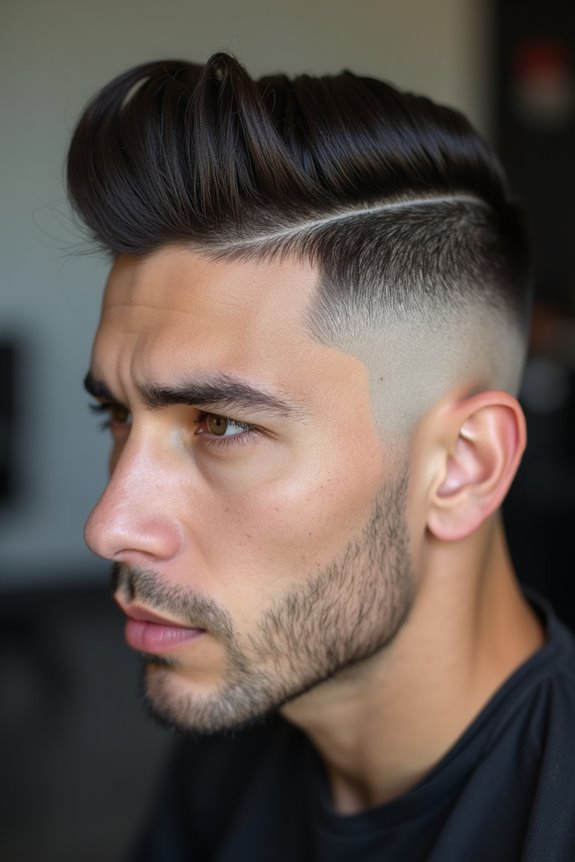
What’s behind the high and tight’s transformation from a strictly military cut to a worldwide phenomenon? The journey started with military origins; soldiers needed low maintenance haircuts. By the late 1980s, civilians discovered what servicemembers already knew: this style worked.
The cut’s appeal spread because it solved real problems. You get a sharp, distinct look without spending hours styling. Different variants emerged too. The high fade version blends longer tops with shorter sides, while the recon offers maximum edge definition.
Today, you’ll find this haircut everywhere. Syrian, Egyptian, and Moroccan youths wear it. Indonesian military personnel adopt it as Cepak. Why? It adapts to various hair types and face shapes, making it accessible to many. That’s how a practical military solution became a popular choice across diverse populations.
High and Tight Haircut: FAQ
Now that you’ve seen how this cut conquered the world, you’re probably ready to get one yourself, or at least understand what you’re asking for at the barbershop.
I’ve put together answers to the questions I hear most:
- What guard lengths work best? Use #1 or #2 on sides and back, then #5 or #6 on top with a #2 or #3 fade for blending.
- Is maintenance really easy? Yes. Trim every two to three weeks to keep that sharp contrast crisp.
- Are there variations? Absolutely. Try skins fade, recon versions, or flat tops for different looks.
- Who can pull this off? Anyone seeking a clean, professional haircut.
Your barber can handle the details.