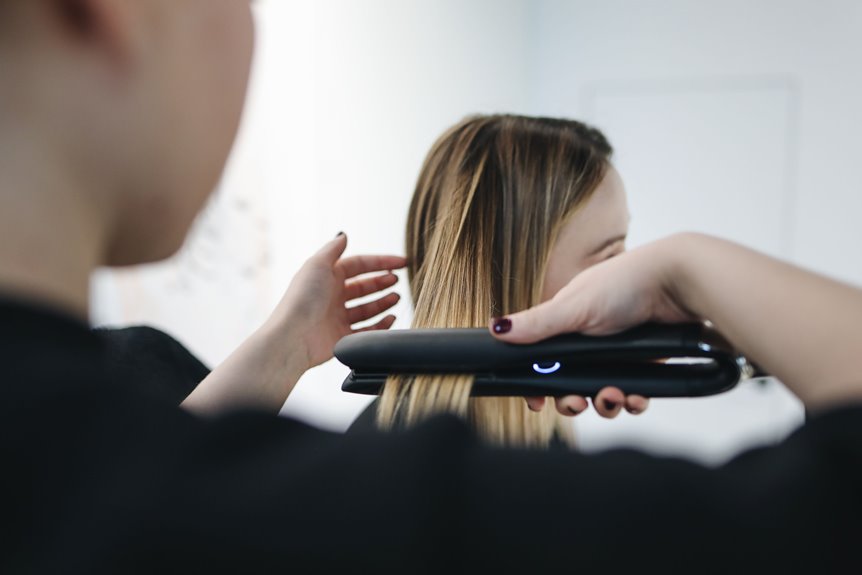
Your first Japanese hair straightening appointment takes 3 to 4 hours total. Most of that time goes to the flat-ironing stage, where I section your hair and carefully iron each part for lasting smoothness. A quick 10–15 minute consultation helps me assess your hair’s texture and thickness beforehand.
Follow-up sessions every 4–8 months are shorter since I only treat new growth. Your exact timing depends on hair length, density, and current condition.
Want to know what happens during each stage?
How Long Does a Full Japanese Hair Straightening Treatment Take?
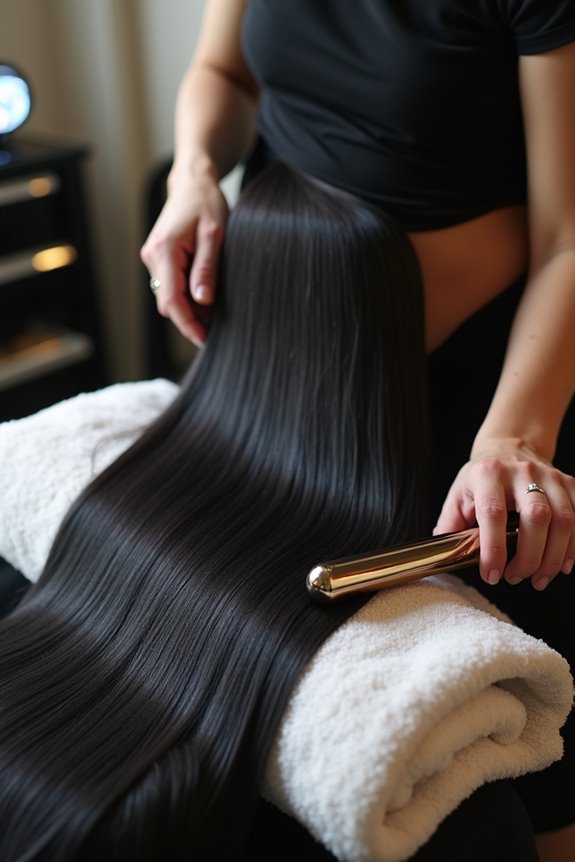
Just how long you’ll spend in the salon chair for Japanese hair straightening depends on several factors. The full treatment length typically ranges from 3–4 hours for most clients. Your specific Japanese straightening duration varies based on your hair’s characteristics.
Hair length matters significantly. Longer strands require more time for flat ironing and chemical application. Thickness also impacts your in-salon processing time considerably. Coarser or denser hair needs extra attention during each step.
Your hair’s current condition affects timing too. Damaged or heavily textured hair may require additional smoothing phases. The stylist performs a thorough consultation first to assess your needs and provide accurate time estimates.
These factors work together to determine your exact appointment length.
Japanese Hair Straightening Timeline: What Affects Duration?
What makes one person’s straightening appointment stretch to four hours while another’s wraps up in three? Several factors determine your timeline. Your hair length plays a huge role; longer locks require more processing time and flat ironing. Thickness matters too. Dense or coarse hair needs extended neutralizer time to fully process. During your consultation, your stylist assesses these details and creates a personalized plan. Heavily textured hair naturally takes longer than previously straightened strands. Even hair condition affects duration. Damaged hair may need careful handling. Your appointment isn’t one-size-fits-all. Understanding what influences your timeline helps you plan accordingly and appreciate the customized care you’re receiving.
Hair Length, Thickness, and Texture: How They Impact Treatment Time
Your hair’s physical characteristics directly shape how long your straightening appointment takes. Understanding these factors helps you set realistic expectations.
Your hair’s length significantly impacts processing time. Waist-length or mid-back hair typically requires 3–4 hours minimum, sometimes stretching to 5+ hours. Shorter lengths finish faster since stylists cover less surface area.
Thickness matters equally. Dense, thick hair demands more passes through each section during application and ironing phases. You’ll notice your stylist works methodically, ensuring even processing throughout.
Texture plays an important role too. Straight or wavy hair processes smoothly and quickly. Very curly or tightly coiled textures need extra attention for uniform results, extending your overall processing time.
Fine hair often moves through appointments closer to the 3-hour mark when your stylist works efficiently without sacrificing quality results.
How Long Does the Consultation Add to Your Appointment?
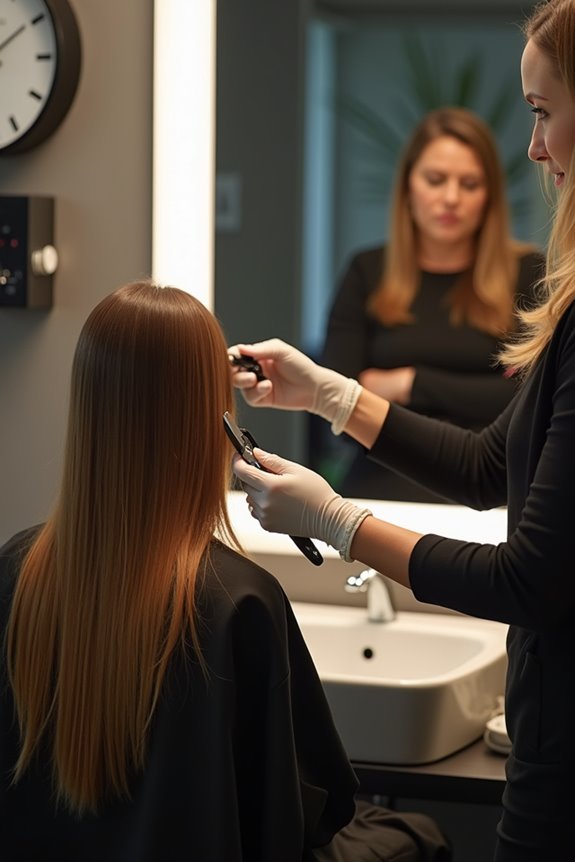
Before your stylist begins the actual straightening treatment, you’ll need to complete a consultation first. This client consultation typically lasts 10–15 minutes and is necessary before booking your service. During this appointment length, our team analyzes your hair and discusses what’s realistic for you.
The consultation time covers important ground:
- Hair condition assessment (we examine texture, thickness, and overall health)
- Feasibility discussion (we explain whether Japanese straightening works for your hair type)
- Expectation setting (we outline results and aftercare requirements)
This consultation duration helps determine if you’re a good candidate. We’ll tailor your treatment plan specifically to your needs. After our post-consultation review, we’ll assist with scheduling your actual straightening service.
The Flat-Ironing Stage: Where Most of Your Time Goes
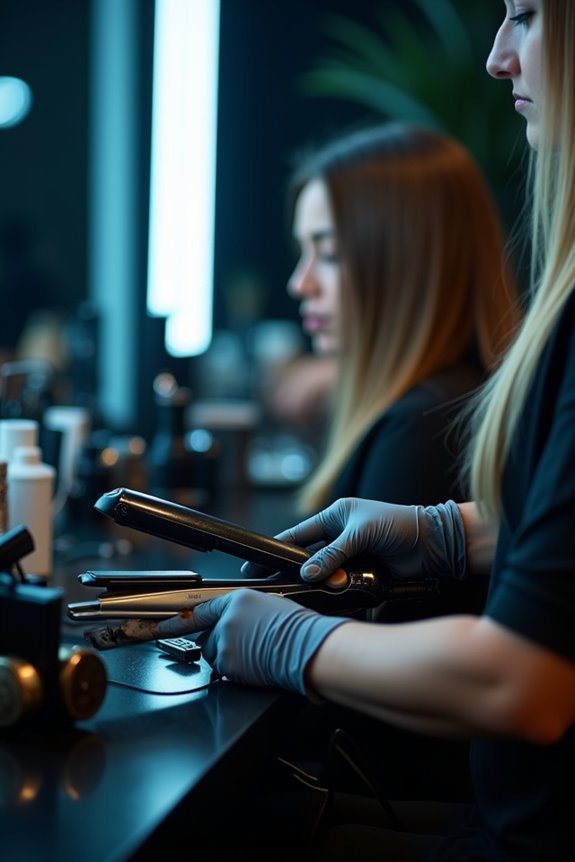
Once your stylist applies the straightening treatment, they’ll move into the flat-ironing phase, the step that’ll consume the bulk of your 3–4 hour appointment. This isn’t just one quick pass with an iron. Your stylist carefully sections your hair and works through each section multiple times at precise temperatures so the chemical bonds reform correctly. This meticulous, section-by-section approach takes considerable time, but it’s what delivers those lasting, straight results you’re paying for.
The Most Time-Consuming Step
While the chemical treatment softens your hair’s structure, the flat-ironing stage is where your stylist really earns their time and where you’ll spend the bulk of those 3–4 hours. This step takes considerable time because precision matters.
Your stylist will:
- Section your hair into manageable portions for controlled, careful work
- Make deliberate ironing passes with a flat iron to set the new straight structure
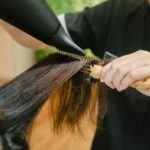
- Blow-dry first, then iron each section to achieve uniform smoothness
The actual duration depends on your hair length, thickness, and texture. Longer, thicker hair naturally requires more ironing passes. Your stylist won’t rush this phase. Proper technique during flat ironing affects both longevity and heat damage. That’s what separates professional results from mediocre ones.
Section-By-Section Flat Ironing
Your stylist transforms chemically softened hair into straight strands through meticulous sectioning and flat ironing.
Your technician divides your hair into small, manageable sections. This precision approach allows complete bonding restructuring throughout your entire head. They work methodically, making small passes with the flat iron across each section.
Temperature control matters tremendously here. Professional stylists avoid excessive heat on delicate areas, protecting your hair’s integrity while achieving results. Each ironing pass directly determines your final straightness.
This step dominates your 3–4 hour session. The careful, section-by-section technique produces uniform results across your hair. After flat ironing completes, your stylist applies neutralization and final styling to lock everything in place.
Duration And Precision Factors
Why does flat ironing consume the bulk of your appointment? I’ll break it down for you. Stylists must work methodically through each sectioned area with controlled temperature settings. This careful approach keeps your hair transforming evenly without damage.
What makes this stage time-intensive:
- Meticulous sectioning – I divide your hair into small, manageable portions before any heat application
- Slow, repeated passes – Each section gets multiple iron passes at precise temperatures to set the new bond structure
- Hair-specific timing – Longer, thicker, or coarser textures require extended time duration to achieve uniform straightness
Your stylist won’t rush this critical phase. Proper technique during flat ironing prevents touch-ups later and maximizes your results. That’s where the investment truly pays off.
Japanese Hair Straightening Retouches: How Often and How Long?
Once you’ve invested in Japanese hair straightening, you’ll eventually need retouches to keep your look smooth. Your retouch interval typically falls between 4–8 months, depending on your natural growth rate. During each session, I focus on just 2–3 inches of new growth at your roots, making the application process faster than your initial treatment. The treatment duration for retouches is noticeably shorter since I’m only re-creating the straight bond structure where new hair has emerged. Here’s what happens next: your previously treated lengths stay permanently straight. With proper aftercare during regrowth phases, you’ll maintain that uniform straightness you’re looking for and extend your overall results.
Why Your Stylist’s Skill Matters for Timing
Why Your Stylist’s Skill Matters for Timing
A stylist’s experience level directly impacts how long your Japanese hair straightening appointment takes. When you’re seeking this transformation, you want someone who understands the process thoroughly.
An experienced stylist handles timing differently:
An experienced stylist manages appointment timing through efficient consultation, mastered flat ironing techniques, and swift problem-solving.
- Consultation efficiency: Skilled professionals ask targeted questions during your initial consultation, identifying hair needs quickly without wasting time.
- Flat ironing mastery: Expert stylists work faster through small sections during flat ironing (the most time-consuming step) because they’ve perfected their technique.
- Problem-solving speed: Seasoned professionals anticipate challenges and adjust their approach smoothly, preventing delays.
Newer stylists may take longer, sometimes extending appointments beyond the standard 3 to 4 hours. Their careful approach isn’t wrong; it’s simply building confidence. When selecting your stylist, ask about their Japanese hair straightening experience. You’ll appreciate the expertise that respects both your hair and your schedule.
Why Your Hair’s Current Condition Changes Your Appointment Length
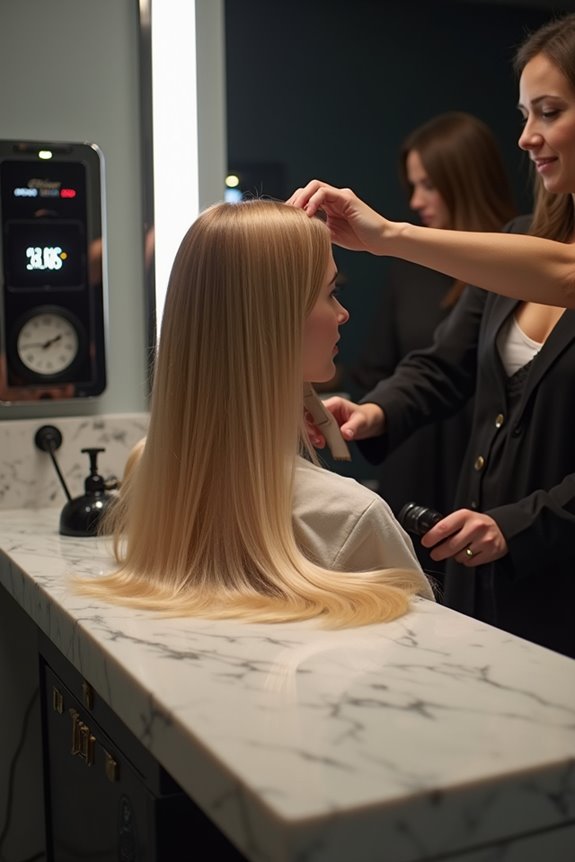
How’s your hair’s current health? Your hair condition directly impacts your processing time. If you’ve had previous coloring, relaxers, or heat damage, your stylist needs extra care during sectioning and difficulty assessment. Damaged strands require slower, gentler flat-ironing passes to prevent breakage. Your stylist may apply protective treatments before beginning.
Thicker, curlier hair demands more sectioning work and precise attention. Each section needs multiple passes for uniform straightening. The neutralizer application takes longer too. Your stylist applies it slowly to fragile areas.
Hair that’s been chemically processed needs thorough evaluation. Your stylist checks elasticity and strength beforehand. This assessment determines whether you’re a good candidate and how much time you’ll actually need.
Healthier hair typically requires the standard 3–4 hours.
First Appointment vs. Follow-Up Sessions: What to Expect
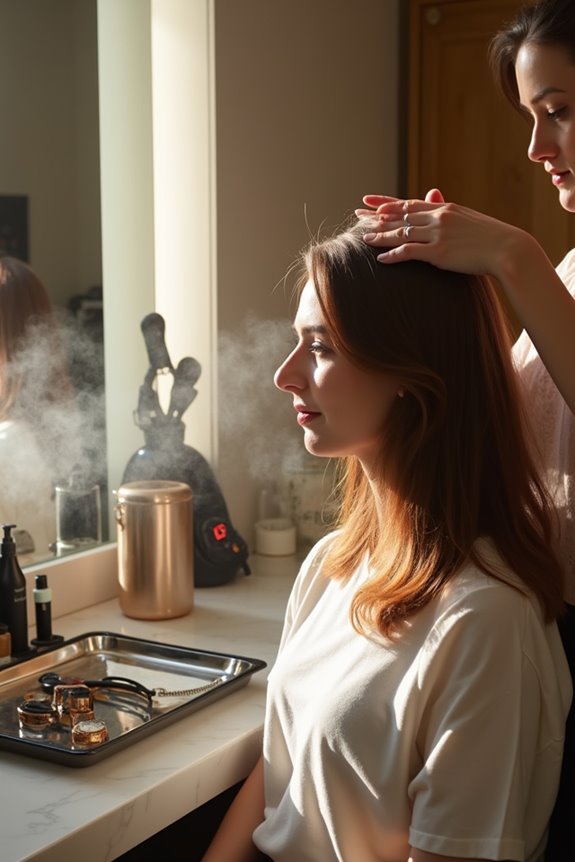
Your stylist’s assessment of your hair condition determines not just how long your appointment takes, but also what happens next.
Your first appointment for Japanese hair straightening lasts 3–4 hours. You’ll experience:
- Cleansing and consultation: Your stylist evaluates your hair’s texture and strength
- Chemical application and processing: The straightening formula works on your strands
- Blow-drying, flat ironing, and neutralizing: These steps set your new straight look in place
Follow-up sessions are shorter because they only treat new growth. You’ll need retouches every 4–8 months to maintain that uniform straight appearance.
The duration difference matters. Your first appointment requires more time for thorough treatment. Retouches focus on managing regrowth, making them quicker overall. Planning ahead helps you manage your schedule and keep your straightened hair looking fresh between visits.
Why Rushing the Process Compromises Results
When you rush your Japanese straightening appointment, you’re asking your stylist to skip the precise timing that makes this treatment work. Your hair’s bonds need adequate time under the chemical solution and heat to restructure properly. Cut corners here, and you’ll end up with uneven results or weakened strands that won’t hold the straightness you paid for. That’s why I always tell clients: taking the full 4-6 hours might feel long, but it’s the only way to guarantee your hair stays straight, healthy, and strong for months afterward.
Bond Restructuring Requires Time
Because your hair’s disulfide bonds need adequate time to break down and reform properly, skipping steps or speeding through Japanese straightening won’t give you the results you’re hoping for.
Think of bond restructuring like this: you’re literally reshaping your hair’s foundation. Here’s what happens when you rush.
Chemical penetration fails. The solution doesn’t fully saturate your strands, leaving some bonds unchanged.
Heat ironing becomes incomplete. Speeding through this step means uneven straightness and potential root reversion.
Neutralization skips stabilization. Without proper processing time, your new straight structure won’t hold.
The central heat ironing phase demands the most patience. Proper timing produces even results and lasting straightness. I’ve learned that adequate processing time protects your hair’s health too, preventing excessive damage or over-processing that shortcuts cause.
Heat Application Precision Matters
How does a flat iron actually straighten hair? The tool reshapes your hair’s protein bonds through controlled heat. When you rush this flat-iron step, you’re compromising bond restructuring at the molecular level.
Here’s what happens: I section your hair into half-inch subsections from the scalp down. This sectioning provides uniform heat exposure across every strand. Inconsistent pressure or hurried passes create uneven results; some areas stay wavy while others frizz up.
Ironing precision demands patience. Each pass should be deliberate, maintaining steady temperature and timing. You’re not just straightening; you’re restructuring bonds permanently.
Stylists allocate most of your 3–4 hour treatment to this flat-iron phase. That’s not wasted time. It’s investment in lasting straightness. Rush it, and you’ll regret it within weeks.
Skipping Steps Damages Hair
Skipping Steps Damages Hair
Why do stylists insist on following every step of Japanese hair straightening? Each phase protects your hair’s integrity. When you skip steps, you’re risking permanent damage that you’ll regret.
Here’s what happens when corners get cut:
- Skipped neutralizer application leaves residual chemicals weakening your hair bonds long after treatment ends
- Insufficient dwell time prevents the chemical solution from fully breaking and reforming disulfide bonds, compromising straightness
- Rushed sequencing causes uneven results and unexpected heat damage in thicker sections
I understand wanting faster appointments. However, proper pacing allows consistent temperature application and complete chemical processing. Rushing through blow-drying and flat-ironing intensifies heat damage, particularly in coarser hair. You deserve lasting results that stay straight as your roots grow out. Follow the process as designed.
Planning Your Schedule: Total Time Investment Over a Year
If you’re thinking about getting Japanese hair straightening, you’ll want to map out your whole year commitment upfront. The initial treatment duration takes 3–4 hours, but that’s just the beginning. You’ll also need recovery time and scheduling flexibility.
| Phase | Time Needed | Frequency |
|---|---|---|
| Initial Treatment | 3–4 hours | Once yearly |
| Retouch Sessions | 3–4 hours each | 1–2 times yearly |
| Recovery Period | 48 hours | After each service |
Plan for 1–2 retouches every 4–8 months as new hair growth appears. Your yearly planning should include the initial Japanese straightening appointment plus follow-up visits. Factor in consultation time beforehand. When you’re part of the straightening community, you’ll discover that consistent retouch timing maintains that uniform straight look. Block out these sessions strategically around your life events.
Preparing Before Your Appointment to Stay on Schedule
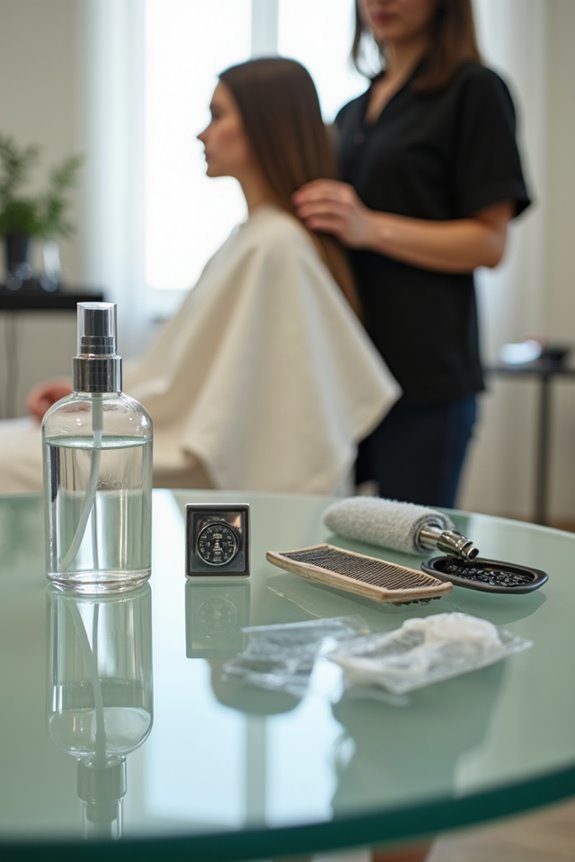
Getting ready for your Japanese hair straightening appointment is as important as the treatment itself. Proper preparation helps maintain consistency throughout your treatment and keeps you on schedule.
Start by scheduling a consultation to confirm your candidacy. Bring your complete hair history, including any coloring or prior chemical treatments, so stylists can tailor the perfect plan for you.
Before your appointment, follow these steps:
- Arrive with clean hair; clarifying shampoo begins the preparation process
- Avoid moisture and heavy styling the day before your visit
- Follow all pre-visit instructions provided by your salon
Plan for a 3 to 4 hour appointment depending on your hair length and condition. This commitment to preparation sets you up for quality results.